
As a rabbit owner, you may wonder how long your pet rabbit can survive without food. Rabbits should not go more than 12 hours without food, as this can lead to serious health problems. It’s essential to ensure that your rabbit has constant access to fresh food to keep them happy and healthy.
Rabbits rely on their diet to maintain their digestive system and overall well-being. If your rabbit stops eating for even a few hours, it could indicate a health issue, and you should seek veterinary advice. Understanding their dietary needs can help prevent stressful situations for both you and your pet.
Taking care of a rabbit comes with responsibilities, including monitoring their eating habits. Ensuring they eat properly not only supports their health but also creates a happy environment for them.
Understanding Rabbit Nutrition and Dietary Needs

Rabbits have specific dietary needs to stay healthy. A balanced diet mainly consists of hay, fresh vegetables, and a limited amount of pellets. Proper nutrition is essential to prevent digestive issues like gut stasis.
The Importance of Hay and Fresh Vegetables
Hay should be the main part of your rabbit’s diet. It supports digestion and keeps their teeth healthy. Always provide high-quality grass hay, like timothy or meadow hay. Aim for a daily supply that fills at least 80% of their diet.
Fresh vegetables are also important. Leafy greens like romaine lettuce, kale, and cilantro are great choices. Offer a variety to keep their meals interesting. Aim for about 1 cup of fresh veggies per 2 pounds of body weight each day. Just avoid starchy or sugary vegetables like carrots and corn.
Balanced Diet and Water Intake
While hay and vegetables form the base of their diet, pellets can add nutrition. Choose high-fiber pellets, but offer them in moderation. Too many can lead to weight gain and digestive problems.
Fresh water is crucial. Always provide clean water in a bowl or bottle. Change it daily to keep it fresh. Monitoring your rabbit’s diet can help you spot issues like changes in appetite or feces. Healthy rabbits produce cecotropes—soft droppings they eat for extra nutrients. Watch for changes here, as they can signal dietary problems.
Risks of Food Deprivation in Rabbits
Food deprivation can lead to serious health problems for your rabbit. Understanding these risks will help you ensure your pet stays healthy and happy.
Gastrointestinal Stasis and Its Dangers
Gastrointestinal stasis, commonly called GI stasis, occurs when the digestive system slows down or stops. This can happen quickly if your rabbit goes without food. When their intestines are not active, it can lead to bloating and serious discomfort.
GI stasis can result in life-threatening conditions if not treated. It may lead to a build-up of gas, which can cause pain and even rupture the intestines. If you notice your rabbit isn’t eating or showing signs of pain, take them to a vet immediately.
Signs and Symptoms of Dietary Distress
It’s essential to watch for signs of dietary distress in your rabbit. Common symptoms include a loss of appetite, weakness, and dehydration. Your rabbit may seem less active than usual or hide more often.
You should also look for signs of dehydration such as dry gums or skin that doesn’t spring back when pulled. If your rabbit exhibits these signs, it’s crucial to act quickly. A vet visit may be necessary to prevent further health issues.
How to Monitor and Encourage Healthy Eating Habits
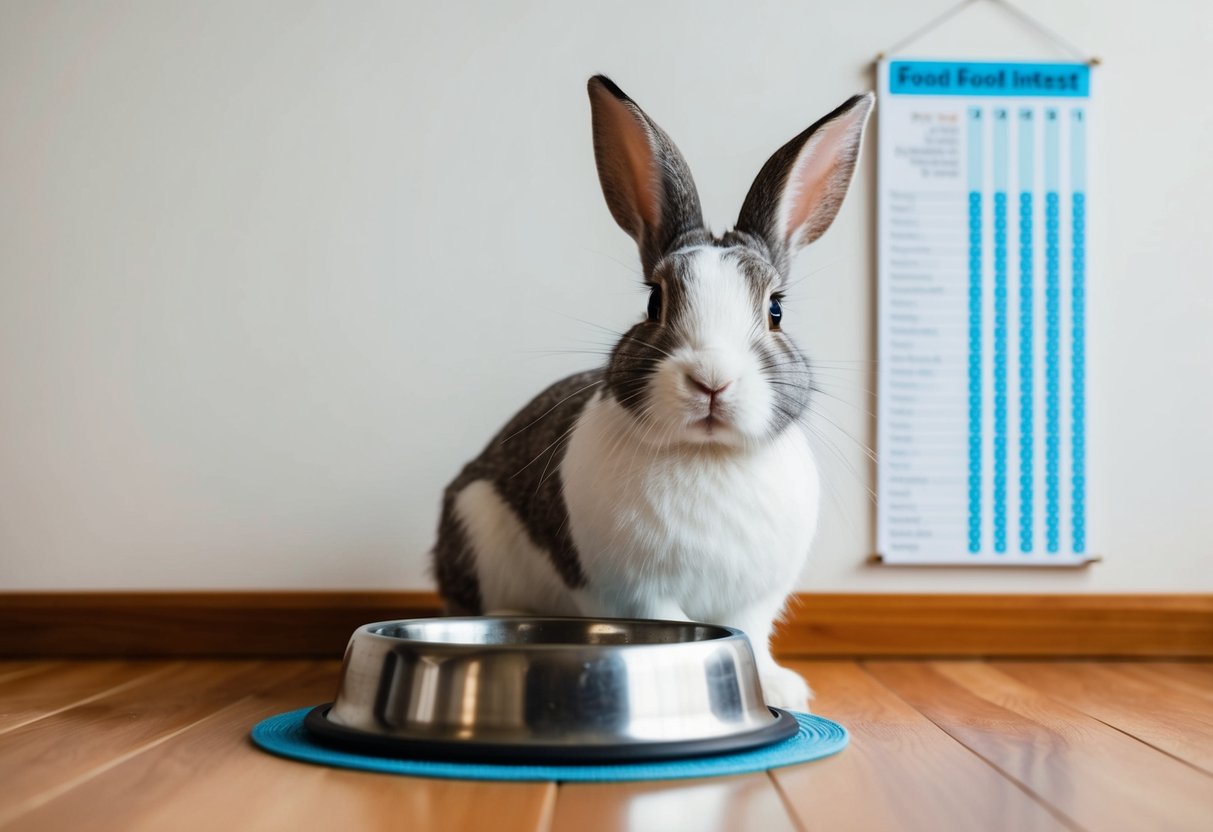
Keeping an eye on your rabbit’s eating habits is crucial for their health. Understanding appetite and providing variety can encourage better nutrition. Here are some effective strategies to help you monitor and promote healthy eating.
Assessing Rabbit Appetite and Eating Patterns
First, pay attention to how much your rabbit eats each day. You should note both the quantity and type of food they enjoy. If your rabbit suddenly stops eating or picks at their food, this could signal a health issue.
To keep track, consider keeping a simple food log. Mark down when they eat, what they eat, and any changes in their habits.
Offer a mix of rabbit pellets, hay, and fresh greens, including herbs. Foods like parsley or cilantro can entice them to eat more. If you notice signs of decreased appetite, it’s best to consult a vet to rule out any concerns.
The Role of Enrichment in Grazing Behavior
Rabbits are natural grazers and thrive on variety. Providing enrichment can encourage them to munch more throughout the day.
Try scatter feeding, where you spread pellets or fresh herbs around their space. This encourages exploration and makes eating more fun.
You can also introduce treats like leafy greens or small amounts of fruits. Just be careful not to overdo it, as too many treats can upset their stomach.
Pay attention to their favorite foods and rotate offerings regularly. Remember, a healthy rabbit diet should include a mix of hay, pellets, and fresh veggies. Keeping their meals exciting can help maintain good eating habits and support their overall nutrition.
When to Seek Veterinary Care
Knowing when to seek veterinary care for your rabbit is important. If your pet doesn’t eat for a while, problems may arise. Observing your rabbit can help you decide if a visit to the vet is necessary.
Identifying Emergencies: When Immediate Care is Needed
You should seek veterinary care if your rabbit hasn’t eaten for over 12 hours. This can lead to serious health problems. Signs of distress might include lethargy, lack of grooming, or unusual behavior.
If your rabbit shows symptoms like bloating or a hard abdomen, this indicates a possible emergency. Also, if you have baby rabbits or certain breeds, they may be more vulnerable and need attention sooner.
Always trust your instincts. If something doesn’t seem right, don’t hesitate to call your vet. Quick action can save your rabbit’s life.
Ongoing Veterinary Support for a Healthy Rabbit
Regular check-ups are vital for maintaining your rabbit’s health. Your vet can provide guidance on proper diet and care to keep your furry friend in great shape.
Make sure to schedule visits at least once a year. This is especially true for older rabbits or those with known health issues. Your vet may suggest specific vaccinations or treatments based on your rabbit’s breed.
Creating a health plan tailored to your rabbit’s needs can prevent many health problems. During visits, be sure to discuss any changes in behavior, appetite, or weight with your vet. This information can be crucial for early detection of issues.


