
Raccoons are fascinating creatures known for their adaptability and playful behavior. You might be surprised to learn that these clever animals can run at speeds of up to 15 miles per hour. This quick pace helps them escape predators and navigate their environment efficiently, making them successful urban survivors.
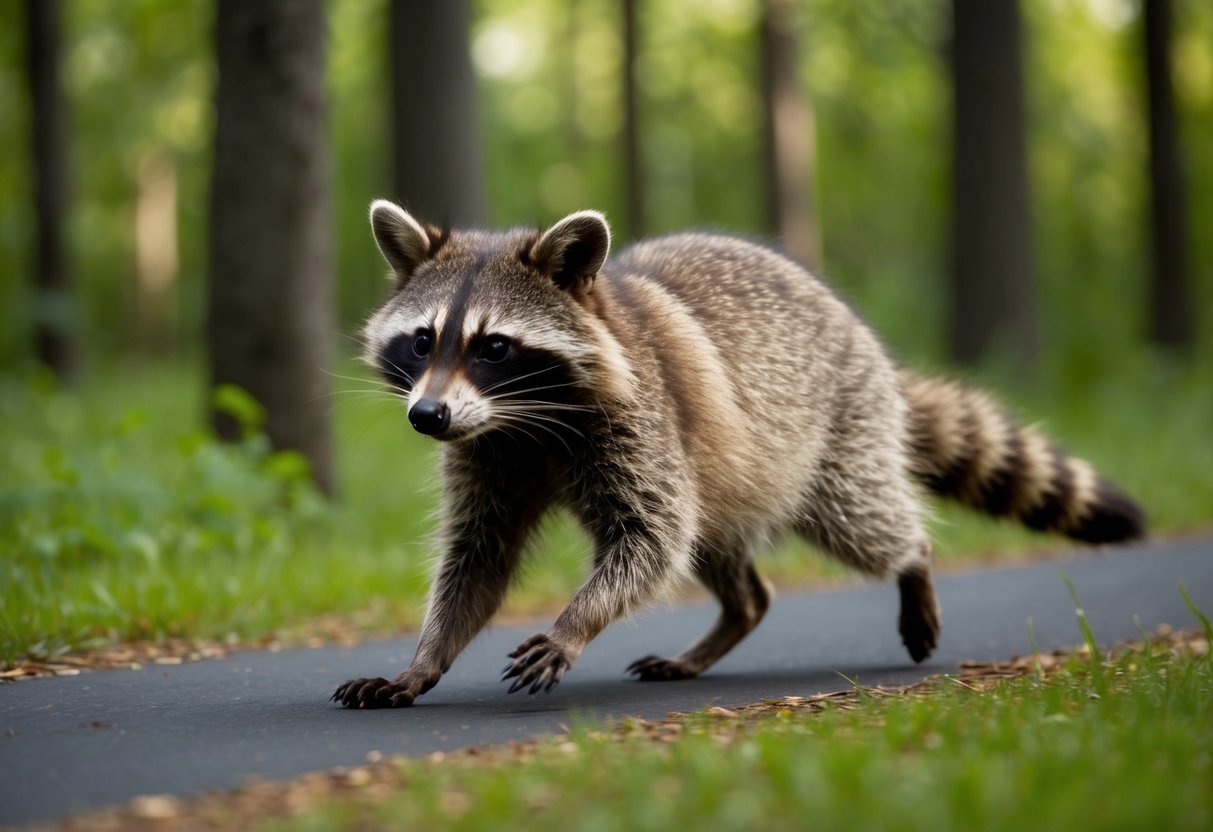
While you might not usually think of raccoons as speedy animals, their surprisingly swift movement reflects an important trait in the animal kingdom. Raccoons are built for versatility, which allows them to thrive in various settings, from forests to cities. Their ability to sprint fast also complements their skills in climbing and swimming, making them truly remarkable in their adaptability.
Raccoon Characteristics and Habitat
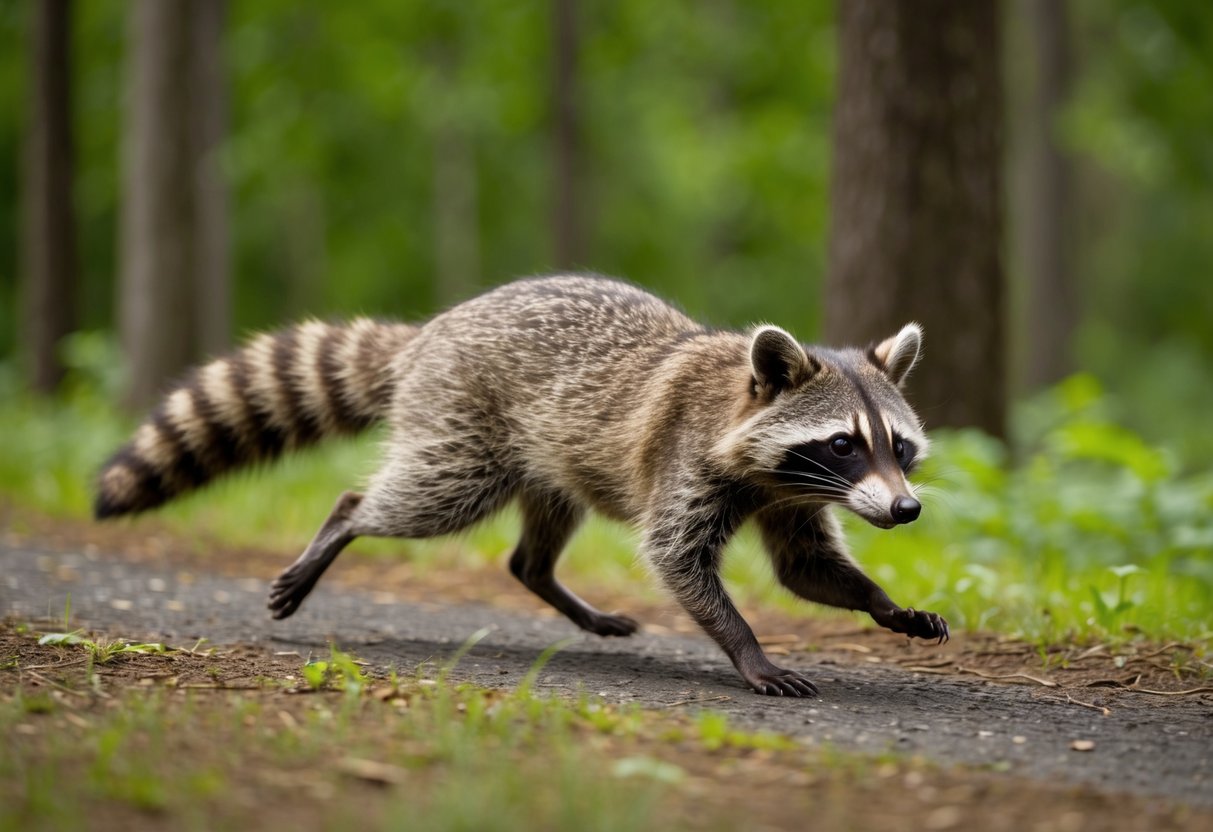
Raccoons are fascinating creatures known for their unique physical features and adaptable nature. Their ability to thrive in various environments, from forests to urban areas, showcases their intelligence and resourcefulness.
Physical Attributes and Adaptability
Raccoons have a distinctive appearance with a grayish-brown coat, a bushy tail, and a mask-like facial marking. Their shoulder height ranges from 9 to 12 inches, while their tails can be 7.6 to 15.9 inches long.
These mammals are quite dexterous, allowing them to open doors and latches easily. Their front paws are highly flexible, making them skilled foragers. This adaptability is essential for finding food in various environments.
In winter, raccoons can gain a significant amount of fat, doubling their body weight compared to the spring. This ability to store fat helps them survive when food is scarce.
Habitat Preferences
Raccoons are found throughout North America and can adapt to many habitats. They often choose areas near water sources, such as rivers and lakes. You can find them in forests, wetlands, and increasingly in urban environments.
In cities and towns, raccoons search for food in garbage cans and dumpsters. They are clever enough to thrive in human-populated areas, often creating dens in trees, attics, or other sheltered spots.
The flexibility in their habitat choices showcases their remarkable adaptability. Raccoons can live in diverse settings, which benefits their survival and well-being.
Raccoon Behavior and Lifestyle

Raccoons are fascinating creatures known for their intelligence and adaptability. Their behaviors, active lifestyles, and unique dietary habits make them interesting to observe, especially at night.
Diet and Foraging Patterns
Raccoons are omnivores, which means they eat both plants and animals. Their diet includes fruits, nuts, insects, frogs, and even small mammals. You might spot them rummaging through trash cans or exploring gardens for food.
They have excellent front paws that allow them to open containers and dig through dirt. Raccoons use their sense of touch to find food, often using their paws to “feel” objects. This foraging behavior is more common at night, as they are primarily nocturnal.
Activity Cycles
As nocturnal animals, raccoons are mostly active during the night. During the day, they seek shelter in burrows or tree hollows to rest. In spring and summer, they venture out more often to find food for their young.
You may hear their vocalizations at night, which can include chatters, growls, and screams. These sounds help them communicate with each other and establish territory. Their active lifestyle is a key part of their survival since they need to hunt and gather food to thrive.
Reproduction and Rearing
Raccoon mating season occurs in late winter or early spring. After a gestation period of about two months, female raccoons give birth to 2 to 7 kits.
Mother raccoons are attentive, using their intelligence to teach their young how to find food and navigate their environment. The kits begin to explore outside the den by the age of 8 to 10 weeks. They learn to hunt and forage with their mother, mimicking her behavior. This affects their growth and survival as adults.
Raccoon Movement

Raccoons are known for their impressive abilities when it comes to movement. They can run, climb, and swim effectively, adapting to their environment. Understanding these skills can provide insight into how they interact with their surroundings.
Running and Speed
Raccoons can run at speeds of up to 15 miles per hour. This quick burst of speed helps them escape from predators. However, their endurance is not as strong. They can maintain that speed for only a few hundred feet before needing to slow down.
This means raccoons rely on quick sprints rather than long-distance running. Their body is built for agility, allowing them to change direction easily when on the run, making them more difficult to catch.
Climbing and Agility
Raccoons are excellent climbers, thanks to their dexterous paws and strong legs. They can climb trees with ease, navigating branches and vines expertly. Their agility allows them to quickly ascend or descend, which is useful for escaping danger.
Their ability to climb not only helps them find food in the trees but also offers safe places to rest. This skill is vital for avoiding ground predators. In wooded areas where they live, being nimble can be a lifesaver.
Swimming Ability
Raccoons are also known as skilled swimmers. They can comfortably move through water, which helps them escape threats or hunt for food like fish. Their webbed feet help them paddle effectively.
When swimming, raccoons can cover a good distance without tiring too quickly. This adaptation is essential during hot summer days or when they need to cross rivers.


