
So, how do you really know if you’ve got rats? Look for the obvious stuff—droppings, gnaw marks, and those weird scratching noises at night.
If you spot rat droppings, holes chewed through walls or wires, or hear scurrying after dark, you’re probably not alone in your home. These clues usually mean rats have already slipped in and might be causing trouble.
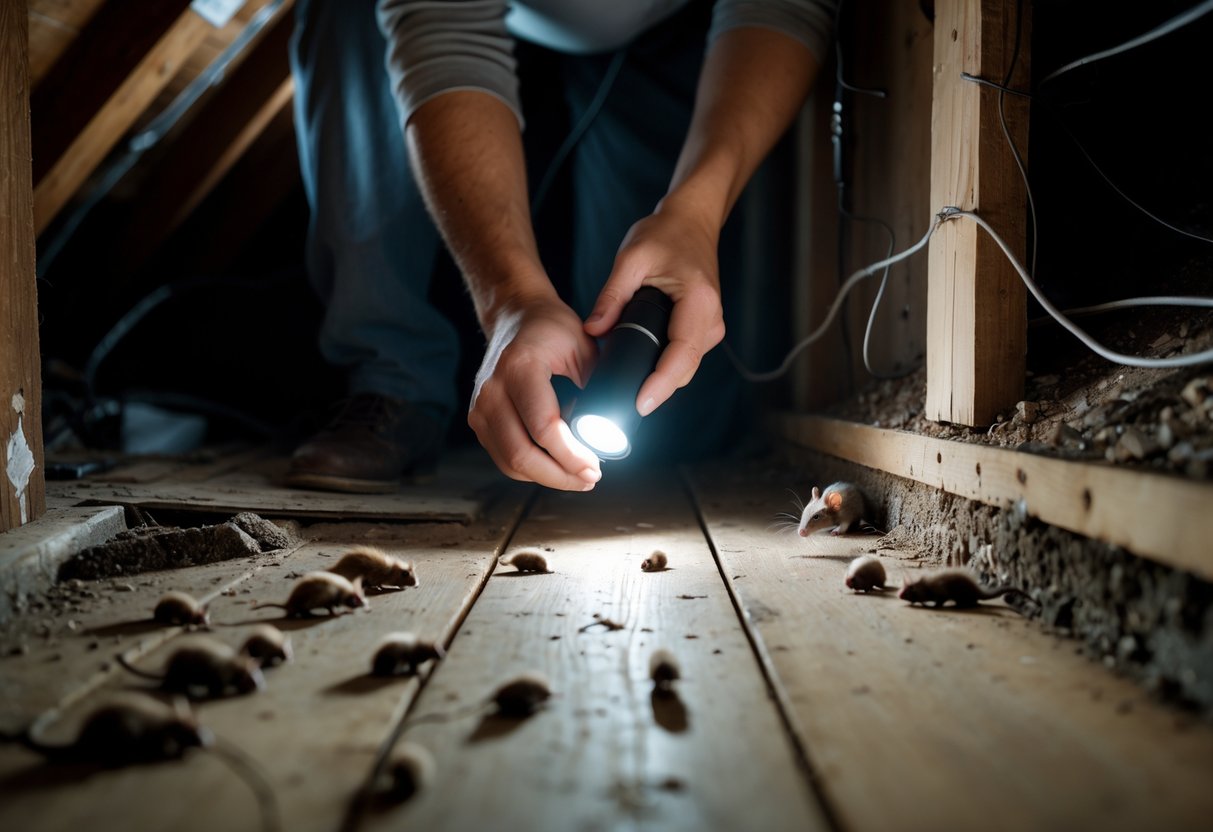
You might pick up on other hints, too. Strange, musky smells? Greasy tracks along the walls? Sometimes you’ll even stumble across messy nests built from shredded paper or fabric.
Don’t ignore your pets, either. They sometimes act jumpy or fixate on certain spots if they sense rodents before you do.
Spotting these signs early lets you tackle the problem before it spirals. If you catch rats fast, you can protect your home and your family. There’s a lot to watch for, but it’s worth knowing what to check and how to respond.
Common Signs You Have Rats

If you start noticing odd things around your place, rats might be the culprits. These signs can tip you off before things get out of hand.
Finding Rat Droppings
Rat droppings are a dead giveaway. They’re dark, shaped like grains of rice, and usually show up near food, along baseboards, or in hidden corners.
Fresh droppings look shiny and damp, while old ones turn dry and crumbly.
You’ll often find them in kitchens, attics, basements, or storage spaces. If you see a lot, you probably have more than just a couple of rats.
Be careful when cleaning them up—rat droppings can carry diseases.
Gnawed Food and Chewed Materials
Rats love to chew, and they don’t discriminate. If you find food packages with holes or bite marks, that’s a strong sign.
They’ll also gnaw on wood, wires, plastic, and even paper. This can lead to damage inside walls or furniture, and chewed electrical wires are a real fire hazard.
Those gnaw marks usually look rough and uneven. Check your stored food and belongings now and then, just in case.
Hearing Scratching or Scurrying Sounds
Rats are mostly night owls, so you might hear scratching, rustling, or squeaking after dark. The sounds usually come from inside walls, under floors, or up in the ceiling.
If you hear these noises a lot, it’s likely rats moving around. Sometimes it’s just soft scurrying, but other times it gets loud when they’re nesting or chewing up stuff.
Distinctive Foul Odors
A strong, musty smell can mean rats are hiding out. Their urine and droppings give off an ammonia-like stink, especially in closed spaces.
You’ll notice the smell most in attics, basements, or tucked-away areas where rats tend to gather. If you can’t get rid of a weird odor no matter how much you clean, rats might be the reason.
The smell can linger until you clean up all the droppings and nests.
For more info, check out 9 Signs of a Rat Infestation You Should Watch Out For.
How to Distinguish Rats From Mice and Other Rodents

If you want to tell rats and mice apart, look at the details. Droppings, body shapes, and habits can all help you figure out which rodent you’re dealing with.
Differences in Droppings
Checking droppings is one of the easiest ways to tell the difference. Mouse droppings are tiny, about 1/8 inch long, and look like little grains of rice with pointy ends.
You’ll usually find them near food—think cupboards or pantries.
Rat droppings are much bigger, around 1/2 to 3/4 inch long, and have blunt or rounded ends. Rats tend to leave these near entry points, along walls, or in hidden corners.
Since rats are larger, their droppings are hard to miss. If you see droppings scattered around, pay attention to their size and shape to figure out what you’re up against.
Physical Characteristics
Rats and mice aren’t hard to tell apart once you look closely. Mice are smaller, usually 2.5 to 4 inches long, and their ears look big for their heads.
Their tails are thin and often as long as their bodies. Mice have soft fur and pointed noses.
Rats are bigger—think 6 to 9 inches long—with thick bodies. Their ears are smaller compared to their heads, and their tails are thicker and scaly.
Rats have blunt noses and rougher fur. Norway rats look stocky, while Roof rats are slimmer and have longer tails.
If you pay attention to these details, you’ll have a much better shot at figuring out which rodent has moved in.
Behavioral Clues
Rats and mice act pretty differently when they get into your home.
Mice usually act curious. They’ll check out new places fast, poking around for anything interesting. You’ll often find their nests close to food, and they love using soft stuff like shredded paper or insulation. Mice seem to prefer hiding inside walls or cupboards, especially when there are crumbs around.
Rats don’t like change as much. They stick to spots they already know. Norway rats dig burrows underground or hang out in basements. Roof rats, on the other hand, climb up and nest in attics or even trees. Rats chew with more force than mice, and they can bite right through wood or wires if they want.
Both animals mostly come out at night. If you hear scratching or quick little footsteps, that’s probably them moving around.


