
Ever heard weird noises above your head and wondered if rats could actually move around up there? Well, they can. Rats are surprisingly good climbers and can crawl along walls and ceilings if there’s something rough or a beam to grab onto. So yes, rats can crawl across ceilings, using anything sturdy enough to support them.
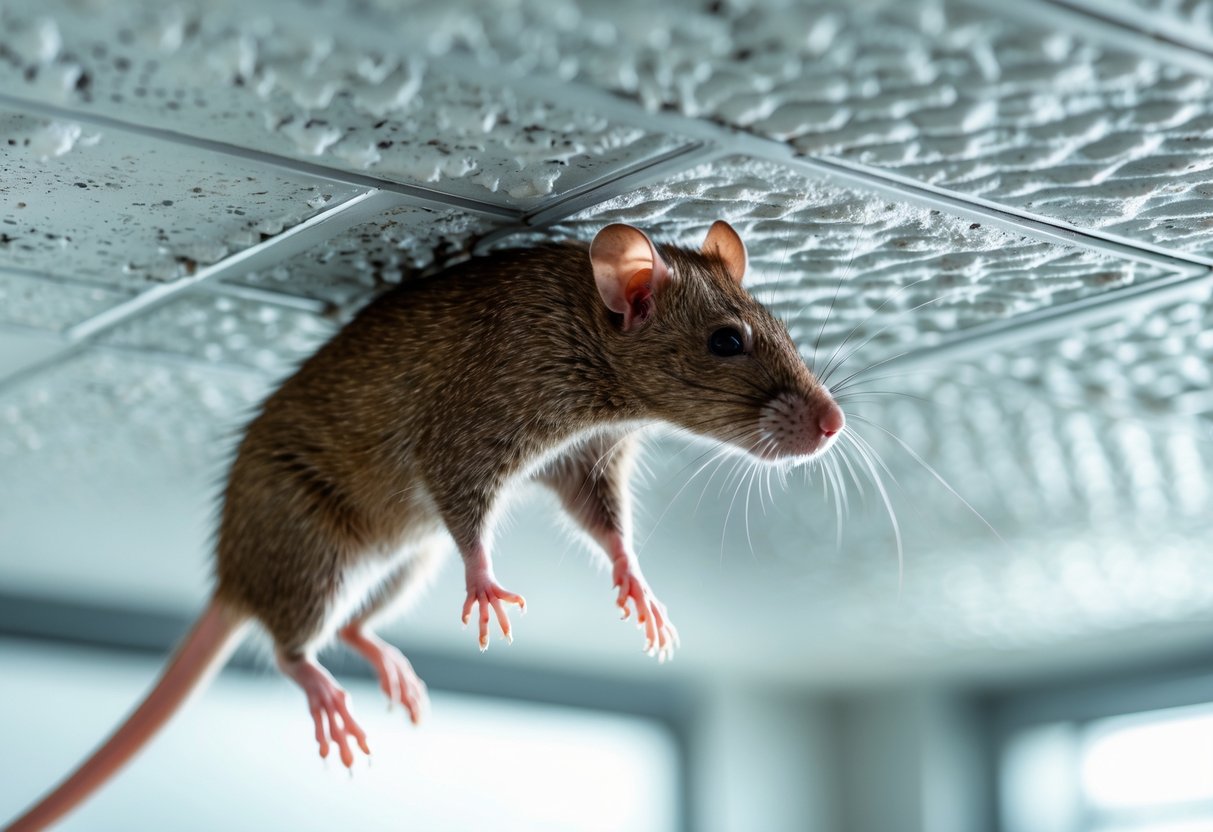
This skill lets rats sneak into all sorts of unexpected places in your house. It’s honestly a bit unsettling, but knowing how they get up there helps you spot problems before they get out of hand.
If you know how clever rats can be at climbing and hiding, you’ll be more prepared to protect your home. It’s not just about the noise—they can cause damage and health risks, too.
Let’s look at how rats move and what you can do if you suspect they’re above you.
Can Rats Crawl Across Ceilings?

Rats climb well and use ceilings to get around your house. They like high places because they feel safer and can dodge danger more easily.
If you know how they climb and why they choose ceilings, you’ll have a better shot at keeping them out.
Rat Climbing Abilities Explained
Rats can climb almost anything. Their sharp claws grip rough walls, pipes, and even wires.
They squeeze through holes as small as half an inch. So, yeah, they get into some pretty tight spots.
Rats move with surprising agility. You might be amazed at how they scamper along narrow ledges or balance on thin wires.
Roof rats stand out as the best climbers. They scale brick walls and leap between trees and rooftops.
Since rats are light and quick, they move across ceilings and other high spots without much trouble.
Why Rats Use Ceilings and High Spaces
Ceilings give rats shelter and cover from predators like cats or birds. Being up high helps them avoid people and stay hidden.
Ceilings have entry points like vents, holes, and pipes. Rats use these to get inside.
Rats travel quietly across ceilings. The sounds you hear overhead often come from their movement inside walls or attic spaces.
This lets them move around unseen, searching for food or places to nest.
If you hear scratching or odd noises above you, rats might be using your ceiling as a secret path.
Types of Rats Found in Ceilings
You’ll usually find two types of rats in ceilings: roof rats and Norway rats. Roof rats are smaller, lighter, and better at climbing.
They often live in attics or ceilings, making nests in dry, hidden places.
Norway rats are bigger and stick closer to the ground, but they can climb into ceilings if they need to. If you notice movement in high spots or in your attic, roof rats are probably the ones to blame.
Both types chew wires and insulation, so you’ll want to deal with them quickly. For more on this, check out how to get rid of rats in walls and ceiling.
Preventing and Getting Rid of Rats in Ceilings

Rats hiding in your ceiling can be a real headache. If you spot them early and use the right approach, you’ll get rid of them faster.
Stopping them from coming back is just as important, honestly.
Identifying Signs of Rats in Ceilings
Listen for scratching or scampering sounds, especially at night when rats get busy. You might notice chewed wires, droppings, or greasy marks along beams or in the corners.
Look for small holes or gaps near vents or along roof edges. Damaged insulation or piles of nesting material in the ceiling are big clues.
Try using a flashlight to check these areas. You’ll spot things you might otherwise miss.
If you catch a whiff of ammonia or a musky odor, that could mean rats have built a nest nearby. Paying attention to these signs is your first step in keeping rats under control.
Proven Methods for Removal
Start by sealing up every entry point with steel wool and caulk. That blocks their usual paths.
Clear out food sources and any clutter where they could hide nests.
Set traps to cut down the rat population. Using a mix of methods tends to work best.
If things get out of hand, call in pest control pros. They have stronger tools and know how to remove rats safely.
After you’ve treated the area, keep it clean and dry so you don’t attract new rats. Check your ceiling space regularly to catch any new problems.
Best Traps to Use in Ceilings
Snap traps are usually the best bet. They kill rats quickly and fit easily along rat paths in the ceiling.
Bait them with peanut butter or bacon for better odds.
Live traps let you catch and release rats, but you’ll need to check them often. If you prefer a humane option, these work well.
Electronic traps kill rats instantly with a small electric shock. They’re safe for indoor use and you can reuse them, but you’ll need batteries and to be careful where you put them.
Always wear gloves when setting or emptying traps. Check them daily and dispose of any caught rats safely.
How to Prevent Rats from Returning
Trim back branches and trees that hang near your house. This blocks rats from jumping onto your roof or sneaking into the eaves. I always try to keep vegetation at least 3-4 feet away, just to be safe.
Store food and pet food in sealed containers. Make sure you keep trash bins tightly closed, too.
Clean up spills and crumbs as soon as you notice them. It’s surprisingly easy for rats to find even the smallest mess.
Check your home every few months for new holes or signs of damage. If you spot gaps, fix them right away using steel wool, metal flashing, or some tough caulk.
Try using natural repellents like peppermint oil around entry points. Some people swear by ultrasonic devices, but honestly, they work best when you use them alongside physical barriers.
If you want more detailed tips, check out this guide on how to get rid of rats in walls and ceilings.


