
Ever wondered how frogs actually bring new life into the world? It might not be what you expect. Most frogs don’t give birth to live babies like mammals do. Instead, they lay eggs—usually in water—and those eggs hatch into wiggly tadpoles that eventually turn into frogs. It’s a simple process on the surface, but honestly, it’s pretty fascinating when you dig in.
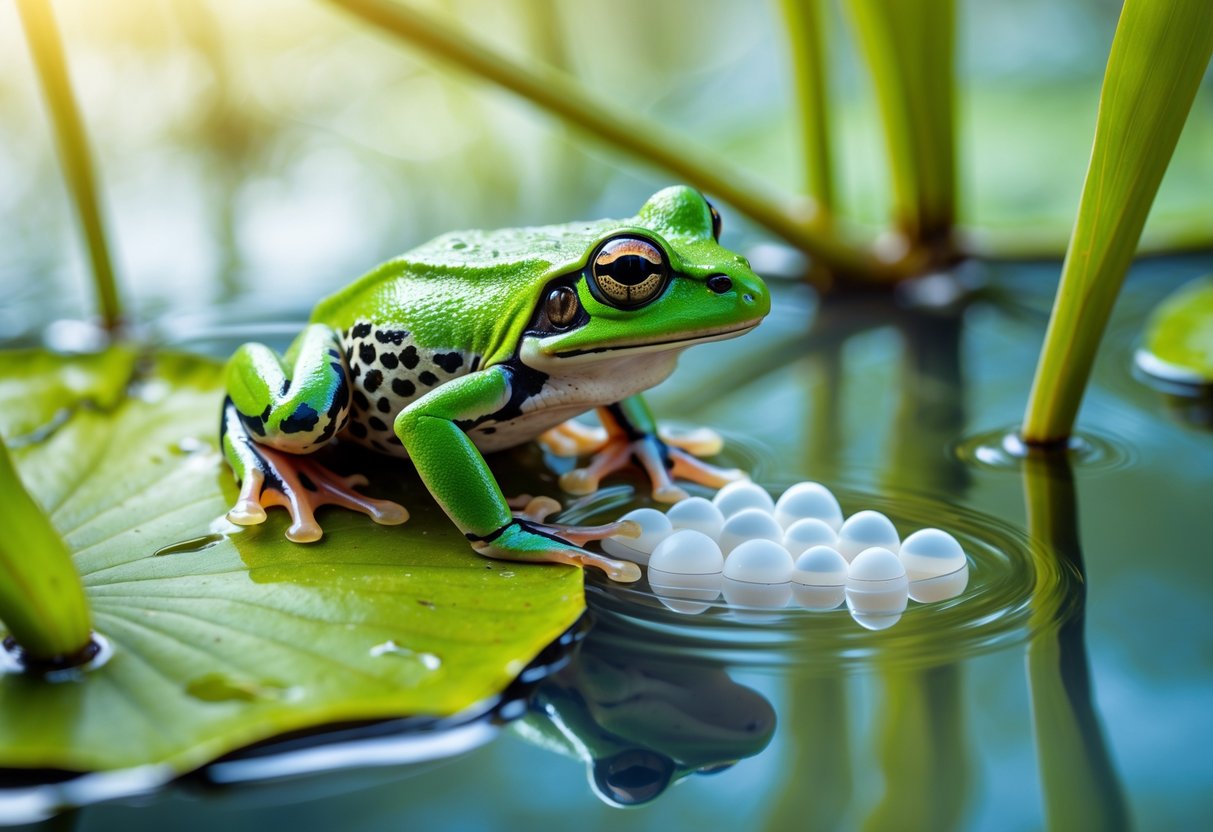
Frogs have all sorts of unique ways to reproduce, depending on their species. Most lay eggs that the male fertilizes outside the body, but there are some weird exceptions—like a frog that actually gives birth to live tadpoles. If you’re curious about those special cases, you’re not alone. They really make frog reproduction even more interesting.
Learning how frogs reproduce gives us a glimpse into their wild life cycle and how they manage to survive. Once you know the basics, it’s hard not to appreciate how diverse and, honestly, cool frog birth can be. If you’re into nature facts, these details are worth a look.
How Frogs Give Birth: Reproductive Strategies

Frogs use all kinds of methods to reproduce, depending on what species we’re talking about. Some lay eggs in water and go with external fertilization. Others have figured out internal fertilization or even carry their eggs in unexpected places.
The way frogs act during mating changes how they give birth, too.
Egg-Laying and External Fertilization
Most frogs stick with the classic: they lay eggs in water. When they mate, the female drops hundreds or even thousands of eggs into shallow water. Right then, the male climbs on her back and releases sperm over the eggs, fertilizing them on the spot.
This method, called external fertilization, helps the eggs develop but also means a lot won’t make it. During this time, you might spot frogs piling on top of each other in ponds or puddles—it’s pretty wild to see.
The eggs hatch into tadpoles, which slowly change into young frogs. Laying eggs in water gives the tadpoles a better shot at finding food and making it to adulthood. Want to see this in more detail? The Woodland Trust’s guide on the life cycle of a frog is a good place to start.
Internal Fertilization and Live Birth
Some frogs go a different route and use internal fertilization. In these cases, the male actually inserts sperm directly into the female’s body, sometimes using a tail-like structure or their cloaca.
A few frogs with this method even give birth to live young instead of laying eggs. These babies can be tiny froglets, skipping the whole tadpole phase. That’s a big advantage in tough environments.
Internal fertilization isn’t common, but it makes sure the sperm gets to the eggs. The species Ascaphus truei is a classic example—they use a tail-like organ during mating. If you want more info, the reproductive system in anuran amphibians review goes into this in depth.
Unique Cases: The Fanged Frog
Let’s talk about the fanged frog—it’s kind of an oddball. Instead of laying eggs in water, the males guard eggs on land.
After fertilizing the eggs, the male hangs around and carries the tadpoles on his back to water or damp spots once they hatch. This keeps them safe from predators and drying out.
This kind of care shows how some frogs adapt their parenting to survive in different places. For more weird and wonderful examples, frogs-friends.org’s article on reproductive strategies is worth a read.
Mating Behaviors and Amplexus
The mating embrace—called amplexus—plays a huge role in frog reproduction. During amplexus, the male grabs onto the female, usually in water, to fertilize the eggs as she lays them.
There are different types of amplexus. Males might hold the female around the waist, head, or even her armpits. This grip makes sure sperm lands right where it needs to.
Before amplexus, some frogs use calls, visual signals, or even scents to attract a mate. Males can get pretty loud when they’re trying to impress.
Understanding amplexus gives you a sense of how frogs manage to keep reproducing, even when the environment isn’t exactly friendly. For more on this, A-Z Animals explains it really well.
Habitats, Adaptations, and Diversity in Frog Reproduction

Frogs live pretty much everywhere, and their birth methods are just as varied. How they reproduce depends a lot on their habitat and what they need to survive.
You’ll see different strategies in ponds, streams, and other watery spots that suit each species.
Influence of Ponds and Streams on Birth Methods
In ponds, frogs usually lay their eggs in big clusters right on the water’s surface. This makes it easy for tadpoles to hatch and swim around. The calm water means eggs aren’t likely to get washed away.
Streams are a bit trickier—faster water can be dangerous. Frogs that live near streams often stick their eggs under rocks or attach them to plants to keep them safe. These eggs might hatch faster, just to avoid getting swept off.
A lot of frog species have adapted to these different environments, depending on what works best for them.
Adaptations to Different Environments
Frogs have come up with clever ways to protect their eggs and babies in tough places. Some lay eggs that stick to leaves or even the backs of female frogs. That way, the eggs don’t dry out or get eaten as easily.
A few species skip the tadpole stage and give birth to tiny froglets. This usually happens in frogs living in dry areas or places where water is risky or hard to find.
You’ll find these special frogs in rainforests and sometimes on land, far from water. These adaptations help frogs survive in spots that would be way too rough for most eggs or tadpoles.
Evolutionary Diversity of Frog Species
Frogs show a surprising range of birth methods, all shaped by evolution over millions of years. Most frogs actually use external fertilization—males and females both release eggs and sperm right into the water.
But that’s not the whole story. Some frogs go for internal fertilization instead, with the male fertilizing eggs inside the female. These frogs might even give birth to live young, like little froglets or tadpoles.
A few rare frogs, like the Surinam toad, really break the mold. Their babies grow on the female’s back, which is just wild if you think about it. And then there are some frogs that once kept eggs in their stomachs—nature gets creative, doesn’t it?
All this variety in how frogs reproduce? It really highlights how different species adapt to their own habitats just to make it. If you’re curious, the Britannica frog and toad reproduction article digs deeper into how environments shape frog diversity.


