
Ever wondered if rats leave your attic during the day in the UK? Well, honestly, they usually don’t. Rats tend to be nocturnal, hiding out in your attic when it’s light out to avoid danger. So, during the day, they mostly keep quiet and still, making it tricky to notice them unless you really pay attention.
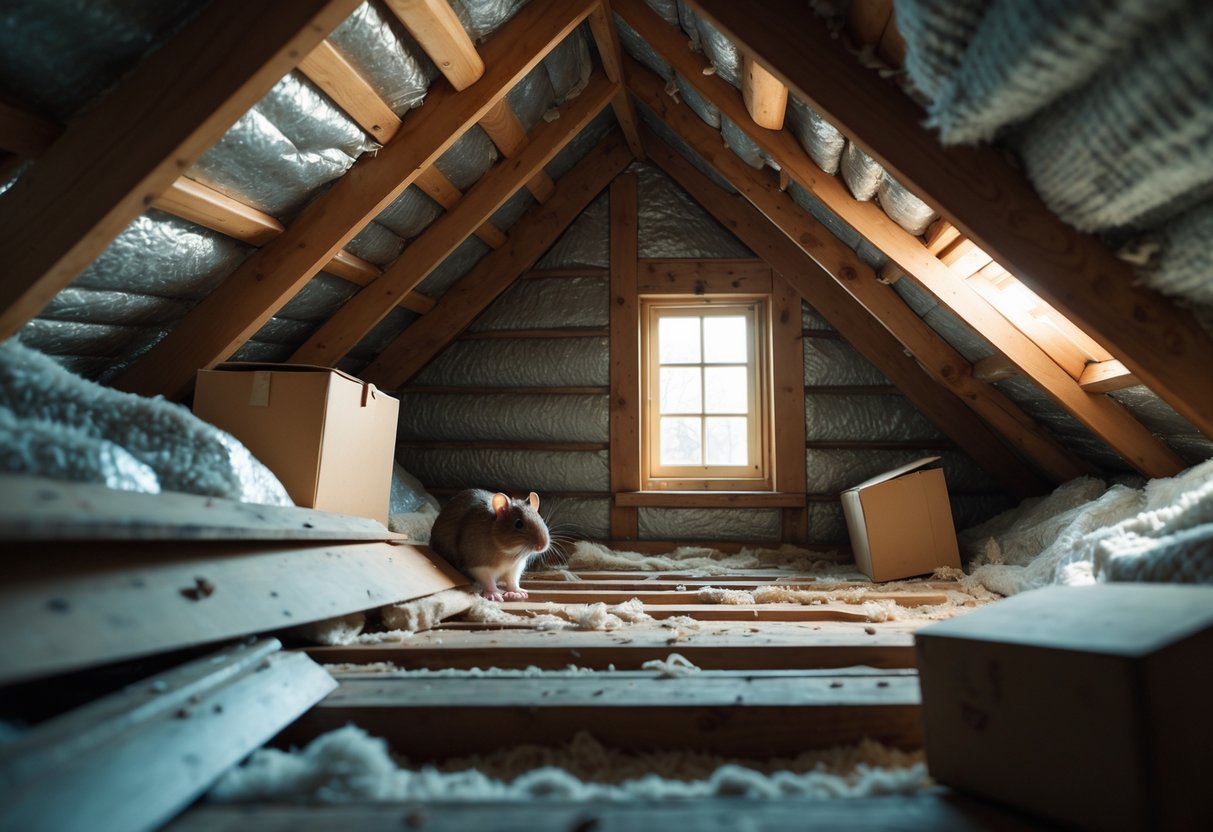
At night, you might hear them rustling around, searching for food or just being generally busy. If you know what to listen for, you can pick up on these signs early and do something about the problem before it gets worse.
Do Rats Leave the Attic During the Day in the UK?

Rats usually come out at night, but sometimes you might catch them during the day. It depends on how many rats there are and what’s going on around them.
If you know what to expect, you’ve got a better shot at spotting the signs and dealing with it early.
Typical Rat Behaviour in Attics
In the attic, rats mostly stay hidden when it’s light out. Being nocturnal, they wake up and get moving once it’s dark.
During the day, they rest in nests they’ve made out of insulation or whatever soft stuff they can find. If you see rats wandering around in daylight, that’s not a great sign—it could mean there are a lot of them up there.
Sometimes, older or weaker rats come out during the day because they can’t compete with the stronger ones at night. Rats also chew on wires, wood, and insulation to keep their teeth in check.
Factors Influencing Daytime Activity
A few things can push rats to come out during the day. If there’s a lot of noise or people moving around at night, rats might adjust and sneak out earlier.
When food gets scarce, they’ll risk searching during daylight. Big colonies mean more competition, so the less dominant rats sometimes venture out in the day just to avoid a fight.
Weather can also play a part—if it’s really extreme or there are strong smells like predators or chemicals, rats might leave their hiding spots when it’s light.
Signs You Have Rats in the Attic
Here are some signs you might have rats up there:
- Scratching sounds at night and sometimes during the day.
- Rat droppings near food or nesting spots.
- Chewed-up wires, wood, or insulation.
- Greasy marks or little footprints along beams or walls.
- That strong, musty smell from their urine or nests.
If you spot rats in the daytime or notice any of these clues, you probably have an infestation. Move quickly to avoid damage or health issues.
For more tips on getting rid of rats, check out how to get rid of rats in the attic.
How to Manage and Prevent Rats in Your Attic

Rats in the attic can create all sorts of headaches—chewed wires, ruined insulation, and just general mess. You need to block their way in, get rid of any rats already there, and make sure they don’t come back.
Taking these steps makes your home safer and a lot less stressful.
Sealing Entry Points and Decluttering
Check your attic and the outside of your house for cracks or holes. Rats can squeeze through gaps that barely look big enough for a pencil.
Seal up every opening around pipes, vents, and the roof with steel wool, metal mesh, or caulk. Don’t leave old boxes, wood piles, or clutter lying around—rats love hiding in that stuff.
Clear out crumbs or rubbish that might attract them. If you keep things tidy, rats have fewer places to hide or nest.
Effective Trapping Methods
Set up humane or snap traps along walls or wherever you’ve seen signs of rats. Peanut butter works well as bait—rats can’t seem to resist it.
Space your traps about 3 to 5 feet apart to cover the main routes rats use. Try to avoid poison, especially in the attic, because if rats die inside your walls, you’ll have a nasty smell and a tricky cleanup.
If you do use poison, keep it far from pets and kids. You can also use motion-sensing cameras to check if rats are still around or if your traps are doing the job.
When to Call Professional Pest Control
If you spot a lot of rats around, or you’ve found serious damage like chewed-up wires, it’s probably time to reach out for expert help. Pest control pros use tools and tricks most of us don’t have, and they know how to get rid of rats safely.
They’ll actually hunt down and seal up the sneaky entry points you might never notice. Plus, they can offer advice on keeping rats out for good.
If you want real, long-term rat control and you’re serious about protecting your home’s wiring, calling in the professionals just makes sense.
For more tips on sealing and trapping, check out this guide to how to get rid of rats in the attic.


