
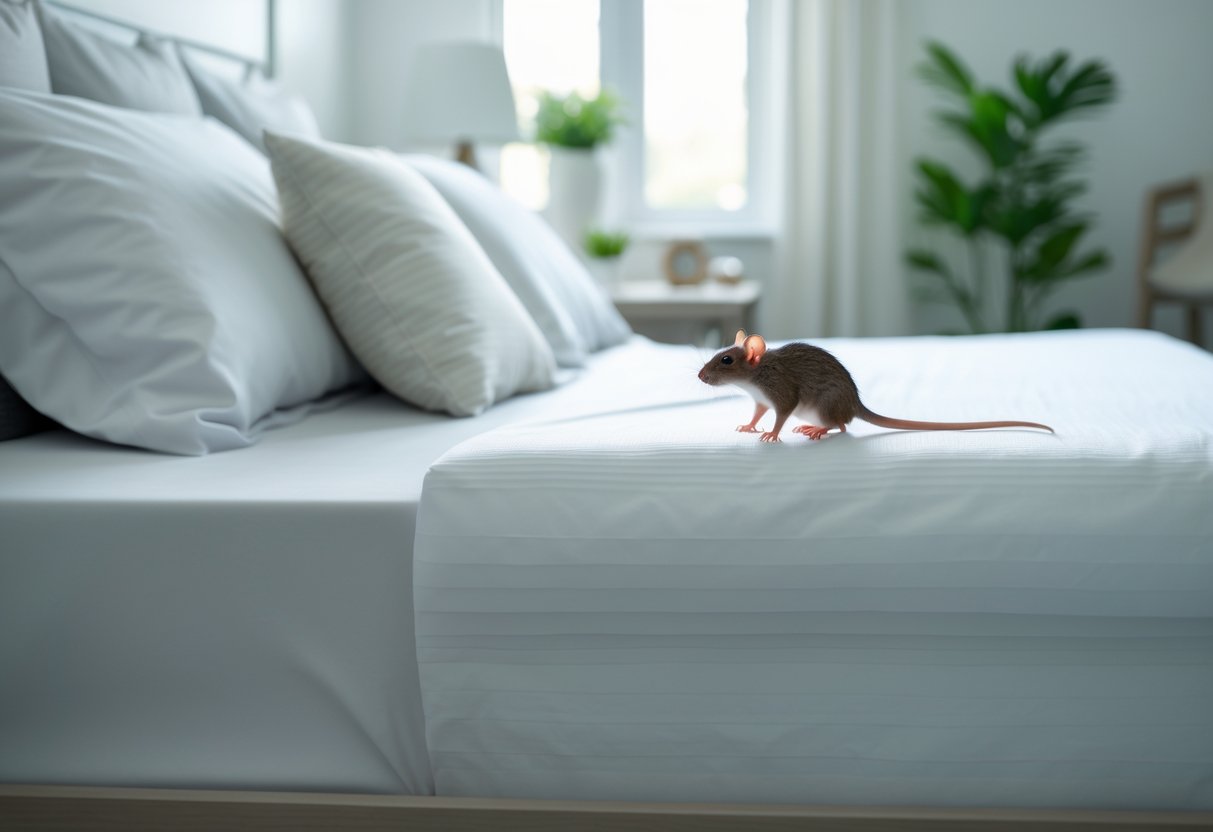
So, you’re probably wondering if rats can actually climb onto your bed. The answer’s a bit unsettling: yes, they can. Rats are surprisingly skilled climbers, and if there’s a way up, they’ll find it.
They’ll use furniture, piles of clothes, or anything close by to scramble up and check things out.

Most people don’t expect to see a rat on their bed, but these little creatures are clever and pretty determined. If your room has food crumbs, clutter, or even small gaps, it’s basically an open invitation for them.
It’s a good idea to know how rats move around and what attracts them. That way, you can keep your bed a rat-free zone and avoid any nasty surprises.
If you’re curious for more, here’s an article on rats climbing on beds.
Do Rats Climb Onto Beds?

Rats can climb and reach places that might surprise you, including your bed. They usually get up there by using furniture or clutter as little ladders.
You might spot signs like droppings or chewed-up bedding if rats have been around. They’re drawn to beds looking for food, warmth, or a quiet place to hide.
How Rats Access Beds
Rats climb walls, jump onto furniture, and use stuff like nightstands or piles of clothes to get to your bed. They squeeze through small gaps or holes to sneak into your room and, eventually, your sleeping area.
Even high beds aren’t much of a challenge—if there’s something nearby to climb, they’ll use it.
Clutter or even pet rats can make it easier for wild rats to get up there. They usually explore at night, moving quietly while you’re asleep.
So, if you ever wondered how a rat might get up there, it’s usually by climbing or jumping from nearby surfaces.
Signs of Rats on Your Bed
You might see small black droppings on your sheets or mattress. Sometimes, they chew fabric, bedding, or even furniture close to your bed.
A weird, musty smell can also mean rats have been visiting.
If you wake up with itch marks or find little scratches, a rat could be to blame. Rats might bite if startled, though it’s not super common.
Checking your bed for these signs now and then can help you catch a rat problem before it gets out of hand.
Why Rats Are Attracted to Beds
Rats usually come to beds because of food crumbs or grease left from late-night snacks. They also want warm, quiet places to hide, especially after dark.
Beds surrounded by clutter or food give rats a perfect spot to nest.
Pet rats sometimes hang out on beds, which can attract wild rats sniffing around for company or territory. If you keep snacks near your bed, don’t be surprised if rats keep coming back for an easy meal.
Keeping your bed clean and free from food can really help cut down on this risk.
For more info on how rats climb and why they might show up, take a look at this article on rats climbing onto beds.
Health Risks and Prevention Strategies
Rats can cause serious health problems if they get into your home. They carry diseases and pests, and they often sneak in through tiny holes or gaps.
You can protect yourself by knowing what to look out for, blocking their entry points, and using good rat control methods.
Diseases Transmitted by Rats
Rats can spread several nasty diseases. Some of the worst ones are plague, hantavirus, and leptospirosis.
These illnesses spread through rat bites, urine, droppings, or even fleas that hitch a ride on rats. Hantavirus can cause bad breathing problems, and leptospirosis might lead to fever or organ damage.
A rat bite can cause rat bite fever, which brings fever, rashes, and joint pain. Fleas from rats sometimes carry plague, which, while rare, is pretty serious.
Try to avoid contact with rats and their droppings, and always clean with disinfectants if you find any evidence.
How to Seal Up Entry Points
Rats can squeeze through holes as small as a quarter inch. To stop them, check your home for gaps and cracks—especially around doors, windows, pipes, and vents.
Seal these with steel wool, caulk, or metal mesh. Don’t bother with plastic or rubber; rats chew right through that stuff.
Look at places where wires or cables go through walls, and make sure window screens are tight. Give your foundation and rooflines a quick look for any gaps.
Regular maintenance and sealing up possible entry points is one of the best ways to keep rats from getting into your bed or living space.
Effective Rat Control Tips
If rats get inside, you’ll want to deal with them quickly. Try using snap traps or electronic traps—just set them along walls or wherever you’ve noticed rat activity.
Bait stations with poison might work too, but you’ve really got to be careful if you have kids or pets around. Honestly, it’s best to keep your home clean and free of crumbs.
Store your food in sealed containers. Get rid of clutter and take out the garbage regularly, since rats love messy spaces.
Sometimes, even after all that, rats stick around. In that case, you might want to call in a professional to handle the problem safely and help you avoid future infestations.
For more advice on keeping rats away and staying safe, check out prevent and control rats.


