
If you think rats have moved in nearby, it helps to know what their dens look like. A rat den usually looks like a messy, crumpled ball made from bits of shredded paper, fabric, dried grass, and whatever soft stuff they can find around your house.
You’ll often find these nests tucked away in quiet, hidden spots—think basements, attics, inside walls, or maybe behind some old cabinets.
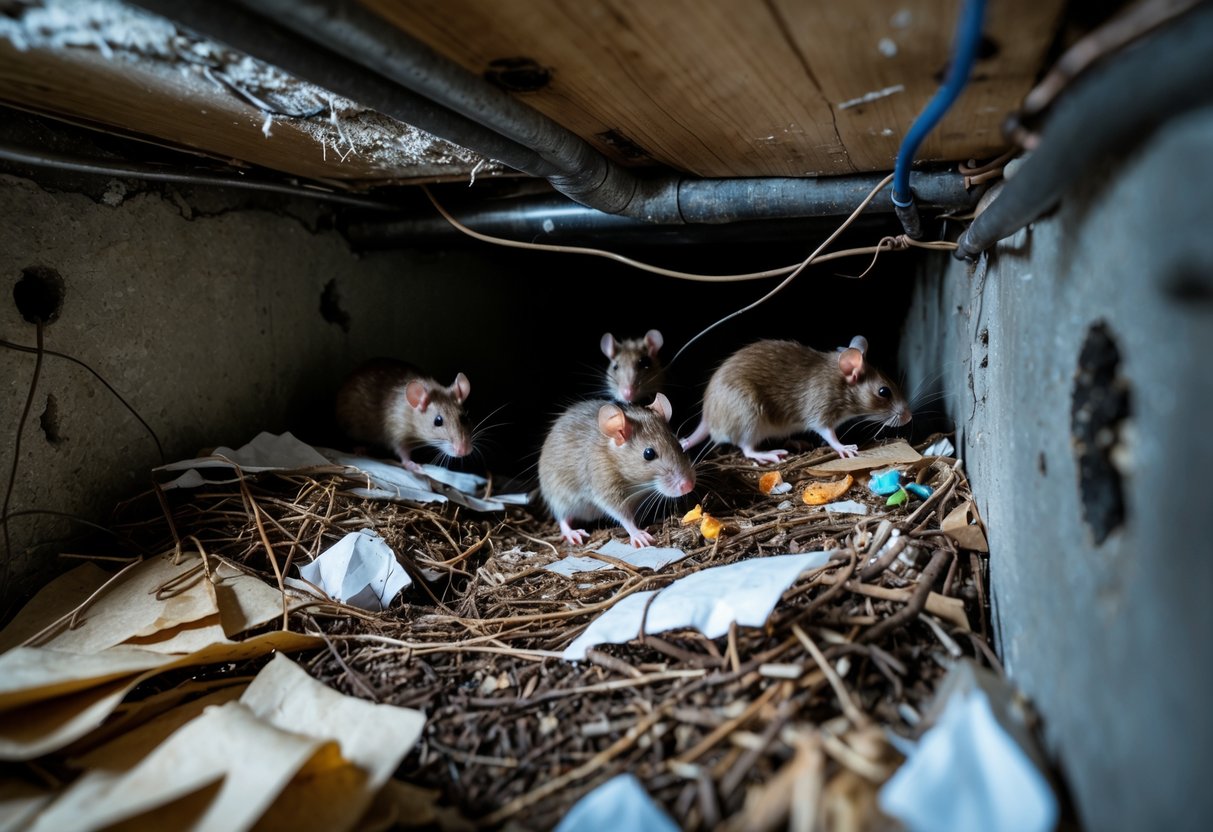
Rats are sneaky. They build their dens where they feel safe from predators and close to food.
You might notice gnaw marks, rat droppings, or tunnels near your home’s foundation. These clues make it easier to spot a rat den and deal with it before things get out of hand.
If you want to keep your home rodent-free, learning what a rat den looks like is a good place to start.
This post will help you recognize those signs so you can jump on the problem right away.
Key Features of a Rat Den

Rat dens can look pretty different depending on what kind of rat you’re dealing with and where they live.
You’ll see nests, burrows, or holes made from whatever they can find, usually tucked into places that give them safety and easy access to food.
Appearance and Materials Used
Most rat dens have a messy, soft nest built from shredded paper, cloth, insulation, and dried plants.
You might spot torn fabric, cardboard, or grass woven into a rough ball or oval shape.
Inside, the den stays warm and protected. The size depends on the rat family, but it’s usually just big enough for them to squeeze in together.
Black rats often build their nests above ground, using softer stuff, while brown or Norway rats dig burrows underground and line them with similar materials.
Watch for loose nesting materials around an entry point. Rats always make sure there are hidden openings for coming and going.
Common Locations Indoors and Outdoors
Rats love dark, quiet spots where they won’t be bothered.
Indoors, check attics, behind walls, under floors, or piles of clutter in garages and basements.
Outside, they go for sheltered places like under decks, wood piles, garden sheds, or thick bushes.
Norway rats dig burrows beside building foundations or under garden debris. Roof rats usually stick to higher places like tree hollows or attics.
Knowing these favorite hiding spots helps you look in the right places if you think rats are close by.
Difference Between Rat Nests, Burrows, and Holes
A rat nest is the cozy, soft part of the den. That’s where rats sleep, breed, and raise their babies.
A rat burrow is an underground tunnel system—Norway rats are famous for these. The nest sits inside, but tunnels branch out for protection and easy movement.
Rat holes are just entry or exit points. They might lead to burrows or nests, and you’ll often see gnaw marks around the edges.
Knowing the difference helps you figure out exactly where rats are living so you can target your pest control.
You can learn more about rat nests and burrows and where they usually show up.
How to Identify the Signs of a Rat Den

If you look carefully, you’ll find clues to a rat den—physical signs, weird smells, and strange noises.
These hints often help you spot where rats are hiding and give you an idea how many might be nesting nearby.
Droppings and Gnaw Marks
Rat droppings are a dead giveaway. They’re dark, shaped like pellets, and about half an inch long.
You’ll usually find droppings near food, nesting spots, or along walls where rats run.
Gnaw marks are another big clue. Rats chew on wood, plastic, wires, and food packages.
Look for fresh, sharp bite marks or damaged stuff—especially near your food storage, cupboards, or baseboards.
Both droppings and gnaw marks point to active rats and help you zero in on their den. Always wear gloves when cleaning up, since rat droppings can carry nasty bacteria.
Distinctive Smells and Noises
A strong, musty odor often means a rat den is close by. Rats give off an ammonia-like smell from their urine, especially in enclosed or hidden places like attics or inside walls.
The smell gets worse if there are a lot of rats.
At night, listen for scratching, scurrying, or squeaking. Rats are most active after dark.
You’ll usually hear these sounds from inside walls, ceilings, or behind stuff you’ve stored away.
If you keep hearing noises from the same spot, there’s a good chance a rat den is nearby.
Noises and smells can help you find a nest even if you never see the rats themselves.
Number of Rats in a Nest
Rat dens usually have more than just a single rat hanging around. Most nests start with a breeding pair and their young, but sometimes you’ll get a whole extended family or even a colony—maybe a dozen rats or more—crammed together.
The number of rats in a nest really depends on how much food and shelter they can find. If you notice lots of droppings or see a ton of gnaw marks in one spot, you’re probably dealing with more than a couple of rats.
Rats breed fast—almost alarmingly so. If you spot early signs of just a few, don’t brush it off; that often means a bigger infestation is right around the corner.
For more details on rat nests and signs, check out rat nest identification.


