
Rabbits are beloved pets, known for their playful nature and soft fur. As a rabbit owner, you might wonder, do they enjoy being held? The answer is that many rabbits do not like being held, as it can make them feel scared or trapped. Each rabbit has its own personality, and while some might tolerate being picked up, others will avoid it at all costs.
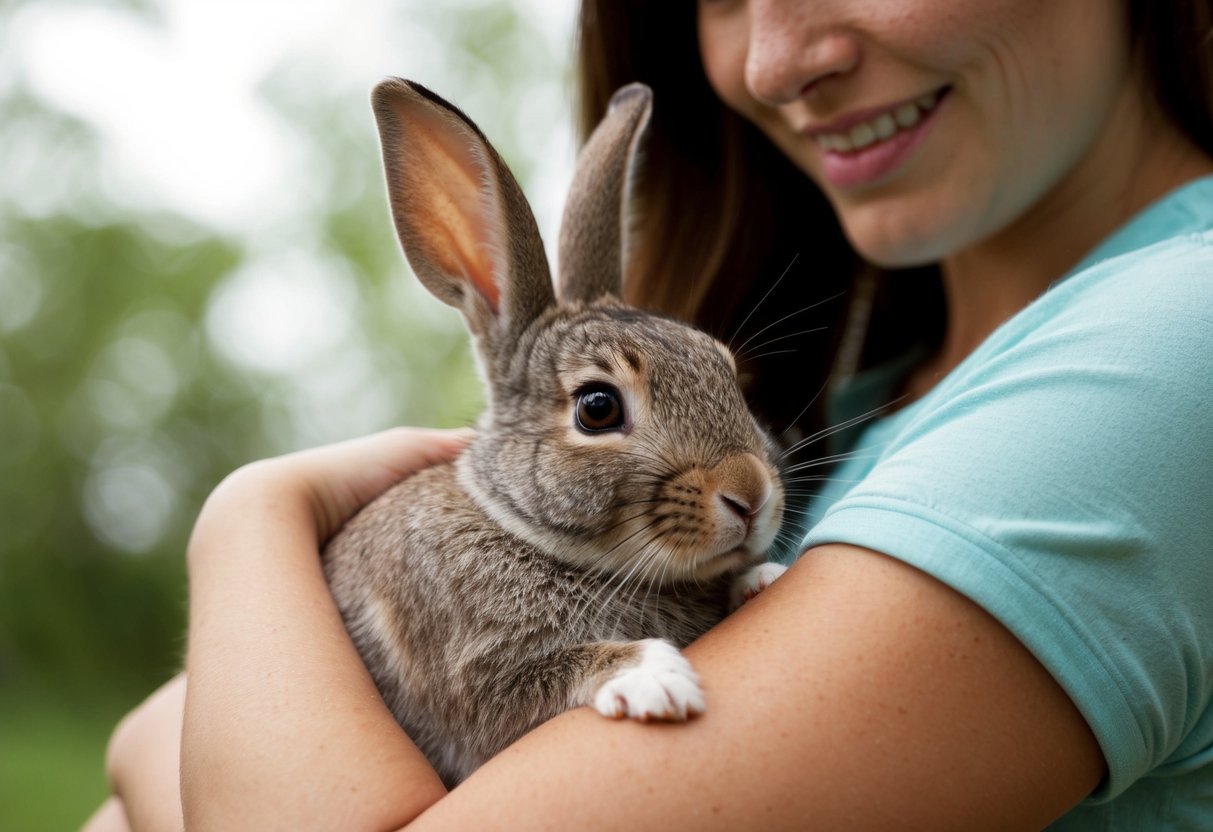
If you’ve ever tried to cuddle your bunny, you may have noticed signs of discomfort. It’s important to understand your rabbit’s feelings when it comes to handling.
Knowing how to approach this topic can help you bond better with your furry friend, ensuring that both of you feel comfortable during your interactions.
In this article, you’ll learn more about rabbit behavior when it comes to being held and tips on how to make your bunny feel safe. Understanding these aspects will not only enhance your connection but also contribute to your rabbit’s well-being.
Understanding Rabbit Behavior

Rabbits have unique behaviors shaped by their instincts and personalities. Knowing these can help you understand how to interact with them effectively, especially when it comes to holding them.
Prey Animal Instincts
Rabbits are prey animals, which means they are wired to be cautious. Their instinct is to flee when they feel threatened. This can happen easily when you try to hold them.
They might struggle or try to escape if they feel confined. When holding your rabbit, make sure you support their body well, so they feel secure.
You can also create a calm environment to help ease their fears.
Understanding this instinct is crucial for building trust. It’s important to respect their need for safety and allow them to explore their surroundings.
Body Language and Communication
Rabbits communicate using body language, which can show their feelings. For example, if your rabbit’s ears are flat against their back, they might be scared or annoyed. If they are relaxed, their ears will be upright and facing forward.
Pay attention to other signs like thumping their feet. This is often a signal of alarm. If your rabbit approaches you with a relaxed body and nuzzles against you, it shows they feel comfortable.
Recognizing these signals will help you understand when your rabbit is open to being held and when they need space. This helps to strengthen your bond.
Personality Differences Among Rabbits
Like people, rabbits have unique personalities. Some may enjoy cuddling and being held, while others prefer their independence. Factors such as breed and past experiences can affect their comfort level.
Gentle breeds, like the Holland Lop, might be more accepting of handling. In contrast, more energetic breeds, like the Netherland Dwarf, might resist holding.
Learn your rabbit’s individual personality by observing their reactions. Spend time interacting with them on their terms. This can help you figure out what they like and dislike for a happier, healthier relationship.
The Art of Holding Rabbits

Knowing how to hold your rabbit properly can help build trust and create a comfortable experience for both of you. Here are some important techniques and signs to watch for, along with common mistakes to avoid.
Proper Techniques for Picking Up
To hold your rabbit correctly, start by making them feel safe. Approach slowly and let your bunny see your hands.
Gently pet them to help calm any nerves.
When you pick up your rabbit, support their body well. Use one hand to cradle their chest and the other to support their hindquarters. Keep a firm grip, but make sure it’s gentle.
Always hold your rabbit close to your body. This helps them feel secure.
If your bunny squirms, don’t panic. Just hold them a little tighter, ensuring they’re safe but not squeezed too hard.
Signs of a Comfortable Bunny
A relaxed rabbit will often show signs of comfort while being held. Look for a bunny that stays still, with their ears in a neutral position. If their eyes are half-closed, it means they feel relaxed.
If your rabbit nuzzles you or leans against you, it’s a good sign they trust you. Cuddling can also be a sign of affection.
A comfortable bunny will usually breathe steadily and might even let out soft sounds.
Always be mindful of your rabbit’s body language. If they seem frightened or start to kick, gently place them back down to let them explore on their own.
Common Mistakes to Avoid
One of the biggest mistakes is picking up a rabbit by the scruff of their neck. This can frighten them and create a lack of trust. Instead, use the proper techniques to provide support.
Another common error is holding them too high or too far from your body. This can make your rabbit feel unstable and scared. Always keep them close to reduce their anxiety.
Avoid sudden movements or loud noises during holding. Both can startle your bunny and lead to an unpleasant experience. Always create a calm environment for your rabbit while you’re cuddling.
Creating a Trusting Bond

Building a strong relationship with your rabbit is essential. A trusting bond allows them to feel safe when you hold them. Here are some effective ways to create that trust.
Bonding Time and Activities
Spend quality time with your rabbit to help them feel comfortable around you.
Engage in activities that promote interaction, such as gentle play or exploring their space together. Offer them toys to encourage engagement.
You can also sit quietly near them, allowing them to come to you when they feel ready.
Gradually introduce your touch by gently petting them. Aim for short sessions at first, then increase the time as your rabbit becomes more comfortable. This approach creates a positive atmosphere for bonding.
Positive Reinforcement Training
Positive reinforcement is a great way to make your rabbit associate being held with good experiences.
Use treats like small pieces of fruit or their favorite veggies when they allow you to pick them up. Praise them with a soft voice to reinforce their good behavior.
Consistency is key. Always reward them when they show interest in being held or approach you.
This will help your rabbit feel more secure and encourage them to trust you over time. Remember that patience is important. Allow your rabbit to set the pace as they learn to accept being held.
The Role of Petting and Affection
Gentle petting can significantly enhance your bond with your rabbit.
Start by stroking their back or sides. Use slow, soft movements to make them feel relaxed.
Pay attention to their body language. If they seem comfortable, continue. If they pull away, give them space.
Also, spend time sitting quietly with your rabbit. This lets them feel your presence without pressure.
Use affectionate gestures like softly talking to them or offering a treat. These actions create a loving environment where your rabbit feels safe. The more affection and comfort you provide, the stronger your bond will grow.
Essential Rabbit Care Tips
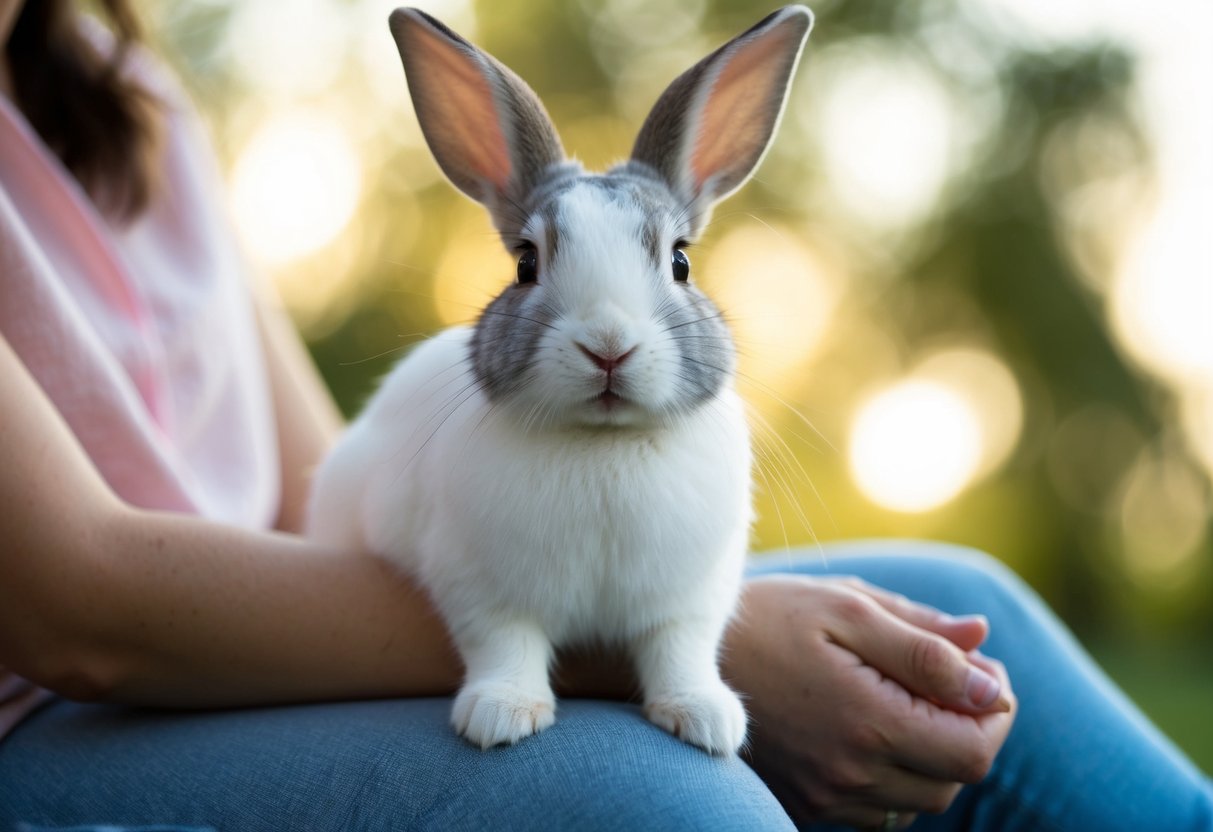
Taking care of a pet rabbit is fun but requires attention. Here are some essential tips to help you provide the best care for your furry friend.
Diet Matters
Rabbits need a balanced diet. Make sure you give them plenty of hay, fresh vegetables, and a small amount of pellets. Avoid giving them too many sugary treats like fruits.
Safe Space
Create a safe and comfortable environment for your rabbit. They need a quiet place to rest and hide. Consider using a cozy rabbit house or a designated area in your home.
Handling with Care
When you pick up your rabbit, make sure to support their body. Gently hold them against your chest. This helps them feel secure and reduces stress. Always pay attention to their body language.
Training Tips
Training your rabbit can improve their behavior. Use small rewards, like treats, to encourage good actions. Start with simple commands and be patient.
Regular Vet Visits
Make sure to take your rabbit to the vet for check-ups. Routine care can prevent health issues and keep your pet happy.


