
Ever wondered if owls actually nest in roofs? Well, the answer’s yes—at least for some of them. Barn Owls and a few others often look for quiet, tucked-away places like attics, roof spaces, or old barns to raise their chicks.
These spots keep them safe from rough weather and sneaky predators. Plus, they can easily get to food nearby.
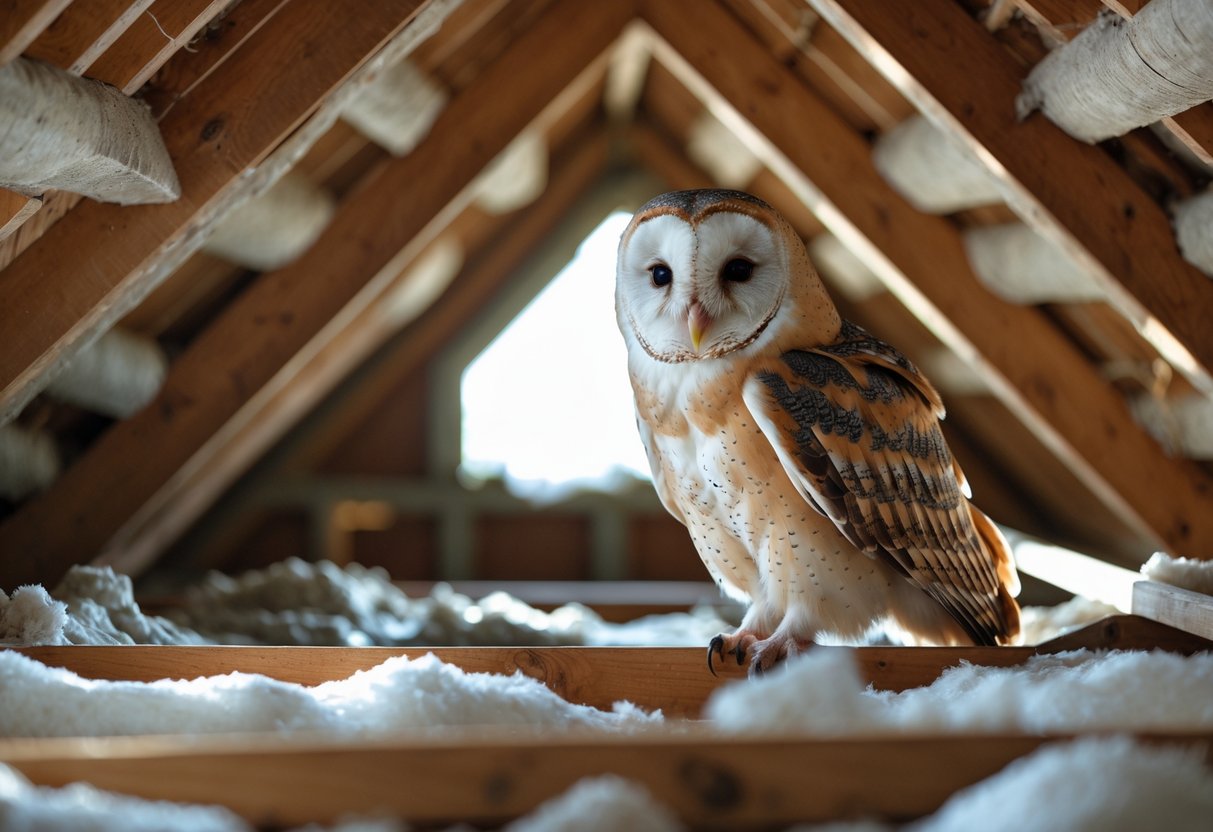
Owls usually don’t bother building their own nests. Instead, they find existing cavities or use abandoned nests in roofs or buildings.
So if your roof has little hidden corners, an owl might find it pretty inviting. You might even hear some nighttime rustling if you live out in the country.
Learning why owls choose roofs—and how they manage to live there—can totally change how you think about them. It’s kind of fascinating how well they adapt to human-made structures, using them almost like tree hollows.
Curious about which owls use roofs and how they pull it off? Let’s get into it.
Do Owls Nest in Roofs and Buildings?

Owls look for places that give them shelter and safety for raising their young. Many species end up using roof spaces or buildings, but they each have their own preferences.
You might spot owls nesting in old barns, attics, or even hollow spots in buildings.
Common Owl Nesting Sites
Owls seek out spots that protect them from the weather and predators. You’ll find them in old barns, roof spaces, chimneys, or attics.
Some owls still prefer hollow trees or rocky cavities, but if those are hard to find, they’ll settle for buildings.
The barn owl especially loves barn roofs and old farm buildings. These places are quiet and hidden, making them perfect for laying eggs and raising owlets.
Wood or stone roofs seem to be their favorites, probably because natural materials feel safer.
Owls don’t gather twigs or build nests like other birds do. They just use holes, ledges, or nestboxes set up in roof spaces or barns.
Which Owl Species Use Roof Spaces?
A few owl species use roofs and buildings, but barn owls are by far the most common. They nest in barns, farm sheds, and building cavities—usually somewhere quiet and at least three meters up.
The great horned owl might use big buildings or roof cavities too, but it usually picks tree nests left by other birds.
Little owls and tawny owls like smaller cavities and usually avoid nesting inside buildings.
You’ll often spot barn owls sticking to rural or farm buildings. Some owls get closer to houses, but not all of them deal well with people around.
Barn owls, though, don’t seem to mind living near farms—even in attics.
Roofs Versus Natural Cavities
Old roofs and buildings can give owls the same kind of shelter they’d get from tree hollows or rock crevices. Protection from rain, wind, and predators matters most, no matter if it’s in a tree or a building.
Natural cavities are still their first choice, but these are getting rare because of logging or farming. When those disappear, owls start using barns, attics, or even chimneys.
Barn owls skip nest-building and just lay eggs on flat surfaces inside these spaces. You might see them in roof spaces with straw, wood, or stone perches nearby—those seem to make them feel more secure.
Distinguishing Owls From Other Birds in Roofs
If you hear odd noises or see birds in your roof, it’s not always owls. Birds like house sparrows, starlings, and swallows love nesting up there too, and they usually build with twigs and mud.
Owls don’t build nests and tend to stay pretty quiet during the day. Barn owls, for example, mostly keep silent and come out at night.
Their nests look like empty holes with barely any nesting material, which is really different from what small songbirds do.
Think you’ve got owls nesting in your roof? Try watching at dusk or dawn when they come and go. Their big size, silent flight, and unique calls make them easy to spot compared to smaller birds.
You can read more about barn owls nesting in roofs at the Barn Owl roosting and nesting places guide.
Supporting Birds That Nest in Roofs
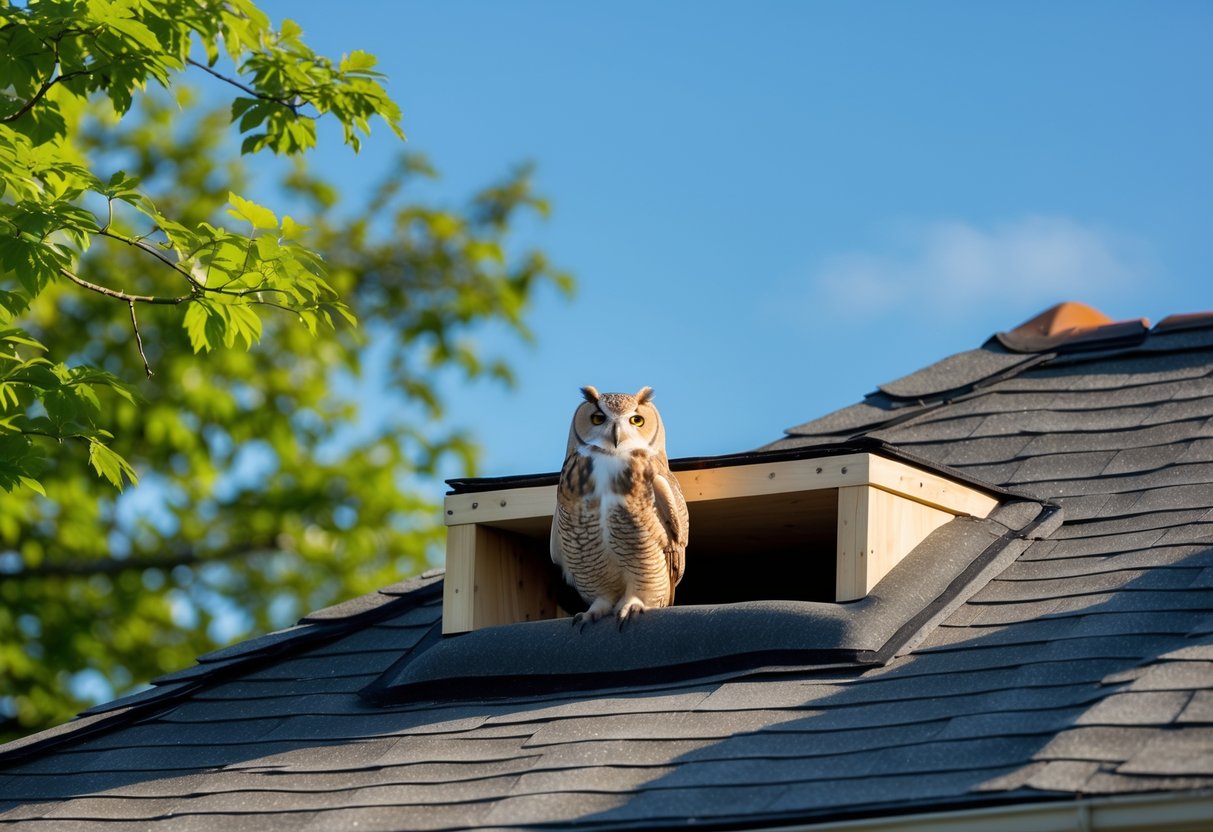
Want to help the birds nesting in your roof? It helps to know why they pick these places, how nest boxes work, and what different birds need.
This way, you can support them without causing problems for your home.
Why Barn Owls and Other Birds Choose Roof Spaces
Barn owls like roofs because they’re safe from predators and nasty weather. Roof spaces are quiet and dark, just right for raising chicks.
These owls usually hunt in open fields, so your roof can be a handy base close to food like voles.
Other birds—like starlings and swifts—pick roofs too, mostly because old trees and hedges are harder to find near people.
Roofs have crevices and gaps that make good hiding spots. During nesting season, these areas give birds warmth and protection for their eggs and chicks.
The Role of Nest Boxes and Installation Tips
Nest boxes help when birds can’t find safe places to nest. For barn owls, use a big box with a wide entrance and put it high up on a building near open fields.
For swifts, nest boxes should be narrow and light, attached under eaves or beams.
When you set up nest boxes, make sure they’re secure and not facing strong winds. Put them at least three meters up to keep predators away.
It’s a good idea to check or clean the boxes after nesting season, so they’re ready for next year.
Differences in Nesting Among Birds Like Swifts, Starlings, and Woodpeckers
Swifts love nesting in tight spaces under roof tiles or eaves. They usually come back to the same nests every year. Since they need open air around their nest for flight, you might want to install swift nest boxes under your eaves—it can make a real difference.
Starlings throw together messy nests with twigs in roofs or tree holes. You might spot them living nearby, though they can get loud and sometimes cause a bit of damage. They breed from late winter through summer, so maybe double-check before clearing out any nests.
Woodpeckers mostly choose tree holes for nesting, but if there aren’t enough trees, they’ll use gaps in wood or even roofs. You’ll often notice them pecking out their own nests, which leaves small holes in wood near your garden or roof. Try putting up nest boxes made for woodpeckers if you’d rather they stay outside your walls.


