
Mother bats play a crucial role in the lives of their young pups. Yes, mother bats do fly with their babies, and they often carry them in their wings for safety. This unique behavior allows them to protect their offspring while searching for food or during their nightly adventures.
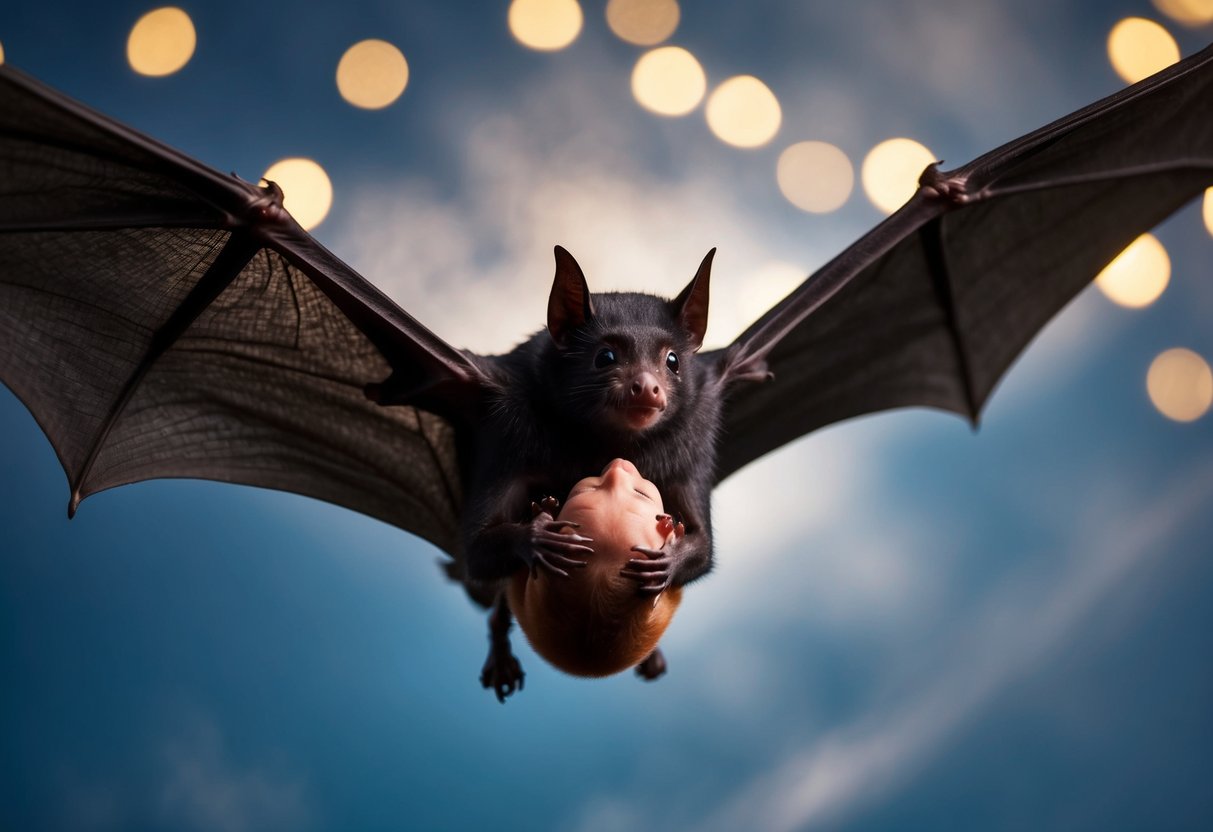
When the pups are first born, they are completely dependent on their mothers for survival. As they grow, mother bats continue to care for them, often carrying them as they fly. This helps the young bats learn about their environment and prepares them for life on their own.
By observing these strong mother bats, you can see how their nurturing instincts create a deep bond with their pups. Each flight is a mix of adventure and learning, making the journey exciting for both the mother and her young.
Reproductive Behavior of Mother Bats

Mother bats exhibit a unique and dedicated approach to raising their young. Their behaviors during maternity and care are fascinating and often essential for the pups’ survival.
Maternity and Birth
When a mother bat gives birth, she usually has only one pup at a time. This is because it allows her to provide better care and protection. The pregnancy lasts around 40 days, varying by species.
After birth, mothers often find a safe spot known as a maternity roost. This roost helps protect them and their young from predators.
Pups are born blind and rely entirely on their mother in the early stages. It’s essential for moms to bond with their young during this time. This connection helps ensure the pup’s survival as it grows and develops.
Nursing and Care
Mother bats nurse their pups for about 30 to 40 days. During this period, they provide milk that is high in nutrients. This milk helps the pups grow strong and healthy.
While nursing, bat moms continue to fly and hunt for food. Often, they carry their young in their wings while foraging. Even as their pups grow, mothers protect them from dangers. This strong maternal instinct ensures that young bats learn to fly and eventually fend for themselves, which is critical for their survival.
Caring for their young is a hard job, but these mothers are committed and protective.
Development Stages of Bat Pups
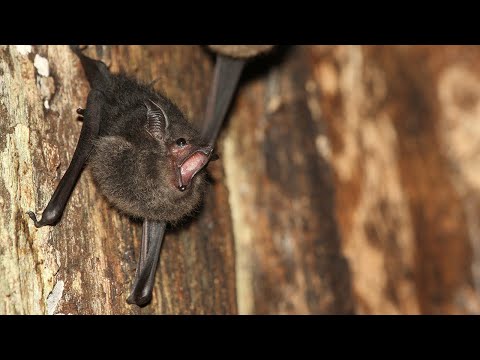
Bat pups go through important stages as they grow. Understanding these stages helps you appreciate their development and what they need to thrive.
Growth Progression
Baby bats, or pups, begin their lives helpless and rely on their mothers for everything. At birth, they weigh about one-third of their mother’s weight.
For the first few weeks, they cling to their mother, staying safe and warm.
As they grow, their bodies change quickly. Pups develop strong forearms that will later help them fly. They vocalize to communicate with their mothers, signaling their needs for food or comfort.
Around three to four weeks, they start to gain independence but still rely on their mothers. During this time, mothers often carry their pups in their wings, ensuring they stay protected while finding food.
Learning to Fly
Learning to fly is an exciting and crucial stage for bat pups. With their strong forearms, they can take short flights within a few nights. During this time, the mother bat plays a vital role.
She encourages her baby bats to practice flying by guiding them back if they fall. Pups use echolocation to navigate their surroundings, helping them develop their foraging skills as they learn.
As they grow more confident, they begin to fly longer distances. They also sharpen their sense of smell, which aids them in identifying food sources. These abilities prepare them to thrive independently in the wild.
Bats in Their Ecosystem
Bats play a crucial role in their ecosystems, influencing various processes such as pest control and pollination. Understanding their diet and habitat can shed light on their importance and challenges they face.
Diet and Foraging Patterns
Bats have diverse diets, which vary by species. Many, like insectivorous bats, consume large amounts of insects, helping to control pest populations. You might be surprised to know that a single bat can eat up to 1,000 insects in one night!
On the other hand, fruit bats, like the Egyptian fruit bat, primarily feed on fruits and nectar. This makes them essential for pollination and seed dispersal. Their foraging habits often affect the health of plant communities.
Bats typically forage at night, using echolocation to find food. This enables them to navigate and hunt effectively, showcasing their unique adaptations.
Habitat and Roosting Sites
Bats need specific habitats to thrive. They prefer roosting sites like caves, trees, and man-made structures. Tent-making bats create roosts by tearing leaves, providing shelter during the day.
Sadly, habitat loss poses a major threat to bats. As forests are cut down and caves are destroyed, their safe spaces shrink. This makes conservation efforts crucial for their survival.
During certain seasons, bats may hibernate or mate in these sites. Maintaining healthy habitats is essential for their reproduction and overall well-being. Protecting these areas ensures bats can continue fulfilling their vital roles in ecosystems.
Challenges and Conservation Efforts
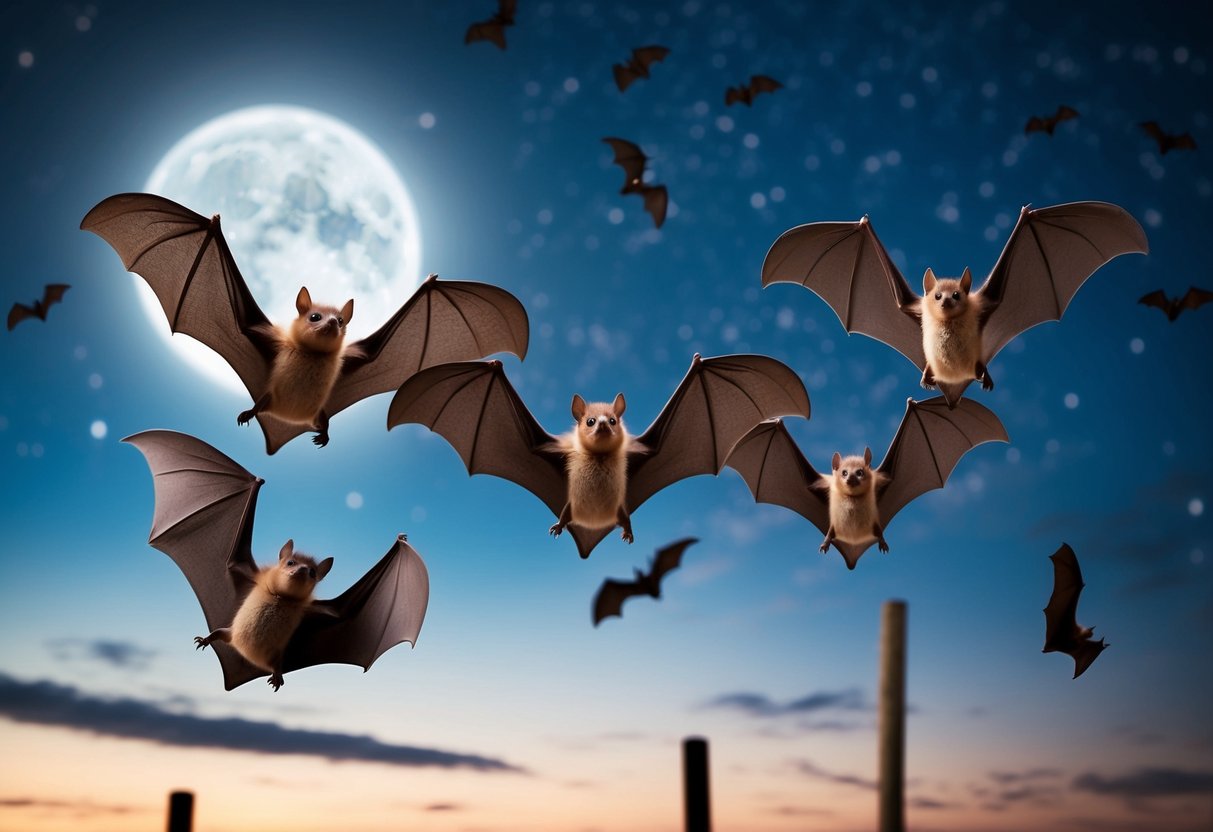
Bats face various challenges that threaten their populations and require effective conservation strategies. Habitat loss and changing environmental conditions significantly impact bat species and their ability to thrive.
Threats to Bat Populations
One of the biggest threats to bat populations is habitat loss. As cities expand and forests are cleared, bats lose their natural roosting sites. This is especially concerning for species like the Mexican free-tailed bats, which need specific environments for maternity season.
Pesticides and pollution also pose dangers. These chemicals can harm bats directly or reduce their food sources, like insects. Additionally, climate change affects bat habitats, altering where they can live and breed.
Diseases, such as white-nose syndrome, have devastated some colonies, especially in temperate regions. This fungal disease is lethal and spreads rapidly among bats, making it a critical concern for conservation efforts.
Conservation Strategies
Conservationists work hard to protect bat populations through various methods. For example, creating protected areas helps safeguard significant maternity colonies. These locations provide safe roosting places for pregnant bats and their pups.
In places like Gamboa, Panama, efforts focus on restoring habitats and raising awareness about the importance of bats in ecosystems. Community programs educate people on how to coexist with bats.
Supporting bat research and monitoring populations is crucial. This helps scientists understand bat behaviors, including how they care for their young. You can also help by keeping natural habitats healthy and advocating for local conservation initiatives.


