
You’re probably picturing a roaring lion and a hulking grizzly, both tense and sizing each other up. Honestly, the grizzly bear would almost always win, just because it’s way bigger, stronger, and can keep going longer than a lion. That’s the quick answer, but it’s worth digging into the details.

Let’s break down how weight, bite force, claws, and fighting style really matter here. We’ll compare body size, weapons, and tactics, plus throw in a few unpredictable factors that could tip the scales if these two ever met.
Just remember, this is all hypothetical—lions and grizzlies live in different places and don’t go looking for fights. Still, it’s fun to see why power and size usually settle these kinds of debates.
Head-to-Head Comparison: Lion vs. Grizzly Bear
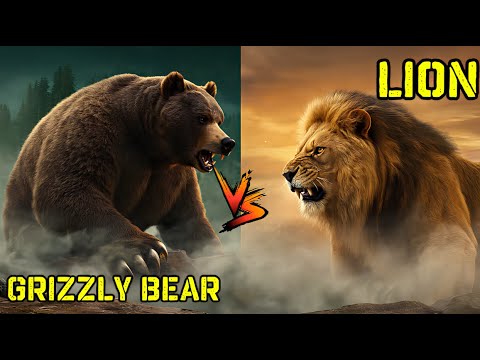
A real fight would come down to size, strength, weapons, and how each animal fights. The lion’s got speed and teamwork instincts. The grizzly brings sheer mass and the kind of power that can snap bones.
Size and Physical Attributes
Male African lions (Panthera leo) usually weigh between 330 and 550 pounds. At the shoulder, they stand about 3.6 feet tall and stretch 8 to 10 feet from nose to tail.
Lions are built for explosive sprints and quick chases. Their bodies are muscular and flexible, perfect for those fast attacks.
Grizzly bears (Ursus arctos horribilis), though, can weigh anywhere from 300 to 800 pounds if we’re talking about adult males. On all fours, they reach 4 to 5 feet at the shoulder.
That extra mass gives the grizzly a serious edge in momentum. Fur and fat make them look even bigger and tougher.
Strength and Raw Power
You’ll notice the grizzly’s got most of its muscle packed in its forequarters and shoulders. That lets it deliver massive swipes and even flip heavy objects or prey.
Bears can move heavier loads than lions of similar height. That’s not just a guess—people have seen it.
Lions, meanwhile, channel their strength into sprinting and gripping. They use their jaws and forelimbs to clamp down during a hunt.
In a one-on-one fight, a lion depends more on agility and timing than pure force.
Claws and Bite Force
A lion’s claws are sharp, curved, and retractable. They use them to grip and slash at prey.
Lion bite force lands somewhere in the hundreds of PSI. That’s enough to cut tendons or puncture organs, especially with a good bite to the neck.
Grizzly claws are longer—2 to 4 inches or more—and they don’t retract. They’re made for digging, but in a fight, they deliver brutal, tearing swipes.
Grizzlies also have a stronger bite force, strong enough to crush bones or even break skulls. Their claws and jaws focus on deep, structural damage, not just quick wounds.
Defensive Abilities
The lion’s mane does more than look cool. It actually protects the neck and throat, making it harder for another animal to get a good grip.
Lions also rely on quick movements and bursts of speed to dodge attacks. That’s their best defense.
Grizzlies, on the other hand, have thick hides and dense fur, plus a hefty fat layer. This combo absorbs slashes and makes it tough for claws or teeth to hit anything vital.
Their low center of gravity and big bodies help them resist being knocked over or dragged. And when it comes to stamina, bears just last longer in a fight than lions do.
Battle Factors and Predator Tactics

If you imagine these two facing off, you’ve got to consider size, weapons, and behavior. How do they hunt? What drives their instincts? And how much does the terrain matter?
Hunting Style and Strategy
Lions hunt with teamwork and speed. A pride will stalk quietly, then launch a sprint to get close to their prey.
They use stealth, then loud lunges and targeted neck bites to finish the job. Alone, a lion still relies on those fast, disabling strikes.
Grizzly bears usually hunt and scavenge by themselves. They don’t use ambushes as much as lions do.
Instead, they depend on brute force and surprise, swinging those long claws to maul whatever’s in front of them. Black bears, by comparison, would rather run or climb than fight.
Predatory Instincts and Face-Off Scenarios
Lions are wired to go for soft spots—throats, bellies—especially when the pride’s around. In a fight, a lion tries to outmaneuver and land rapid, crippling bites.
Big cats use agility and grip to dodge the worst blows.
Bears react differently. A grizzly uses its size, stamina, and raw strength to overwhelm threats.
If it feels threatened, it might bluff charge, stand up, and swing those massive paws. Polar bears act in similar ways, though their bodies and bite mechanics are a bit different.
In a direct fight, the grizzly’s tendency to stand its ground and just maul whatever’s in front of it really changes the dynamic. It’s not like a cat trying to avoid contact—it’s all about power and endurance.
Habitat and Environmental Influences
Location really changes everything, doesn’t it? Imagine the difference between wide-open plains and tangled, rocky forests.
Lions tend to thrive out on the flat savanna. Their speed and teamwork work best when there’s room to move. A lion can sprint incredibly fast, but honestly, it only lasts for a few seconds.
Grizzlies, on the other hand, seem to do better in thick woods or up in the mountains—basically anywhere you can’t just run full-out. Their sheer weight and those massive paws help them on rough ground or when they’re dodging around obstacles.
Cold weather gives bears another edge. Polar and grizzly bears both handle deep snow and long, grueling efforts way better than lions ever could. People change things, too. Sometimes bear behavior shifts around human areas—scavenging at campsites or dumps can pull them into conflicts you’d never see in wild lion territory.


