
Ever been stung by a honey bee and wondered if there’s any hope for the bee afterward? Honestly, honey bees almost always die after stinging. Their barbed stinger gets stuck in your skin, and when they try to fly off, it tears their body apart. It’s a rough deal for the bee, no way around it.
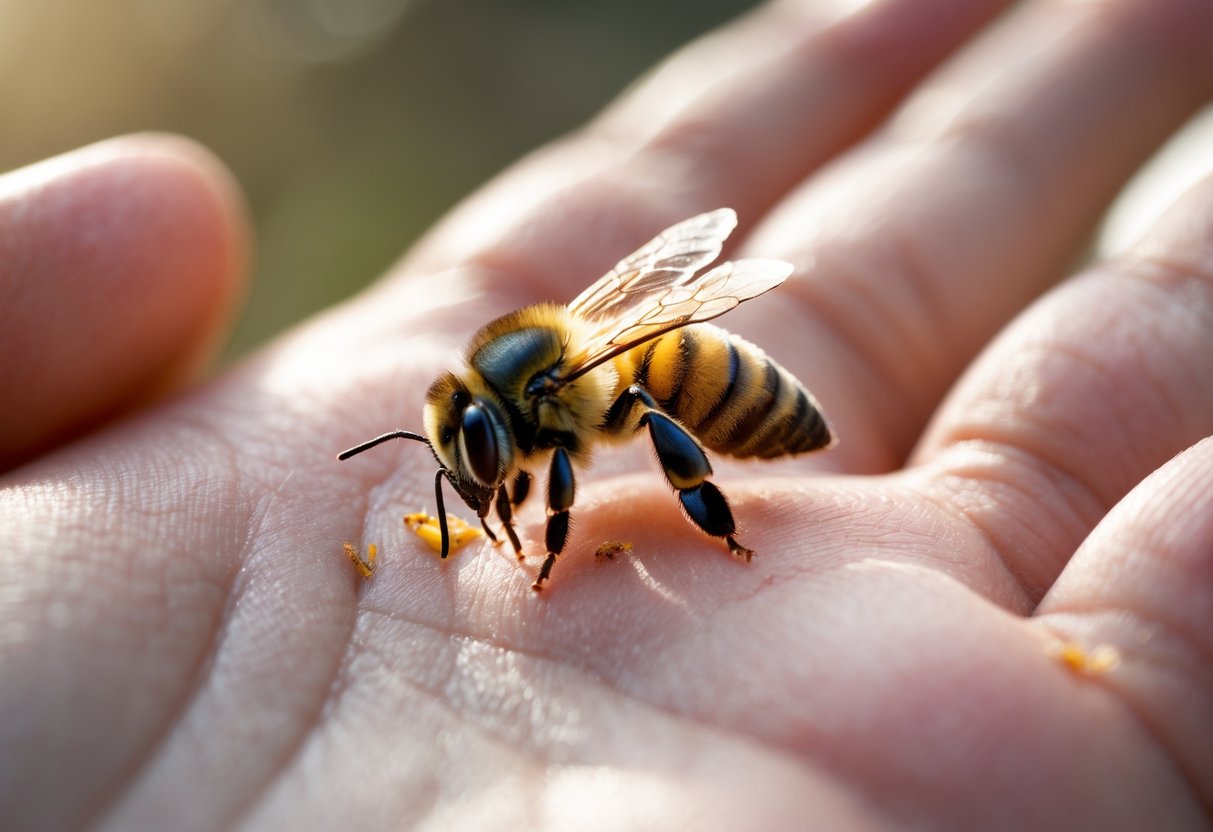
But here’s the thing—not all bees meet the same fate. Bumblebees, for example, have smooth stingers, so they can sting more than once and just fly off like nothing happened.
Learning this kind of stuff really changes how you look at bees, doesn’t it? Maybe knowing how to help a bee after it stings is more useful than you’d expect.
Curious whether you can actually save a bee after it stings you? Or what you could even do to try? Stick around—there are a few surprises about how bees defend themselves and what it means for both you and the bee.
Can You Save a Bee After It Stings?

A bee’s fate after stinging really depends on what kind of bee it is and how its stinger works. Some bees die after stinging, while others just keep on buzzing.
If you know why this happens, you can figure out if there’s anything you can do to help a bee that stings you.
Why Honey Bees Die After Stinging
Honey bees have barbed stingers. When they sting, those barbs grab onto your skin and get stuck.
As the bee pulls away, its stinger—and some of its insides—stay behind. That’s a fatal injury for the honey bee.
So, if a honey bee stings you, it can’t really survive. That’s just how it goes for honey bees, even though other bees have a different outcome.
Exceptions: Can Any Bees Survive a Sting?
Some bees don’t die after stinging. Bumblebees, for instance, have smooth stingers that don’t get stuck.
They can sting as many times as they want and fly off just fine.
Other bee species have stingers without barbs, so they can defend themselves over and over again. They just pull their stinger out and go.
So, while honey bees die after stinging, bumblebees and some others don’t. That’s worth knowing if you ever want to help a bee after it stings.
The Role of the Barbed Stinger
Honey bees evolved those barbed stingers to protect their hive. When they sting thick-skinned creatures like us, the barbs keep the stinger stuck.
This works great for delivering venom and sending out a chemical signal to other bees. But it’s a death sentence for the bee, since the stinger stays behind and rips out part of its abdomen.
If the bee stings something softer, like another insect, the stinger might not get stuck. In that case, the honey bee can actually survive and sting again.
So, what the bee stings really makes a difference.
Timing and Rare Survival Cases
Usually, a honey bee dies within minutes or maybe a few hours after stinging. But every now and then, a bee manages to pull its stinger out with less damage.
If you act quickly and gently remove the stinger, maybe the bee will survive a little longer. Still, the bee’s abdomen is often damaged, so honestly, survival isn’t likely.
If you want to help, focus on removing the stinger as fast and gently as you can. It’s the bee’s best shot, but for honey bees, surviving after stinging a person is extremely rare.
You can find more details in this article on saving a bee after it stings.
What Happens to the Stinger and How To Help

When a honey bee stings, it leaves the barbed stinger in your skin. That stinger keeps pumping venom for several minutes if you don’t take it out.
If you know how to remove the stinger the right way, you can make the sting hurt less. And it’s good to know whether the stinger or a dead bee can still cause trouble after the sting.
Stinger Detachment and Its Impact
When a honey bee stings, its barbed stinger gets lodged in your skin. The stinger stays attached to the bee’s venom sac and some of its muscles.
When the bee tries to fly away, those barbs keep the stinger stuck, and part of the bee’s abdomen tears off with it.
That injury kills the bee. Meanwhile, the stinger keeps delivering venom into your skin.
Venom Delivery After Stinging
The venom sac keeps pumping venom for up to ten minutes, sometimes longer, unless you remove the stinger. That’s what causes the pain, redness, and swelling.
Muscles around the venom sac keep squeezing, pushing venom in. The longer the stinger stays, the worse the reaction can get.
So, pulling the stinger out as soon as possible helps reduce how much venom gets into your body.
Safe Stinger Removal Techniques
You should get the stinger out right away, but do it gently. Don’t pinch or squeeze it with your fingers or tweezers, since that can push more venom in.
The best way? Scrape the stinger out with something flat and hard—think a credit card, your fingernail, or even a dull knife. Just slide it under the stinger and push it out.
Once it’s out, wash the area with soap and water. A cold compress can really help with swelling and pain.
Can a Dead Bee or Dislodged Stinger Still Sting?
When a bee stings, it usually dies, but its stinger and venom sac keep working for a bit. The stinger keeps pumping venom for up to a minute—or sometimes even longer—until you pull it out.
If you spot a stinger stuck in your skin, don’t wait around. Pulling it out fast is your best bet to stop more venom from spreading.
Once you’ve removed it, the stinger won’t sting you again. Still, leaving it in your skin can raise your chances of infection or a worse reaction.


