
When a bee seems interested in you, it usually means you’re giving off signals the bee associates with flowers.
Bees love sweet smells, bright colors, and even the salt in your sweat, so you might seem like a giant walking flower. Most of the time, this isn’t anything to worry about—bees are just out searching for nectar or water.
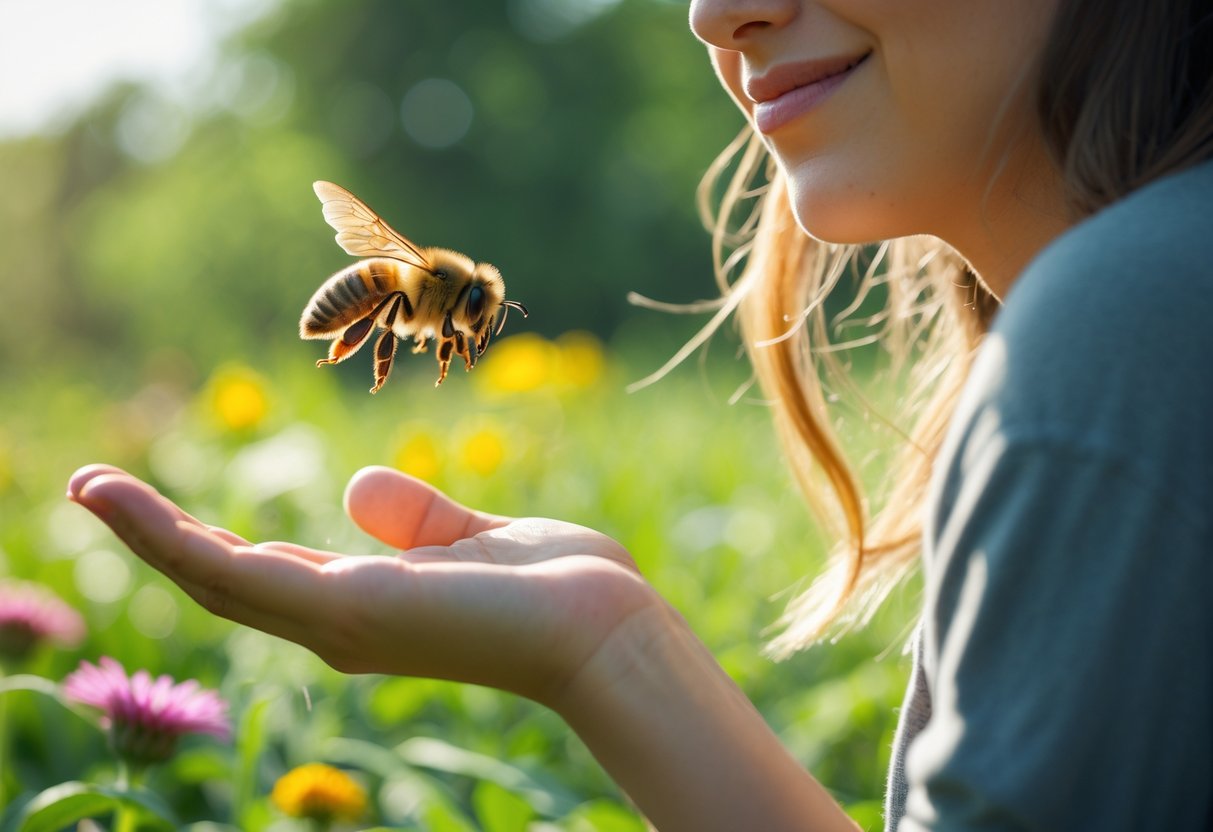
Sometimes, a bee will follow you out of curiosity or because it feels threatened.
If you’ve wandered close to a hive or accidentally disturbed one, bees might react defensively to protect their home.
When you understand these reasons, it’s easier to stay calm and know when to step away or avoid certain spots.
You might wonder if there’s some deeper meaning when bees hang around.
Some folks say bees bring good luck or a message, but honestly, bees just react to what you’re wearing or doing.
If you learn what draws bees in, you can dodge their attention and enjoy your time outside without worry.
For more ideas, check out why bees like people and what you can do about it.
Why Bees Are Attracted to You

Bees notice certain things about you—what you wear, how you smell, even how you move.
If you’re wondering why bees seem to stick around, it usually comes down to scents from your products, the colors of your clothes, and your natural body odor.
Common Signs of Bee Attraction
You might spot bees flying close or landing briefly on you.
They often hover near your hands or face, picking up on smells or warmth.
If you suddenly see more bee activity while you’re outside, you might be carrying scents bees like.
Watch for bees landing on your skin or clothes—these are pretty clear signs they find you interesting.
Scents and Scented Products That Attract Bees
Bees can’t resist sweet, floral smells—they remind them of flowers.
If you use perfumes, scented lotions, or colognes with fruity or floral notes, bees might mistake you for a flower.
Even scented sunscreens or shampoos can draw them in.
If you want to keep bees at bay, try using unscented products or mild scents.
Even light floral lotions can make bees more interested, especially on warm days when they’re out and about.
Impact of Clothing Colors and Patterns
Bright colors like yellow, white, or blue tend to catch a bee’s eye.
Since bees use color to find flowers, wearing these shades can make you stand out.
If you wear dark or dull colors, bees will usually pay less attention to you.
Busy patterns or shiny fabrics might also get a bee’s attention.
If you want to avoid bees, stick with plain, light-colored clothes and skip the flashy patterns.
This trick works pretty well in gardens or parks.
Role of Natural Body Odor and Perspiration
Your natural scent and sweat can attract certain bees, especially sweat bees.
They’re after the salt and moisture in your sweat.
If you’re active or it’s a hot day, you might notice bees coming closer because you’re sweating more.
Sweat bees rarely sting, but they can still be a nuisance.
Good hygiene and unscented deodorant can help keep them away.
Wiping off sweat during outdoor activities might make you less appealing to bees—and keep you cooler, too.
Types of Bees and Exploring Their Behavior
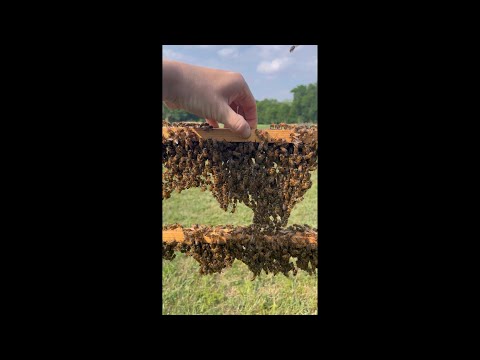
You’ll find all sorts of bees out there, and each one acts a bit differently.
They all have their own ways of communicating, protecting themselves, and helping plants grow.
Difference Between Bees and Other Stinging Insects
Not every stinging insect is a bee.
People often mix up yellow jackets, wasps, and bees, but their behavior isn’t the same.
Yellow jackets act more aggressively and can sting over and over, while most bees only sting once.
You’ll most likely run into honey bees, bumble bees, or sweat bees.
Honey bees live together in hives with a queen.
Bumble bees are bigger and fuzzier, and they’re usually pretty chill.
Sweat bees are smaller and love the salt on your skin.
Knowing the differences helps you stay safe and figure out why a bee might buzz near you.
How Bees Communicate and Make Decisions
Bees have some pretty cool ways to communicate.
Honey bees, for example, do the “waggle dance” to show others where to find food.
This dance tells the direction and distance to flowers.
Bumble bees don’t dance as much; instead, they use scents to mark flowers.
These signals help the group work together.
Bees make group choices, like where to build nests or search for food.
The queen and worker bees handle these decisions as a team.
Understanding Bee Stings and Safety
Bee stings hurt, but most bees only sting if they feel threatened.
Honey bees leave their stinger behind and die after stinging.
They usually do this when protecting the hive.
Bumble bees and sweat bees can sting too, but they’re less likely to unless you bother them.
Yellow jackets, though, can sting repeatedly since they keep their stinger.
If you want to avoid stings, try staying calm, don’t swat at bees, and skip the bright perfumes or sugary drinks that might attract them.
The Importance of Bees as Pollinators
Bees do a lot more for your dinner plate than most people realize. They move pollen from flower to flower, which lets plants grow fruits and seeds.
Honey bees and bumble bees really shine as pollinators. If bees stopped pollinating, a bunch of crops—like apples, strawberries, and almonds—just wouldn’t thrive.
Sweat bees get involved too, especially with smaller plants and wildflowers. When we protect bee populations, we help keep ecosystems balanced and make sure our food supply doesn’t stumble.
Curious about the different bees and what they do? Here’s a guide to common types of bees you might find interesting.


