
People often repeat the claim that you swallow eight spiders a year while you sleep. This story is a myth, and the real risk of a spider ending up in your mouth while you sleep is so tiny that it is close to none.
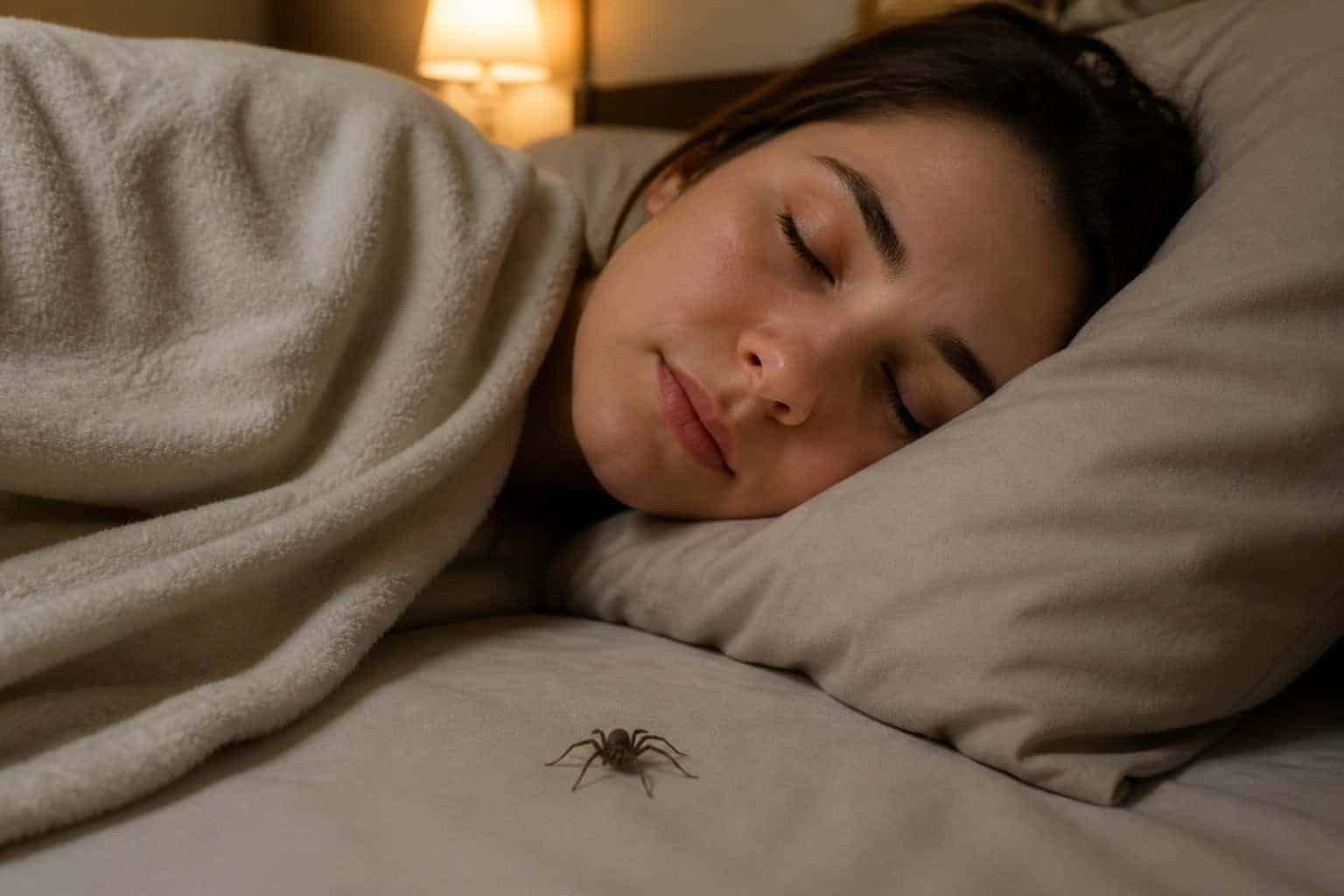
For many, the myth is tied to arachnophobia, which makes every tiny crawl sound much scarier than it is. Spiders usually want nothing to do with you, your bed, or your face.
What The Evidence Says
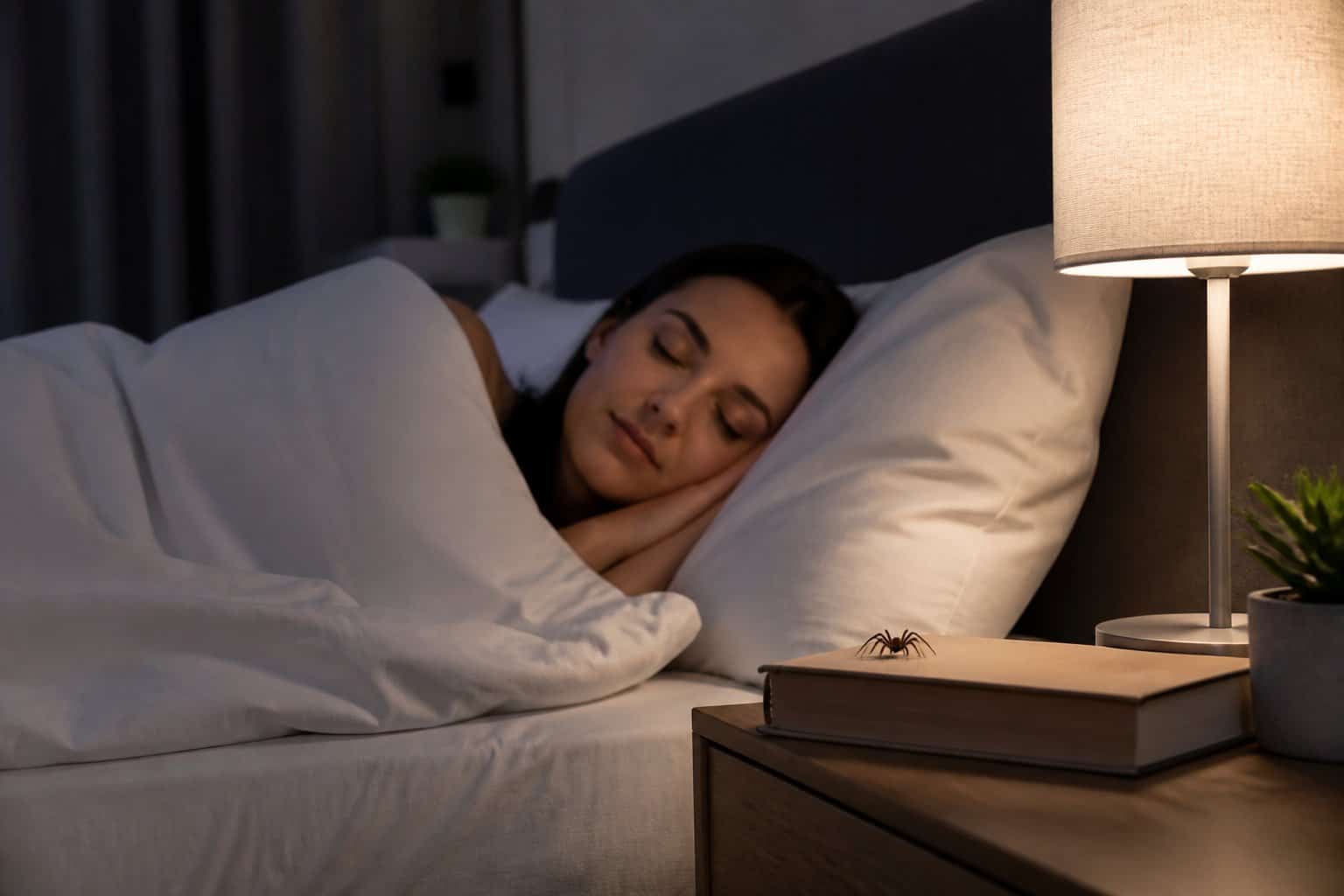
People have repeated the “eight spiders a year” claim for so long that it feels official, yet it has no real proof behind it. Experts and spider researchers have shown why the story does not hold up.
Why The ‘Eight Spiders A Year’ Claim Is A Myth
The British Arachnological Society often appears in myth-busting discussions of this claim. Researchers such as Dr Geoff Oxford and Dr Matt Wilkinson have explained why the rumor keeps spreading.
No scientific record shows people regularly swallowing spiders in their sleep. The idea does not match how spiders behave.
A sleeping person makes noise to a spider. Your breathing, heartbeat, and small movements create vibrations that spiders can sense, so a human bed does not attract them.
How Human Sleep Makes Accidental Swallowing Unlikely
Even if a spider wandered onto your pillow, your body usually reacts fast. Touch on your face, lips, or nose can wake you before anything happens.
Your mouth is not open all night, and the odds of a spider choosing that path are extremely small.
Why Viral Spider Stories Spread So Easily
The claim sounds precise, which makes it feel believable. A neat number like “eight a year” is easy to repeat and easy to remember.
Stories like this mix disgust, surprise, and a bit of danger. They travel quickly online, even when the facts do not support them.
Why Spiders Avoid People

Most spiders in homes want quiet corners, not people. They rely on senses that tell them where danger is, and a sleeping human gives off plenty of warning signs.
How Spiders Sense Vibration, Airflow, And Movement
Spiders feel vibrations through surfaces, and they respond to changes in air and motion very quickly. Your breathing, snoring, and shifting in bed make you seem enormous and risky.
A spider is more likely to back away than move closer. Your bed is noisy to a spider, even when the room feels still to you.
Where Spiders Prefer To Hide Indoors
Most spiders in spiders in Britain and homes elsewhere prefer webs, corners, basements, attics, and other low-traffic places. They go where they can stay hidden and catch small insects.
A bedroom is usually not their first choice unless there is clutter, lots of insects, or easy access from outside. Even then, they are usually passing through.
Why A Sleeping Person Is Not An Attractive Target
You are large, active, and warm, which is not what a spider wants. A face, mouth, or blanket-covered body is far more trouble than it is worth.
Spiders look for safety and prey, not contact with people. If one finds you, it usually wants to leave as soon as it can.
What To Know About Bites And Risk
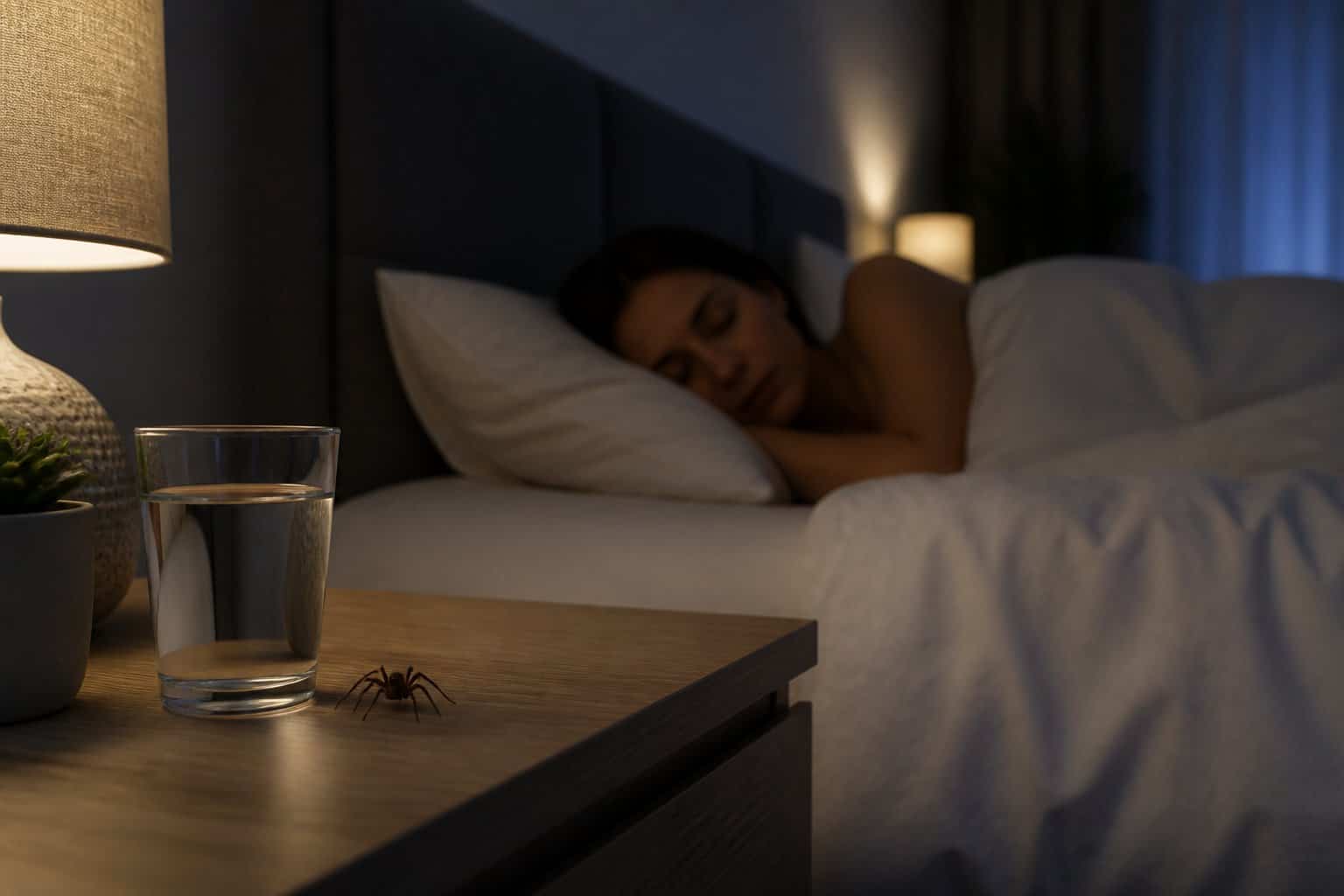
Most fears about spider bites are bigger than the real risk. Many skin problems get blamed on spiders even when another cause is more likely.
How Rare Spider Bites Really Are
Spiders usually bite only when trapped or threatened. Most home spiders avoid people and try to escape.
If a bite happens, it is often minor. Severe reactions are much less common than most people think.
Why Many Suspected Bites Are Something Else
Rashes, bug bites, infected pimples, and skin irritation often get labeled as spider bites. Without seeing the spider, it is hard to know what caused the mark.
Many doctors treat “spider bite” claims with caution. The skin problem may have nothing to do with a spider at all.
What People Mean When They Mention False Widow
When people talk about a false widow or false widow spider, they usually mean a spider that looks alarming but is often misunderstood.
The name sounds scary, which adds to the fear. A sighting does not mean danger, and it does not mean your home is full of harmful spiders.
How To Keep Spiders Out Of The Bedroom

Simple habits work better than panic. A tidy room, fewer insects, and sealed entry points can make your bedroom much less appealing to spiders.
Simple Prevention Steps That Actually Help
Keep the room clean, reduce clutter, and vacuum corners, baseboards, and under furniture. Close windows when you can, use screens, and seal gaps around doors or trim.
Cutting down on other insects helps too, since spiders follow food. Fewer prey insects mean fewer reasons for spiders to stay.
When A Spider Infestation May Point To Another Pest Problem
A real spider infestation often means there are also plenty of small insects for them to eat. That points to another pest issue, not just a spider problem.
If you keep seeing many spiders, check for moisture, crumbs, or cracks that let pests in. Fixing the larger issue usually helps the spider problem too.
Whether Insect Repellent Is Worth Using Indoors
An insect repellent can help in some situations. It is not always the best first step indoors.
Cleaning and sealing entry points usually make a bigger difference. Removing food sources also helps reduce pests.
If you use a product, follow the label carefully. Avoid overusing sprays in sleeping areas.
Simple prevention keeps a room safer than heavy chemicals.


