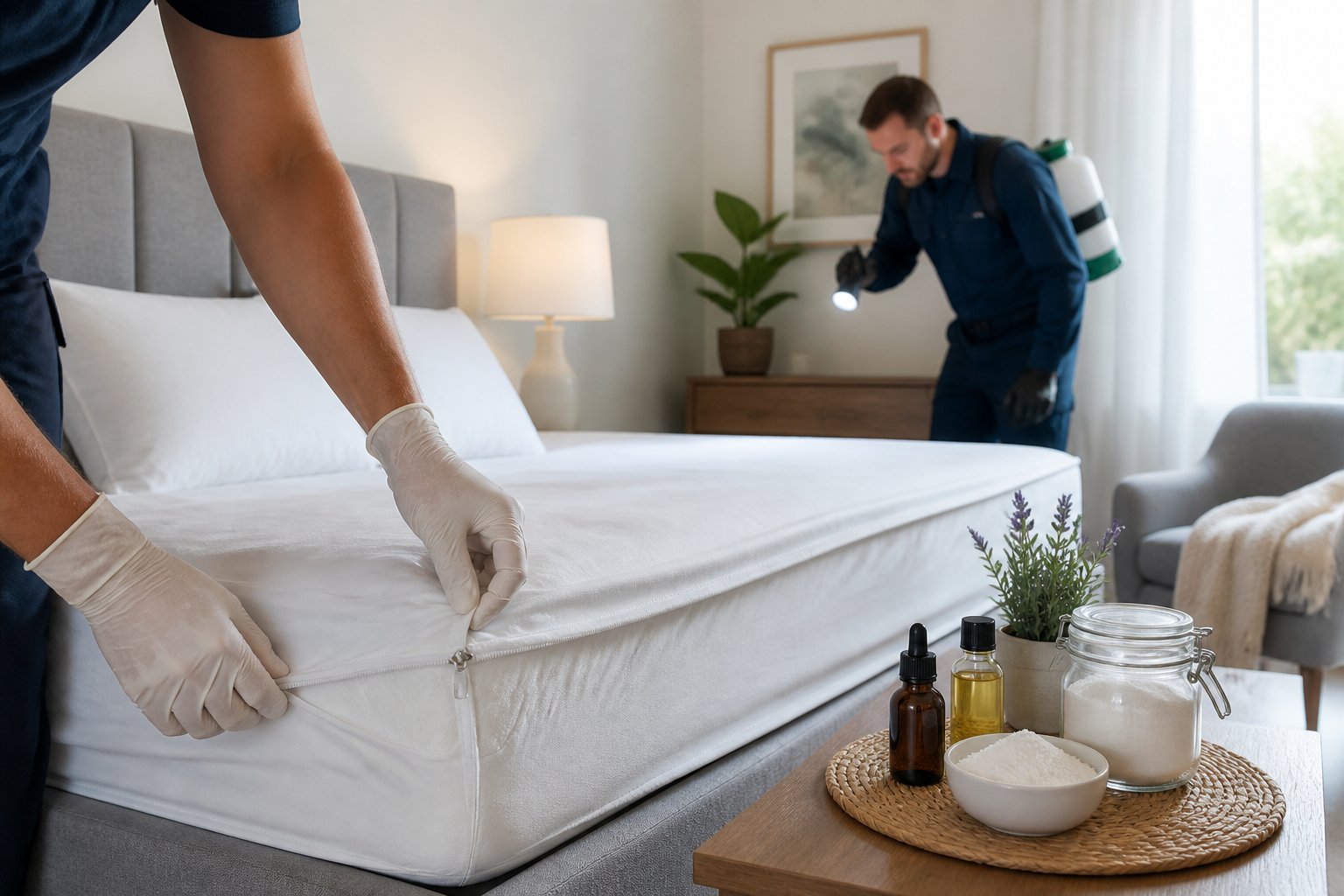
You can stop bed bugs more easily when you act early and use the right mix of barriers, cleaning, and monitoring. The smartest choices are products that block hiding spots, make bites less likely, and help you spot activity before it spreads through your home.
A good prevention setup usually starts with mattress protection and bed leg interceptors. Heat-safe cleaning and careful placement around sleeping areas and clutter-prone spaces also help.

Best Tools To Block Bed Bugs Early
The best prevention tools focus on the places bed bugs use most, especially mattress seams and box springs. Use products that block entry, trap movement, and support cleaning routines that reduce hiding spots and eggs.
Mattress And Box Spring Encasements
A well-made box spring encasement and mattress cover make it harder for bed bugs to hide near your sleep space. Choose a product tested for bed bugs, with a strong zipper and fabric that resists tearing.
Leave the encasement on for a long period and check it regularly for holes.
Bedbug Interceptors And Interceptor Traps
Place bedbug interceptors under bed legs to trap insects before they reach you. Interceptor traps also give you early warning if bed bugs are moving around.
Many people use interceptor traps because they are simple, low-mess, and useful for monitoring.
Vacuums, Steamers, And Laundry Heat
Vacuum thoroughly to reduce bugs in cracks, bed frames, and nearby carpet. Use heat by washing and heat-drying bedding to kill bed bugs on fabric items.
Steamers help on seams and edges. Regular cleaning keeps the infestation from finding new places to hide.

Where To Place Prevention Products Around The Home
Placement matters as much as the product itself. Focus on sleeping areas first, then move outward to furniture, walls, storage, and anything that travels between rooms or comes into your home from outside.
Beds, Bed Frames, And Upholstered Furniture
Start with the bed, bed frame, headboard, and upholstered furniture near your sleep area. Inspect cracks, seams, and stitched edges closely, and use covers or traps where bugs are most likely to move.
Baseboards, Clutter Zones, And Shared Walls
Place monitoring tools near baseboards, along shared walls, and around cluttered areas where bugs can hide. A cluttered home gives bed bugs more places to stay out of sight, which makes treatment harder.
Luggage, Closets, And Secondhand Items
Watch luggage, closet floors, and anything brought in from travel or secondhand shopping. Bed bugs hitchhike easily, so check bags and used furniture before bringing them inside.
If you use storage bins, keep them sealed and away from sleeping spaces.

What Helps Most If You Have Pets Or Worry About Bites
If you share your home with pets, choose prevention tools that protect sleep areas without adding extra risk. Keep bedding clean, reduce bite exposure, and watch for signs that the problem may be getting bigger.
Protecting Dogs, Bedding, And Sleeping Areas
Keep pet beds, your bedding, and the area around your mattress as clean and clutter-free as possible. Bedbugs do not live on dogs the way fleas do, but they can hide in pet bedding, nearby furniture, and cracks around sleeping spots.
Wash fabrics often and vacuum around the places your pets rest.
Reducing Exposure While You Monitor
If you worry about bites, use encasements, interceptors, and regular inspection to reduce contact while you monitor for activity. Cleaning bedding, vacuuming, and protecting your mattress are important steps for reducing exposure while you sleep.
When Bedbug Bites Point To A Larger Problem
A few bedbug bites can be a warning sign, especially if they keep appearing after cleaning and monitoring. If you notice blood spots on bedding, dark marks, or repeated bites, inspect the bed, baseboards, and nearby furniture more closely.

What Not To Rely On And When To Call A Pro
Some DIY ideas sound appealing, but they do not solve every problem. Prevention products work best as part of a bigger plan, and certain warning signs mean you need professional pest control.
Limits Of DIY Powders And Diatomaceous Earth
Diatomaceous earth may help in some situations, but it is not a complete answer for getting rid of bed bugs or stopping a serious infestation. Powders can miss hidden bugs, and they work poorly without inspection, cleaning, and targeted treatment.
Signs Prevention Is No Longer Enough
If you keep seeing bugs, bite patterns keep returning, or bed bug activity spreads beyond the bedroom, prevention alone is not enough. At that point, you need a stronger plan to get rid of bed bugs before they move deeper into walls, furniture, and adjacent rooms.
Choosing An Exterminator Or Professional Pest Control
A qualified professional exterminator will inspect the home and identify hiding spots.
They use an integrated plan that fits the infestation.
If you hire professional pest control, look for experience with bed bugs.
Ask how they approach monitoring, follow-up visits, and treatment safety.