
Ever wondered if rats can climb stairs? Honestly, the answer might surprise you.
Rats can climb stairs easily, no matter if they’re carpeted, concrete, or wood. Their strong legs and sharp claws let them move up and down steps with barely any trouble.
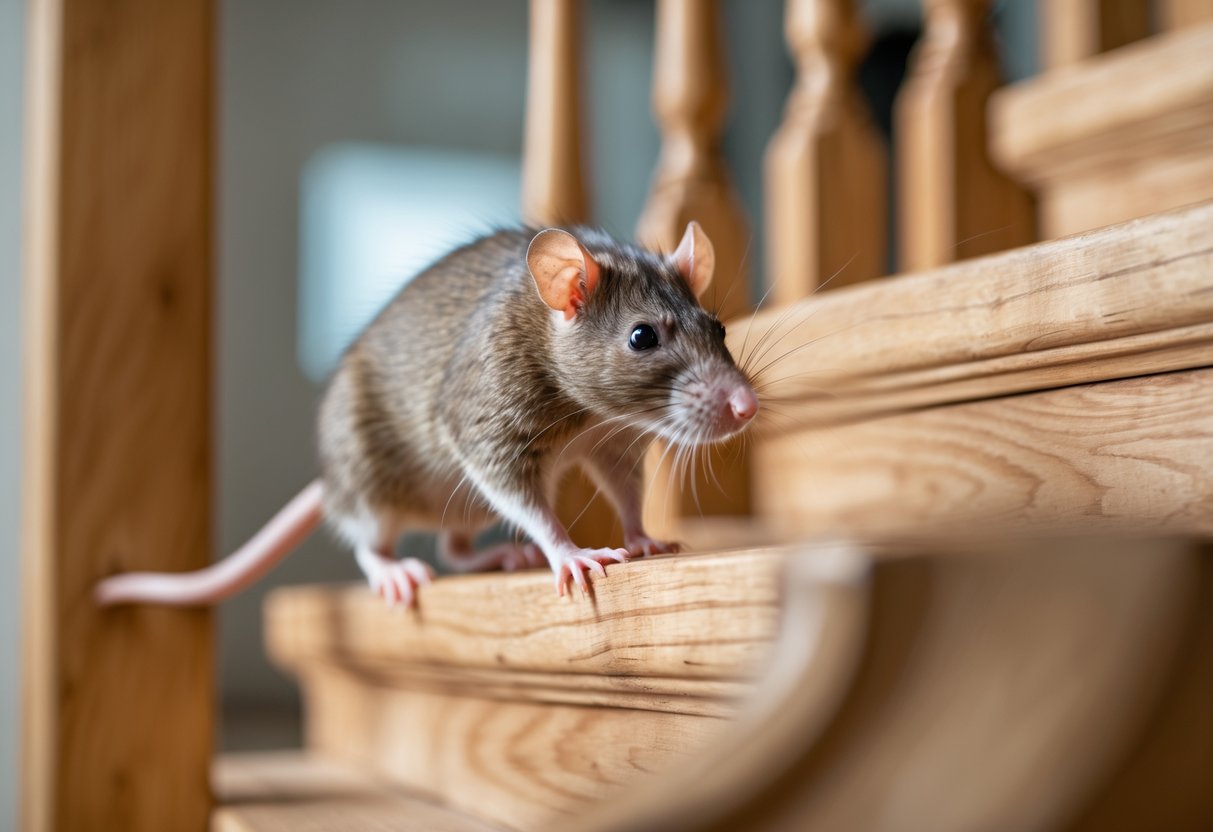
You might hope stairs would keep rats out of certain rooms, but they don’t work like a barrier at all. Rats are clever and super agile, using their claws and tails for balance as they explore.
Knowing this might help you protect your home—or at least explain why these little guys seem to get everywhere.
How Rats Climb Stairs: Abilities and Behavior

Rats climb stairs surprisingly well because they’ve got strong claws, flexible bodies, and sharp senses. Some types of rats do it better than others, and things like age or health can make a difference.
Physical Adaptations That Help Rats Climb
Rats have five toes on each foot, each with sharp, curved claws. These claws work like tiny hooks, so they grip rough or uneven surfaces with ease.
Their hind feet are bigger and stronger, which gives them extra power for jumping and climbing up. Their bodies bend and twist, letting them move smoothly around corners or squeeze through tight spots on stairs.
Rats can even rotate their back legs to climb down headfirst. That’s pretty wild.
Their long tails help a lot too. The tail acts like a balancing stick, keeping them steady as they climb steps or even walls.
This balance trick makes climbing a lot safer—and faster.
Differences Between Roof Rats and Norway Rats
Not all rats climb the same way. Roof rats, or black rats, are lighter and more agile.
They’re famous for climbing and often use stairs, trees, or pipes to reach high places. Norway rats, or brown rats, are bigger and heavier.
They usually stay closer to the ground. While Norway rats can climb stairs and walls, they might be slower or not as confident as roof rats.
If you spot rats climbing inside, chances are they’re roof rats—especially if they’re hanging out on stairs or upper floors.
Factors That Influence Climbing Success
A few things affect how well rats climb stairs. Younger rats tend to move quicker and handle steps better than older ones, who might slow down or struggle a bit.
The type of stairs matters. Rats do best on rough or uneven steps where their claws can grip.
Smooth or slippery stairs can slow them down or even stop them. Health plays a big role too.
Sick or injured rats might avoid climbing since it takes strength and balance. If food is scarce or predators are nearby, rats might climb faster to escape or find a safe place.
If you want more details, check out this look at can rats climb stairs.
Stair-Climbing Rats in Homes: Risks and Prevention

Rats can climb stairs and reach upper floors, putting your whole living space at risk. They use tiny gaps, handy objects, and their strong climbing skills to get around.
If you know how they get upstairs, spot early signs, and set smart traps, you can protect your home.
How Rats Access Upper Floors
Rats sneak into upper floors through small gaps around doors, windows, or pipes. They climb stairs by gripping railings, walls, or furniture close to the steps.
If you leave doors open, have loose floorboards, or easy access points near staircases, rats will use them. Look for cracks or holes—even ones as small as a quarter—because they can squeeze right through.
Rats also use stuff like boxes, drawers, or cords to boost themselves onto stairs or furniture. If you seal up these gaps and clear out clutter near stairs, you can block their routes.
Signs of a Rat Infestation Upstairs
You might hear scratching or scurrying at night from the upper floors. Look for small, dark droppings around stair corners or on floorboards.
Chewed wires, damaged furniture, and greasy trails along walls are also big clues. If you leave pet food or crumbs upstairs, rats might head straight for those spots.
Sometimes you’ll even see little footprints in dusty areas.
Rat Traps and Removal Strategies
Rat traps work well for controlling rats on stairs and upstairs. Snap traps and electronic traps usually catch rats quickly.
Put traps near walls, under stairs, and where you see droppings or chewed spots. Use bait like peanut butter or nuts to lure them in.
Check traps daily and swap out bait if it gets old. Try to avoid poison upstairs—it’s risky for pets or kids and can make rats die in hidden places.
Role of Professional Pest Control
When the rat problem gets out of hand, calling in professional pest control makes a lot of sense. These experts track down every entry point and actually use safer treatments to kick rats out from all floors.
They’ll give you advice on how to stop rats from coming back, too. Honestly, professionals bring tools and know-how most of us just don’t have, so you can feel pretty confident the rats won’t return.
They inspect the whole house—even those tricky spots like stairs and the attic. If you want rat control that’s thorough and doesn’t leave you stressed out, bringing in a specialist could really be the way to go.


