
Most people assume chimpanzees stick to fruits and plants, but honestly, their diet’s a bit more flexible than that. Yep, chimps can eat meat, and they actually do, though it’s just a small slice of what they eat overall.
Adult male chimps, especially, will hunt and share meat with others in their group.
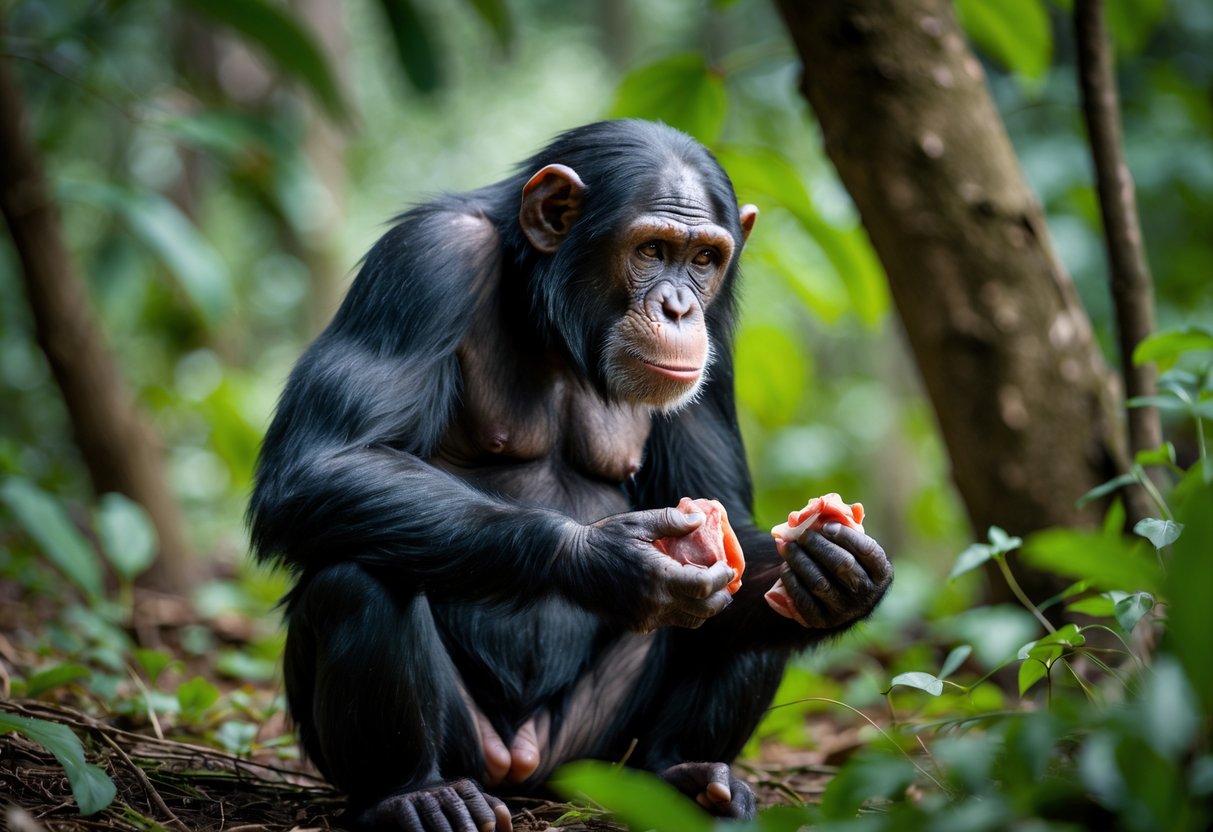
Most days, chimps munch on fruits, nuts, and insects. But when the opportunity pops up, they’ll go after small animals like monkeys or other forest mammals.
Their ability to mix up their food shows just how adaptable they really are in the wild. Curious how often chimps eat meat or why it matters to them? Let’s dig into the details.
Meat Consumption in Chimpanzees

Chimpanzees eat mostly fruit and plants. Still, meat shows up in their diet, especially for certain individuals.
They don’t eat meat every day, but when they do, it’s a careful, deliberate process. The meat comes from specific prey and gives them nutrients they just can’t get from plants alone.
How Often Do Chimps Eat Meat?
Meat is just a small part of what chimps eat—usually less than 6% of their diet. You won’t catch them eating meat daily.
It’s more of a treat, or maybe a backup if fruit is hard to find. Adult males go after meat more than females, but even they don’t hunt all the time.
Sometimes, a chimp might get a big boost of protein from meat only once a month, maybe even less. That makes meat rare, but it’s definitely valuable for them.
Common Prey and Hunting Strategies
Chimps usually target red colobus monkeys when they hunt for meat. Adult males lead these hunts, and it’s a real team effort.
They’ll spread out and try to surround the monkeys, pushing them toward other chimps who are ready to catch them. It’s not just chaos—they plan it out and sometimes even use tools.
Once they catch something, they share the meat with others. Sharing helps keep the group close and builds friendships.
Nutritional Reasons for Eating Meat
Meat packs in protein, fat, vitamin B12, and minerals that plants just can’t provide. When fruit runs low or during pregnancy, meat becomes extra important.
Females benefit when males share meat, especially since those nutrients help during pregnancy and nursing. Sharing food isn’t just about nutrition—it’s social, too.
When chimps share meat, it strengthens their bonds, which can be a big deal for survival out there.
For more info, check out studies on chimpanzees eating meat.
Chimpanzee Diet in the Context of Primates

Chimpanzees eat all sorts of foods, mixing plants and animals as they go. The way they eat meat and share it is pretty unique.
These habits give us a glimpse into how their diets stack up against other primates and why meat matters for chimps.
Omnivorous Diet of Chimpanzees
Wild chimps are true omnivores. They eat plants and animals, but the bulk of their meals comes from fruits, nuts, leaves, and seeds.
They’ll also snack on insects like termites, and sometimes they’ll grab small animals—birds or monkeys, for example.
Meat usually makes up just 2% to 6% of what they eat, give or take. Adult males do most of the hunting, and not every chimp group eats meat all that often.
They’ve got strong teeth for tearing meat, but honestly, they don’t depend on it to survive.
Comparisons With Other Primates
Chimps aren’t the only primates who eat meat. Some monkeys and apes add animal protein to their diets, but it really varies by species.
Most primates stick to plants, but chimps stand out for their group hunting skills. Few other primates hunt together like chimps do, especially the males.
That’s what makes them a bit special—mixing fruit-eating with occasional, but pretty impressive, meat consumption.
Role of Meat in Social Dynamics
In chimpanzee groups, meat means more than just a meal. Adult males hunt animals like monkeys, and they usually share the meat with other hunters, not just their families.
This sharing actually builds bonds. It helps guys form alliances and trust each other.
So, meat isn’t just about getting calories—it’s a big deal socially. If you think about it, their meat-eating habits really shape group behavior and daily life out in the wild.
Curious for more? Check out this research on adult male chimps and meat eating.


