
You might picture gorillas and chimpanzees as natural enemies, but that’s not always true. In some places, they actually get along pretty well.
In the wild, gorillas and chimps sometimes form lasting friendships—they play, eat, and even keep an eye out for danger together. This kind of behavior really flips the script on the whole “rivals” idea.
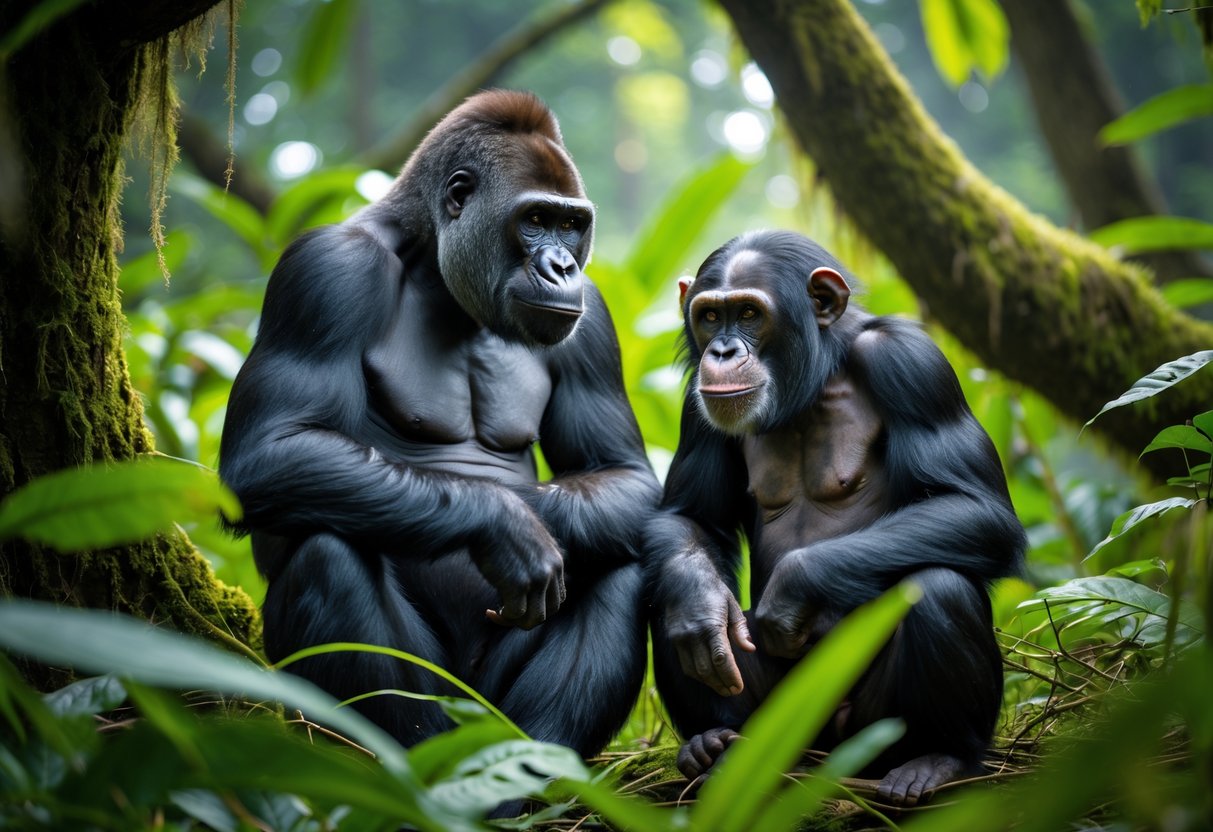
You’ll see these two species sharing food sources and, believe it or not, traveling together without much fuss. They even react to each other’s alarm calls, so they help each other stay safe.
If you’re curious about how these unlikely pals manage to get along, let’s dig into their unique bond. There’s a lot to learn about cooperation in nature from them.
Social Dynamics Between Gorillas and Chimps

Gorillas and chimps don’t just keep to themselves. In places like Nouabalé-Ndoki National Park, they actually form some pretty unusual social bonds.
These relationships can last for years, with individuals recognizing each other and mixing friendly moments with a bit of tension now and then. They share food and information, showing off a surprising level of social awareness.
Long-Term Friendly Associations
In the Goualougo Triangle area of the Congo, chimps and gorillas form friendships that stick around for years. These ties go way beyond just bumping into each other—they actually seek each other out.
A long-term study led by biological anthropologist Crickette Sanz found that these friendships involve playing and feeding at the same trees. These moments aren’t random; they show deep social bonds between individuals from both species.
Honestly, it’s a lot like the way our own friendships work. Time and repeated encounters build trust and comfort.
Individual Relationships and Recognition
One of the coolest parts of these friendships is that chimps and gorillas recognize each other as individuals. Sometimes, a chimp will travel through a group of gorillas just to see a specific friend.
Researchers from Washington University in St. Louis and the University of Johannesburg noticed this after more than 20 years of observing these apes.
This individual recognition shows a level of social awareness that surprises a lot of people. It means these apes keep relationships going, even across different groups and settings.
Types of Social Interactions
Gorillas and chimps do more than just hang out together. You’ll see them playing, sharing space while foraging, and sometimes even defending each other.
Research from Lincoln Park Zoo found that about 34% of their interactions happen while they’re eating from the same trees. Another 18% of the time, they’re close by but eating different foods.
These shared activities help them get access to more plants and resources. Young gorillas and chimps often play together, which helps both groups develop important skills.
Aggression Versus Tolerance
Sure, things can get tense sometimes, but aggressive behavior between chimps and gorillas doesn’t happen all that often. Most of the time, they show tolerance and a willingness to co-exist.
Studies led by Crickette Sanz found that aggression is pretty rare compared to friendly moments. Sometimes, gorillas and chimps even ignore the usual boundaries and hang out more than anyone expected.
It’s a dynamic social system, balancing peace with the occasional conflict. It really makes you wonder—if different species can create communities based on respect and social rules, why can’t we?
If you want to dig deeper, check out the work from Washington University in St. Louis and the iScience journal report.
Why Gorillas and Chimps Interact

So, why do gorillas and chimpanzees—completely different species—keep meeting up in the wild? Their relationships mostly revolve around finding food, sharing knowledge, keeping safe from predators, and sometimes dealing with risks like disease.
These behaviors really show how their lives overlap in Central Africa’s forests.
Shared Foraging and Co-Feeding
Gorillas and chimps often feed together, especially at fruit trees like figs. Sharing these spots helps both species find food in the thick forests of the Republic of Congo and the Congo Basin.
When they feed together, they have a better shot at finding more fruit because each group notices different things. Co-feeding also cuts down on competition, since gorillas mostly munch on leaves and stems, while chimps go for fruits and insects.
Eating near each other keeps things pretty peaceful, letting both groups benefit without fighting over food.
Learning and Cultural Behaviors
Chimps and gorillas don’t just share food—they actually learn from each other. Watching one another helps them pick up new ways to find or handle food.
This kind of information sharing might even change their behaviors over time. In some parts of the Congo, scientists have seen chimps copy gorilla techniques for cracking nuts or dealing with tough plants.
It’s pretty wild to think about interspecies communication shaping how these communities grow and change.
Predator Awareness and Response
Both gorillas and chimps have to watch out for predators like leopards. Sticking together helps them spot dangers sooner.
When they share a habitat, they use alarm calls and body language to warn each other. This teamwork means you’ll see more peaceful moments during risky times.
Larger groups make it tougher for predators to single anyone out.
Risks of Disease Transmission
Sure, these interactions offer plenty of benefits, but let’s be honest—they come with risks too.
When gorillas and chimpanzees get close, diseases can jump from one to the other. Conservationists in the Congo Basin and nearby forests worry about this a lot.
If forests shrink or people move in, diseases spread even faster. Wildlife conservation groups like the Wildlife Conservation Society work hard to protect these habitats and study the risks.
Honestly, it just shows how much caring for their shared home matters. Without that, outbreaks could wipe out whole populations.


