
Can a human befriend a chimpanzee? Well, sort of, but it’s definitely not like making friends with your neighbor.
Chimpanzees are wild animals with their own quirks and needs. Building any kind of bond with them takes tons of patience, a whole lot of respect, and a decent grasp of their natural instincts.
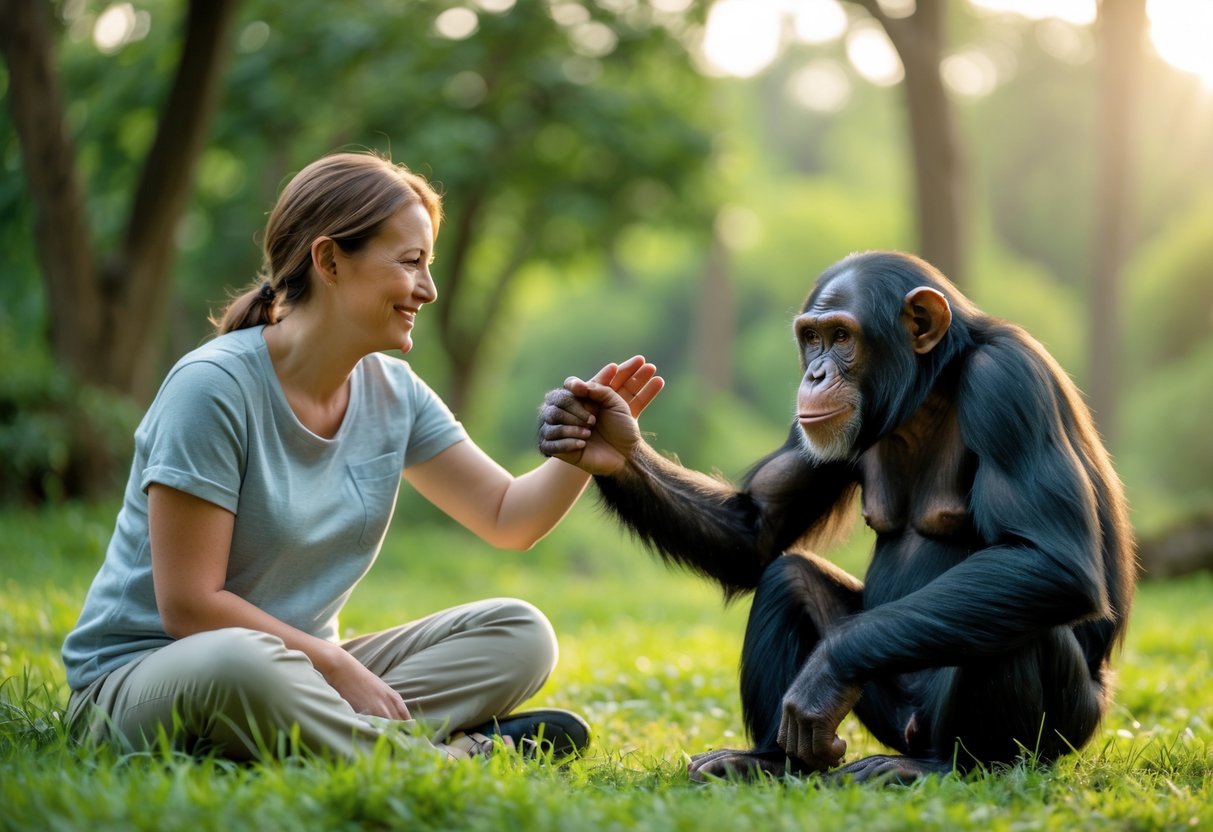
Did you know chimpanzees share about 98.4% of their DNA with us? No wonder they can show affection and enjoy hanging out with others.
But don’t get too comfortable—these friendships can get unpredictable, and sometimes things go sideways.
If you’re curious about what it really takes to connect with these incredible primates, stick around.
We’ll talk about their behavior, social lives, and the safest ways you can interact with them.
Human-Chimpanzee Relationships: Possibilities and Risks
Trying to build a relationship with a chimpanzee isn’t as easy as you might hope.
You have to understand their natural behaviors, look at what’s happened in the past, and deal with the unique struggles captive chimpanzees face.
Historical Attempts at Befriending Chimpanzees
People have tried to befriend chimpanzees for decades.
Back in the mid-1900s at the Chicago Zoo, keepers spent hours with young chimps—talking, playing, and grooming to build trust.
These early efforts showed that chimpanzees could respond well to humans, especially if they were socialized when they were young.
But these friendships didn’t always last.
Researchers and zookeepers found that chimpanzees need steady social groups.
If something disrupted their routine or stressed them out, trust disappeared.
At Lincoln Park Zoo, observers watched how these interactions changed over time and learned a lot from it.
Why Chimpanzee Behavior Challenges Human Friendship
Chimpanzees are smart, but their social rules are nothing like ours.
In the wild, they form tight friendships through trust and endless grooming.
Grooming is huge for them—it’s how they bond and keep the peace.
Still, if a chimpanzee feels threatened, things can get ugly fast.
They’re incredibly strong, and their instincts kick in before you know it.
Unlike us, chimpanzees use subtle signals that we often miss, which leads to awkward misunderstandings—even when you think you’re being friendly.
Cases of Captive Chimpanzees and Human Interaction
Some captive chimpanzees do show friendship toward humans, especially if people raised them.
At sanctuaries or zoo exhibits, keepers often form bonds through years of care and attention.
But captivity changes things.
Chimps might get more dependent or stressed, which makes their friendships a bit complicated.
Most zoos, like Lincoln Park Zoo, now keep direct contact between visitors and chimps to a minimum for everyone’s safety.
Many rescued chimps from the pet trade need extra care.
You’ll see at some primate sanctuaries that their trust builds slowly and stays pretty fragile.
If you want any kind of safe friendship, you really have to respect their instincts and social needs.
Insights from Primatologists and Animal Welfare Advocates

Thinking about befriending a chimpanzee?
It’s smart to listen to what experts and animal welfare groups have to say about the risks and the responsibility.
They’ll tell you chimpanzees aren’t pets, their social needs are serious, and there are rules for a reason.
Jane Goodall and the Study of Chimpanzees
Jane Goodall is probably the most famous primatologist out there.
She spent decades watching chimpanzees in the wild and learned just how clever and social they are.
Chimps form strong family bonds and definitely feel emotions, sometimes in ways that remind us of ourselves.
Goodall taught the world to respect chimpanzees as wild animals.
She spoke out against keeping them as pets, warning that taking baby chimps from their mothers causes trauma and can mess up the whole group.
If you really want to get chimpanzees, Goodall’s research on their behavior, communication, and emotions is a goldmine.
Role of Animal Welfare Organizations
Animal welfare groups work hard to keep chimpanzees safe, especially those living in captivity.
They push for good spaces, social companions, and activities that keep chimps busy and happy.
When chimpanzees get bored or lonely, they sometimes hurt themselves or act out.
These organizations also warn against places that let people take selfies with chimps or make them do tricks.
That’s just not natural for them and can be super stressful.
Groups like the Animal Welfare Institute and various primate sanctuaries try to protect chimpanzees by educating the public and supporting sanctuaries with strict care standards.
Laws and Regulations for Nonhuman Primates
Laws protect chimps and other nonhuman primates from harm. For instance, the Endangered Species Act guards wild populations.
In the U.S., the Captive Primate Safety Act tries to stop people from keeping chimpanzees as pets. Lawmakers want to prevent private ownership because, honestly, chimps just don’t belong in a living room.
You shouldn’t try to keep a chimpanzee at home. They need care from professionals who actually know what they’re doing—especially vets who really get chimp health and behavior.
Sticking to these regulations matters for everyone’s safety, not just the chimps. It also helps fight the illegal trade that causes so much suffering.
If you care about primates, maybe check out some resources on animal welfare rules and conservation. There’s always more to learn.


