
Ever get nervous around bees and wonder if they can sense your fear? It’s a pretty common thought, especially when you’re worried about getting stung.
Bees can’t actually smell fear, but they notice the chemicals and movements your body makes when you’re anxious or scared.
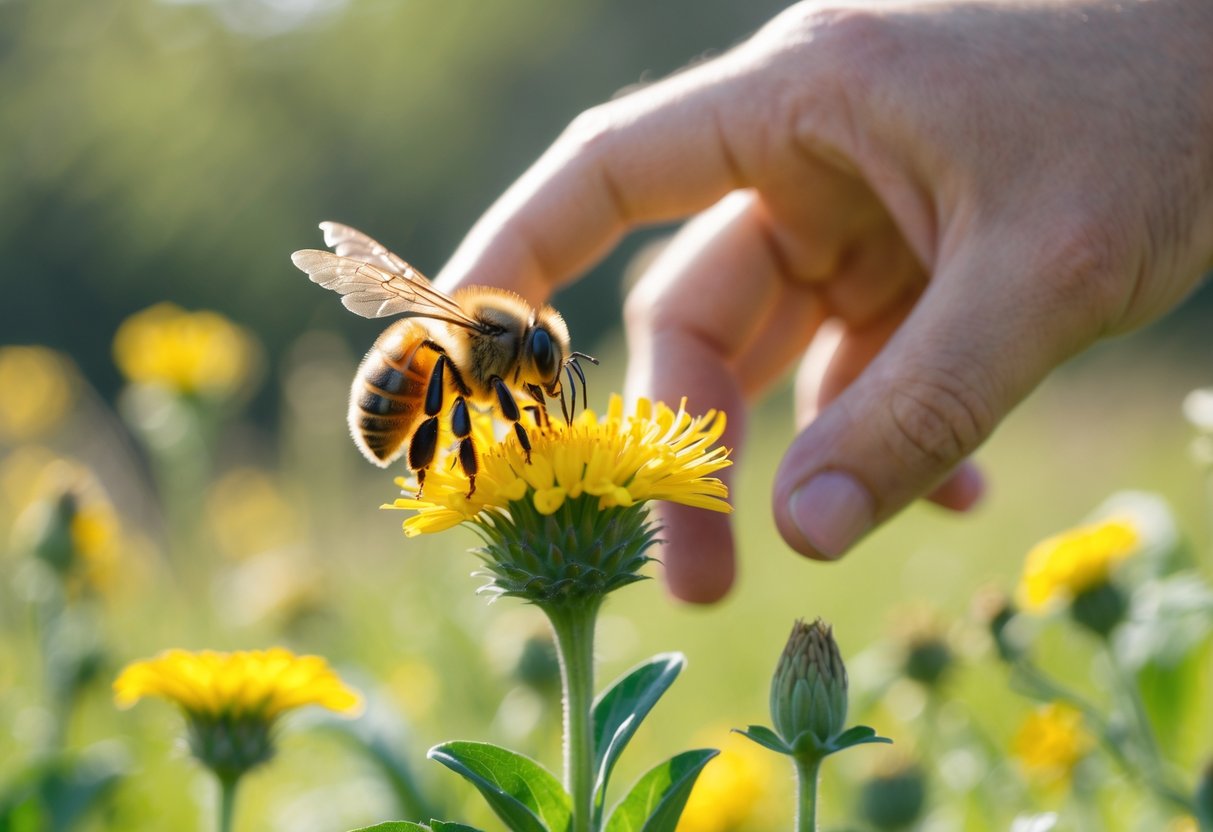
When you’re stressed, your body releases certain scents and your movements change. Bees pick up on those signals.
If you’re nervous and flailing your arms, bees might react more strongly. I mean, who wouldn’t if someone started waving at them?
Understanding this can help you stay calm and avoid upsetting them.
If you know how bees sense their environment, you’ll see why it’s best to stay still and relaxed when they’re nearby. Bees don’t react to fear itself, but to the signals your body gives off.
Let’s look at what they actually notice and how you can keep things chill when bees are around.
How Bees Sense Fear and Human Emotions

Bees don’t sense fear the way humans do. Instead, they notice certain signs and smells you give off when you’re nervous.
These signals can affect how bees behave around you. Often, they become more defensive.
Body Language and Movement Around Bees
When you’re scared, your body moves differently. Maybe you wave your arms or make sudden moves.
Bees spot these quick, jerky movements and take them as a threat. If you stay calm and move slowly, bees usually keep to themselves.
Nervous or panicked actions make them more likely to fly closer or even sting. Your body language tells bees a lot, even if they don’t understand fear the way we do.
Role of Pheromones and Scent in Bee Perception
Your body releases chemicals called pheromones when you’re scared or stressed. These act like invisible signals bees can smell.
Fear pheromones might come from sweat or other natural body scents. Honeybees and other types react to these scents by becoming alert or defensive.
They might assume there’s danger nearby. That’s why bees sometimes act differently around anxious people, even if you don’t notice you’re giving off these scents.
Environmental Cues and Bee Behavior
Bees also pay attention to what’s happening around them. Loud noises, sudden changes, or strong smells like perfume can confuse or irritate them.
That can make bees protective or aggressive. Bees use a mix of chemical signals and movement cues from the environment to figure out how to act.
They react quickly to anything that seems like a threat—including signs linked to human fear, like rapid movement or stress scents.
Why Bees React: Aggression, Defense, and Human Interactions

Bees show aggression mainly to protect their hive. When they sense danger, they jump into action with stings and chemical signals.
Knowing these triggers can help you avoid bee attacks and stay safe.
Bee Attack Triggers and Defensive Responses
Bees defend their colonies when they feel threatened. Sudden movements, loud noises, or strong smells like sweat or fear chemicals can set them off.
If their hive has pests or disease, bees might get even more defensive. They don’t usually attack without reason.
They rely on senses like smell and touch to spot enemies. If you get too close to a hive or act nervously, you might set off their defense response.
Africanized bees, by the way, chase threats much farther than typical honeybees. That’s a whole different level.
Bee Stings, Pheromones, and Group Attacks
When a bee stings, it leaves behind a barbed stinger and dies. The barbs stay in your skin and release an alarm pheromone.
This smell tells other bees to join in the attack. That’s how you end up with a group defense, where many bees sting to protect the colony.
The pheromone makes these attacks feel like they ramp up fast. Staying calm and moving away slowly can help you avoid setting off this alert chemical.
Beekeepers and Safe Beekeeping Practices
Beekeepers put on protective gear before they work with hives. They move slowly and gently so they don’t startle the bees.
Most beekeepers use smoke because it covers up alarm pheromones and helps calm the bees. Honestly, it’s kind of fascinating how such a simple trick works so well.
They check hives regularly to keep the colony healthy. This habit also reduces the stress that can make bees act aggressively.
If you have apiphobia (that’s a fear of bees), learning about bee behavior might help you feel a bit safer. Staying calm and acting respectfully around bees really does lower your chances of getting stung.
If you’re curious about how bees use chemical signals to defend themselves, take a look at bee stings and alarm pheromone behavior. And if you want tips for handling bees safely, check out beekeeping safety guidelines.


