Ever wondered if bees can actually remember your face? It sounds a bit wild, but bees really can recognize and remember human faces with surprising accuracy—even though their brains are tiny compared to ours.
This skill helps them spot important details in their surroundings. It’s a big deal for their survival and everyday behavior.
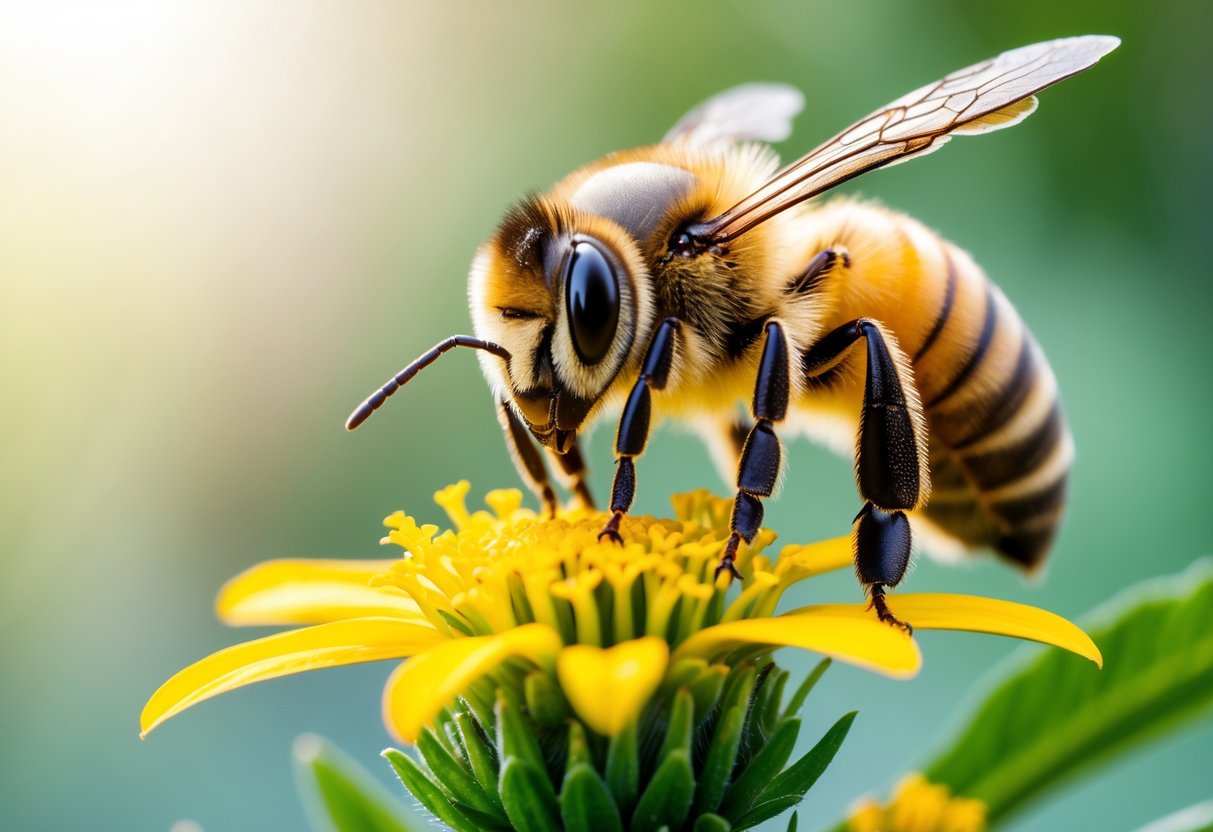
You might think bees just use their sense of smell, but their vision matters too.
Researchers have trained bees to pick out human faces by linking them to sweet rewards like sugar water. That’s honestly more advanced than most people expect from insects.
Learning about how bees remember faces gives you a new way to appreciate these little creatures. They’re not just about honey or pollination—bees use some pretty unique talents to figure out the world around them.
If you’re curious, you can dive deeper into bees’ face recognition abilities.
How Bees Recognize and Remember Human Faces

Bees can spot and recall human faces in ways that might surprise you. They use special tricks to see patterns, learn details, and store those memories.
This lets them tell people apart—even their beekeepers—despite their tiny brains.
Scientific Studies on Bee Face Recognition
Scientists have shown that honeybees (Apis mellifera) can actually learn to recognize human faces with impressive accuracy.
In some experiments, researchers trained bees to associate certain faces with a sugar reward. The bees picked out and remembered those faces later.
Some studies found bees could recognize faces with up to 90% accuracy. They seem to break faces down into smaller parts, a bit like they do with tricky flower patterns.
This research suggests bees aren’t just mindless flyers; they have a surprising intelligence that lets them distinguish individuals.
You can see more about these findings at this link about how bees recognize human faces.
Pattern Recognition Mechanisms in Honeybees
Bees don’t see faces the way we do. Instead, they focus on shapes, colors, and how features are arranged.
They use a process kind of like holistic face recognition—where the whole pattern matters more than just isolated bits.
For bees, things like the distance between eyes, the shape of the mouth, and other features create a unique “code.” They look at faces almost like they’re analyzing a complex flower.
Their compound eyes and tiny brains process visual information quickly. That makes them surprisingly good at telling one face from another.
Role of Memory and Learning in Face Recall
Bees remember faces by linking them to rewards during training. When a bee first sees a face paired with sugar, it stores that pattern in its memory.
Later, it can recall that face to get more rewards.
This memory can last for days. Bees can even recognize people like their beekeepers over time.
They learn through repetition and positive reinforcement—kind of like how you remember someone after meeting them a few times. Honeybees aren’t just reacting to random signals; they actually learn and recall faces in a useful way.
If you want more details, check out this article on bees’ face memory and recognition.
Bee Visual Perception and Its Broader Implications

Bees use their vision in clever ways that help them survive and get their work done. Their knack for recognizing patterns—including faces—connects to how they find flowers and help plants grow.
This just goes to show how their sight skills fit into bigger jobs in nature.
Bee Vision and Environmental Pattern Recognition
It’s kind of wild, but honeybees don’t see the world like we do. Their compound eyes have three types of color receptors, so they can see ultraviolet light—something humans can’t.
That lets bees spot flowers with UV patterns, leading them straight to nectar.
Bees also use movement to sharpen what they see. If a flower or object moves, it pops out more and becomes easier for their brains to process.
This helps them remember important landmarks or flowers in their environment.
By recognizing shapes and colors, bees can quickly find the best spots for nectar and pollen. That’s a huge deal for pollination and helps them support the plants that need them most.
Innate Abilities Versus Learned Behaviors
Some of bees’ visual skills come naturally, like spotting colors and basic shapes. But they learn a lot too—like recognizing specific faces or complicated patterns—by experience.
When you watch a honeybee, you’re seeing an insect that can remember faces it’s seen before. That memory helps them in social interactions within the hive, and maybe even with beekeepers they see a lot.
Learning helps bees get better at foraging too. They remember which flowers gave them good nectar before and skip the duds.
All in all, their intelligence is a mix of built-in senses and a knack for learning new things.
Connections Between Face Memory and Pollination
Remembering faces isn’t just a quirky bee skill—it’s actually tied to how they help pollinate plants out in the wild.
When bees spot and remember different flower patterns, it’s sort of like how we remember faces. That’s pretty fascinating, right?
These visual memories let bees find and revisit the same flowers over and over. So, pollination gets a boost, and plants have a better shot at producing fruit and seeds.
Beekeepers notice this too. When they realize honeybees have sharp visual memories, they can set up spaces that encourage healthier hives and more efficient pollination.
That usually means more honey and stronger crops, which sounds like a win for everyone.
If you’re curious about how bees actually see and remember, you can check out this page on bee face recognition.


