
Ever wondered if chimpanzees can eat the same food you do? Well, yeah, they can—at least when it comes to some things. Chimpanzees will eat certain human foods, especially fruits and veggies, but not everything on your plate is safe or good for them. Their bodies have different needs, so what’s fine for you might not work out so well for a chimp.
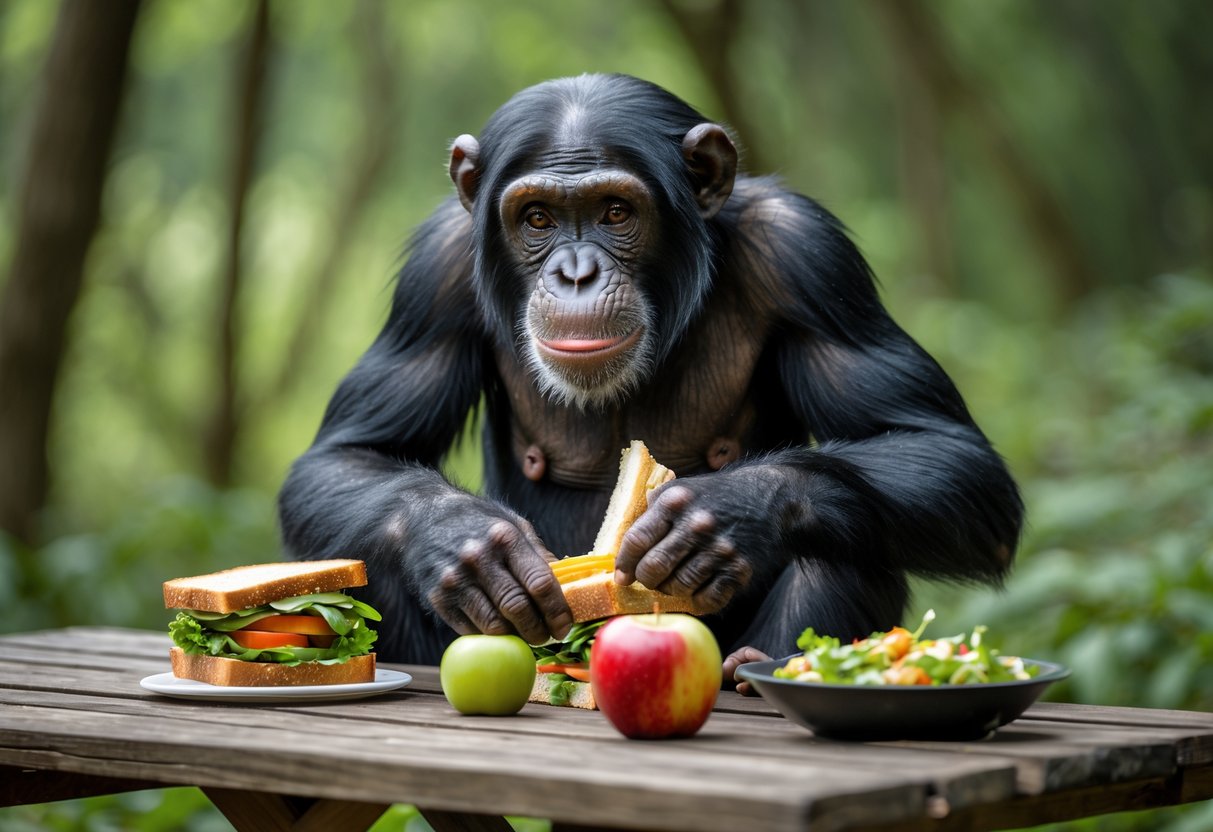
In the wild, chimps mostly munch on fruits, leaves, insects, and sometimes even a bit of meat. In captivity, they adapt to what people give them.
You might find it funny, but chimps actually enjoy bananas, sweet potatoes, and green beans. On the flip side, processed snacks or chocolate? Not a good idea. Knowing what’s safe for them helps us take better care of these amazing animals.
Can Chimpanzees Eat Human Food?

Chimps can eat some human foods, but a lot of what we love just isn’t right for them. Their natural diet is nothing like ours, and giving them people food can cause real health or behavior issues.
If you get the differences, you’ll know what’s safe and what you should skip.
Differences Between Chimpanzee and Human Diets
Chimps mostly stick to fruits, leaves, nuts, insects, and sometimes small animals. These foods give them a solid mix of carbs, protein, and fiber.
Unlike us, they don’t go for processed or sugary stuff. Your favorite snacks—candy, chips, pizza—just aren’t part of their world.
Their bodies can’t really handle high fat, sugar, or salt. Chimps also sometimes eat soil or clay, which, let’s be honest, you probably don’t.
Their food changes with the seasons and their habitat. They rely on fresh, natural options that work for their bodies.
Effects of Human Food on Chimpanzee Health
Fresh fruits and veggies like bananas and sweet potatoes usually sit well with chimps. These foods fit into what they’d eat in the wild and give them nutrients they need.
But processed snacks or sweets? Those can be a disaster. Too much sugar or fat leads to weight gain, diabetes, stomach trouble, and weak immune systems.
If chimps get used to junk food, they might ignore their natural diet. That can mess with their nutrition and even change how they act around other chimps—or people.
Risks of Feeding Human Food to Chimpanzees
Feeding chimps human food brings real risks. If you hand out unhealthy snacks, you could cause obesity or disease.
Chimps might start relying on easy food from people. That can stop them from foraging and lead to risky run-ins with humans.
To keep them healthy, stick with fresh fruits and veggies that match their natural diet. Skip the processed stuff and anything loaded with sugar or fat. If you want more details, check out this guide on what chimps can eat.
Natural Diet and Feeding Behaviors of Chimpanzees

Chimps eat all sorts of things, switching up their diet based on what’s around. They mostly rely on plants but grab protein from insects and small animals, too.
Their knack for using tools helps them grab food that’s tricky to reach.
Primary Foods in the Wild
Wild chimps mostly eat fruits, leaves, nuts, and seeds. Fruits like figs and berries are favorites—they give energy and taste sweet.
Leaves bring extra nutrients, and nuts give healthy fats. Chimps also snack on insects like termites and ants for protein.
In places like Taï National Park in Côte d’Ivoire, chimps enjoy a huge variety of foods because the forest offers so much. Sometimes they even eat soil or clay for digestion or minerals.
Their diet changes with the seasons, depending on what’s out there. This variety helps them stay healthy and adapt to changes in their world.
Role of Tool Use in Foraging
Chimps are clever about getting food. They use sticks to fish termites from mounds and crack open nuts.
Researchers at the Max Planck Institute for Evolutionary Anthropology in Tanzania have watched chimps pick and prep sticks before using them. Tool use really shows off their smarts.
Using tools lets chimps go after foods they couldn’t get otherwise. It’s a pretty good reminder that our early ancestors might’ve done the same when food was scarce or hard to find.
With tools, chimps can expand their diet beyond what they can just grab by hand. That’s a big part of why they thrive in so many different places.
Meat Consumption and Hunting
Most of a chimp’s diet comes from plants, but honestly, they’ll hunt for meat now and then. You’ll see groups working together to catch small animals like monkeys, especially in places like Uganda.
Meat doesn’t make up a big chunk of what they eat, but it matters for the extra protein.
When chimps hunt, you can really see their teamwork and a bit of clever planning in action. It’s tough work, so they don’t do it as often as grabbing fruit or insects.
People have changed things for chimps by poaching and destroying habitats. That makes it harder for them to find food, so being able to hunt and use tools matters even more for their survival out there.


