
Ever spotted a coyote nearby and wondered if they’re actually scared of people? You’re definitely not the only one. Coyotes usually keep their distance and act pretty wary around us.
Most coyotes just want to avoid you and will bolt if you make some noise or let them know you’ve seen them.
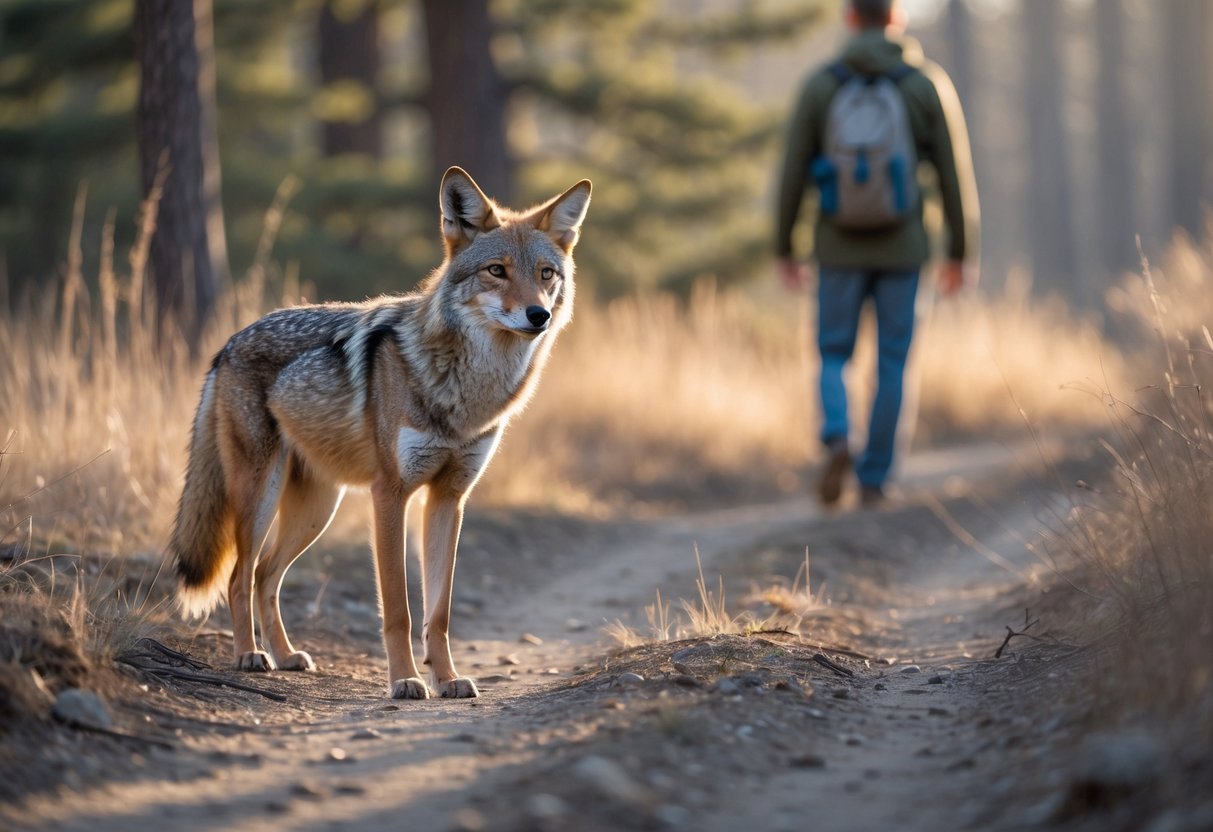
Sometimes, though, coyotes get bolder—especially if they find food near houses or start getting used to people being around. When that happens, they might act less shy and come closer than you’d expect.
If you get how coyotes think, you can keep yourself safer and know what to do if you run into one.
Understanding why coyotes usually fear people—and what makes them lose that fear—can make you feel more confident if you spot one. Plus, it helps you keep your pets, family, and yard a little safer, all while giving the animal its space.
Are Coyotes Naturally Afraid of Us?

Coyotes usually want nothing to do with people. Where they live and their instincts play a big part in how close they’ll get.
If you know what makes them nervous or bold, you can figure out when to be extra cautious.
Natural Instincts Around Humans
Coyotes act cautious by nature and tend to avoid humans. They see bright lights, loud sounds, or sudden movements as threats.
Those instincts help them survive out in the wild.
Most coyotes are nocturnal, so they’re up at night or during dawn and dusk—times when people aren’t out as much. If you spot one during the day, it’s probably just trying to avoid trouble.
Get too close or make some noise, and most coyotes will take off fast. Their fear of people usually keeps them away.
What Causes Coyotes to Lose Fear
Coyotes can lose their fear if they get used to people, a process called habituation. This happens most often when they find easy meals around homes, like pet food or open trash cans.
A coyote that’s gotten used to people might not run when you show up. It might even follow pets or people without much hesitation.
That kind of boldness can turn into a problem.
To keep coyotes wary, don’t leave food outside and make sure your trash is secure. Making noise or waving your arms can remind them to stay away.
Differences Between Urban and Rural Coyotes
Coyotes out in rural areas usually stay far away from people. They hunt at night and just don’t want to deal with humans.
Urban coyotes, though, see people all the time. Because of that, they can get bolder and lose some of that natural caution.
They adapt fast, especially if they find food easily.
So, urban coyotes might show up in your yard or follow pets more often. Still, most prefer to stay hidden if you don’t give them a reason to stick around.
If you want more details about how city life changes coyote behavior, check out Are Coyotes Terrified of Humans? Safety, Behavior & Encounters.
Encouraging Coyote Fear to Protect People and Pets

You can help keep coyotes cautious by making sure they never get too comfortable around your home. It really helps to remind them that your place isn’t safe for them.
Cutting off food and shelter options works, too.
Effective Hazing Techniques
Hazing means scaring coyotes off so they don’t get bold. Walk toward the coyote, wave your arms, or clap loudly.
Yell, or use noisemakers like air horns and whistles.
If you have a hose handy, spraying water at the coyote can work wonders. Tossing small objects, like tennis balls, near (but not at) the coyote also helps.
Repeat these actions whenever you see a coyote on your property so they get the message.
Preventing Habituation
When coyotes lose their fear of people, that’s habituation. You can stop this by never feeding them or leaving food outside.
Even bird feeders can bring in small animals that attract coyotes.
Feed your pets indoors and keep your trash in bins with tight lids. Only put out the garbage on pickup morning, not the night before.
These habits make your yard less tempting for coyotes looking for an easy meal.
Reducing Attractants at Home
Small changes around your house can make a big difference. Pick up fallen fruit from your trees and use fencing to protect gardens.
Keep compost in sealed containers.
Remove bird feeders or use ones that don’t spill seeds on the ground, since that draws in squirrels and other critters. Never leave pet food outside, or you’ll just invite coyotes closer to your home.
How to Protect Livestock and Pets
Coyotes often see small pets as prey and treat livestock like easy pickings. So, keep your pets on a leash and watch them closely outside—especially around dawn or dusk.
Use fences at least 6 feet tall to protect your livestock, and make sure you bury them deep enough to stop coyotes from digging underneath. Try adding a spinning PVC pipe or some outward-facing wire; these tricks can actually keep coyotes from climbing over.
Honestly, just bringing pets indoors at night does a lot to keep them safe.
Want more tips? Check out the Prevent conflicts with coyotes guide.


