
Ever wonder where coyotes go during the day? Honestly, you’re not the only one. These clever animals don’t just disappear—they pick out safe, hidden places to rest and stay out of trouble. Most of the time, coyotes sleep in dens, thick bushes, rock crevices, or even abandoned burrows during daylight hours.
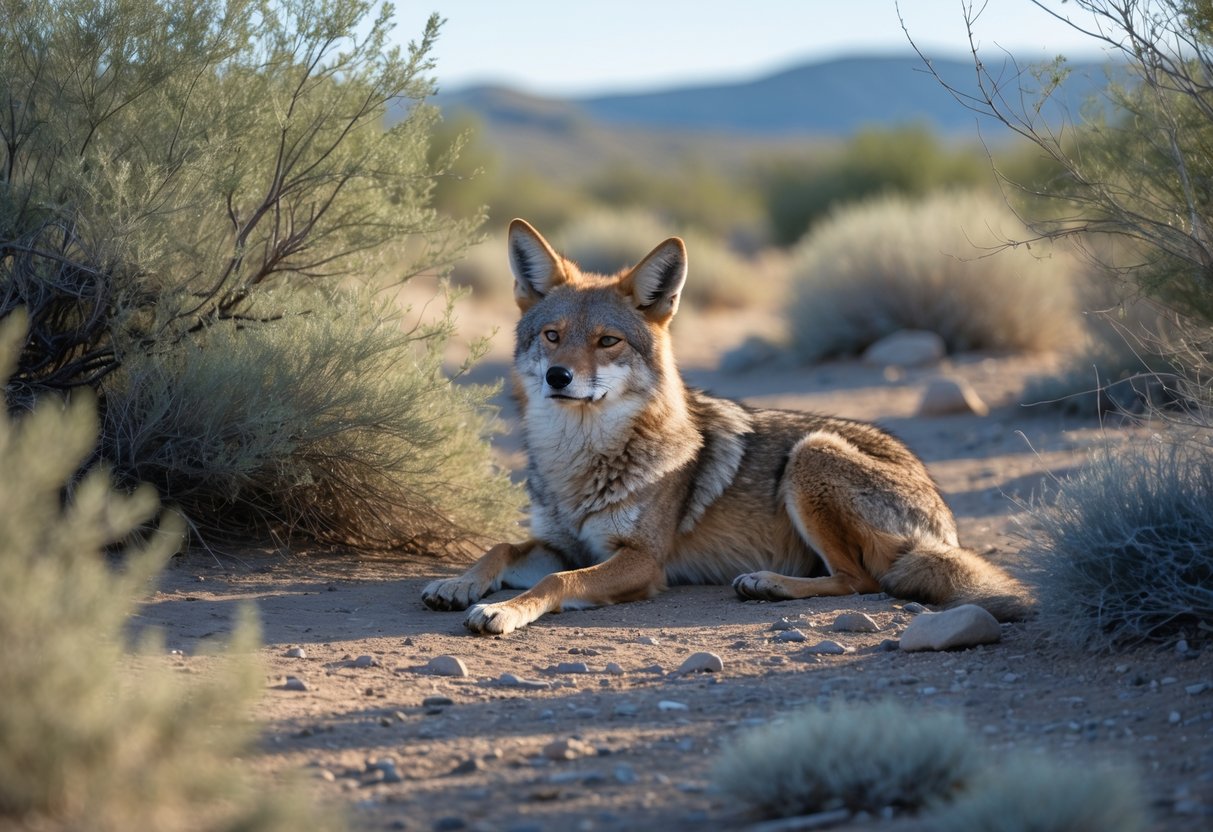
Depending on where they live, you might spot them napping under shrubs in wild spaces. If they’re close to cities, they’ll rest in quieter spots like golf courses or parks.
Coyotes don’t just flop down anywhere—they pick places that help them stay safe while they recharge for nighttime hunting.
If you know where coyotes sleep, you can understand them a bit better and keep a respectful distance. Whether it’s desert, city, or forest, they go for spots with cover and protection that don’t attract attention.
Where Do Coyotes Sleep During the Day?

Coyotes pick safe, quiet places to rest during the day. Their favorite spots change with the environment, but they always want some cover and protection from threats.
You’ll find them in natural dens, urban green spaces, or tucked into thick plants.
Natural Hideouts: Dens, Burrows, and Hollowed-Out Trees
In wild areas, coyotes use natural shelters like dens and burrows. They dig their own dens in soft soil, but sometimes they take over abandoned burrows from animals like badgers or raccoons.
These spots give them a decent vantage point and safety.
If there are hollowed-out trees around, coyotes will rest inside them. The tree hollows offer enough space for them to lay low and keep an eye on things.
These natural hideouts protect coyotes during the day. They really help when they need to stay hidden from predators or people.
Sleeping Habits in Urban Areas: Parks, Golf Courses, and Culverts
Coyotes living near people look for calm green spaces to rest. Parks and golf courses work well because there are plenty of shrubs and open areas where coyotes can hide but still move around.
They also use culverts and other quiet man-made structures for daytime naps. These spots are dark and away from most disturbances, so they’re pretty good for a temporary rest in towns and cities across North America.
You probably won’t see coyotes in busy neighborhoods. They avoid places with lots of people and stick to these quieter spots.
Use of Dense Vegetation and Shrubbery as Daytime Shelter
Dense vegetation and thick shrubbery make perfect daytime hiding spots. Coyotes tuck themselves into bushes or tall grasses that keep them out of sight.
You’ll find this kind of shelter in wild forests and along the edges of cities. The dense plants block wind and noise, which makes their naps a bit more peaceful.
If you live near woods or have heavy shrubbery nearby, that might be where urban coyotes choose to sleep, especially on hot or rainy days.
Coyote Sleep Behavior and Daytime Activity Patterns

Coyotes pick their resting spots carefully and change their activity depending on where they live. Their behavior balances safety, hunting, and avoiding people or predators.
How Coyotes Decide Where to Sleep
Coyotes always look for safe, sheltered places to rest during the day. They dig their own dens or use hollow trees, rock crevices, and abandoned burrows from animals like raccoons or badgers.
These places keep them hidden from predators and out of bad weather.
If you live near forests or prairies, you might find coyotes resting under thick bushes or in tall grass. They avoid plants like poison ivy or anything that might irritate their skin.
Coyotes like spots with a good view so they can watch for danger or prey.
Coyote Activity Patterns: Nocturnal, Diurnal, and Crepuscular
Coyotes are naturally diurnal, so they’d be active during the day. Still, a lot of them shift to being nocturnal or crepuscular (that’s dawn and dusk) to avoid humans.
Rural coyotes often hunt in daylight, focusing on prey like rodents and deer. In or near cities, coyotes usually become more nocturnal to stay safe.
Crepuscular activity lets them hunt when small animals are out and things are quieter.
Adaptations for Safety: Movement, Predator Avoidance, and Rest
Coyotes stay alert even when they’re resting. They sleep in short bursts and can wake up quickly if they hear something.
Their hearing is excellent, so they’ll pick up on danger early.
When they rest, they pick spots with good cover to avoid being seen by predators like wolves or bigger animals. Coyotes also move between multiple dens to keep things clean and avoid insects.
If one den gets exposed or unsafe, they just switch to another. That’s pretty smart, right?
Differences Between Urban and Rural Coyotes
Urban coyotes adapt their habits to survive near people. Usually, they come out at night when the streets are quieter.
They hide their dens in parks, golf courses, or sometimes even under backyard sheds. You might walk past one and never know it.
Rural coyotes keep a more natural routine and move around mostly during the day. They use natural shelters and wander through open spaces like forests or deserts.
Sometimes, you’ll hear rural coyotes howling in daylight, which feels pretty wild compared to their quiet urban relatives.
Curious about where coyotes go during the day? Check out this guide on coyote daytime behavior.


