
When you think of hares in snowy landscapes, you might wonder if Arctic hares and snowshoe hares are the same. However, they are different species, even though they share some similarities. Both belong to the lagomorph family and thrive in cold habitats, but their sizes and specific environments set them apart.
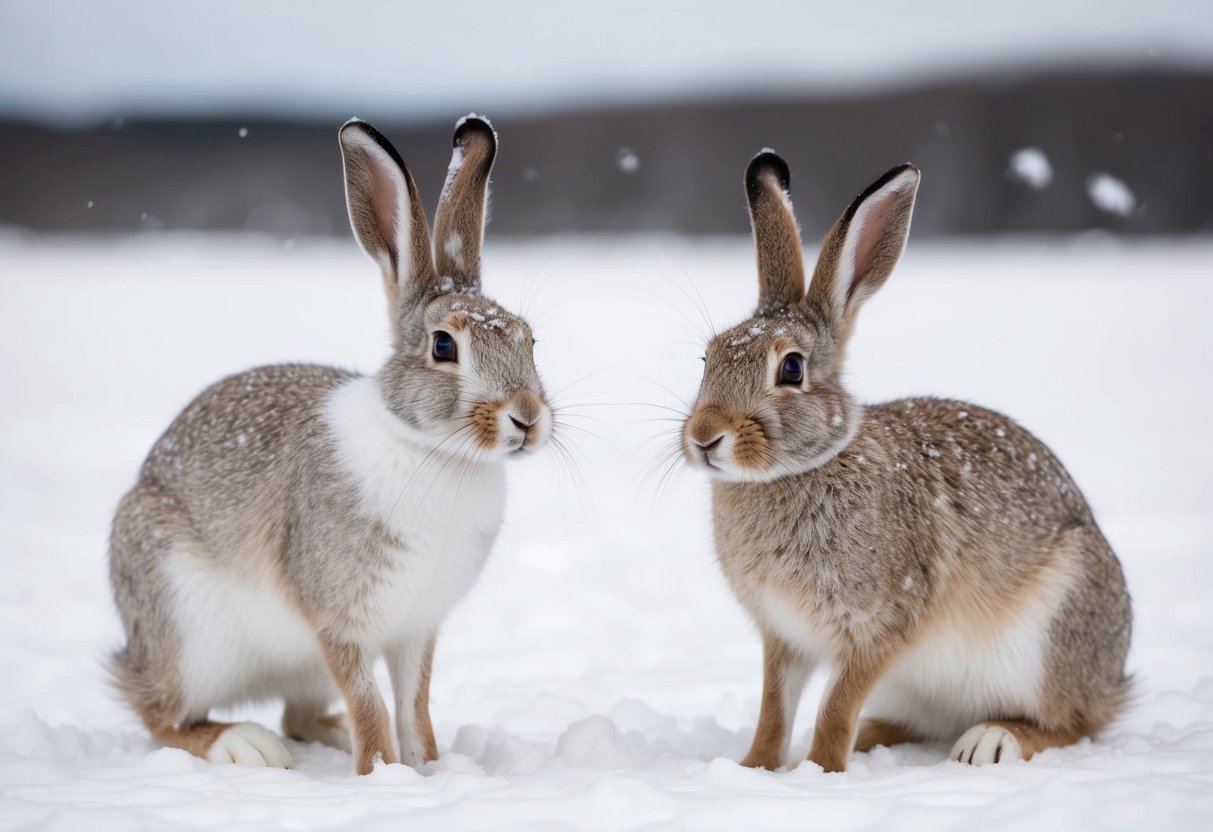
Arctic hares are typically larger and live further north, while snowshoe hares are often found in forested areas of Canada and the northern United States. The snowshoe hare, known scientifically as Lepus americanus, is famous for its large hind feet, which help it move easily over snow. Understanding these differences not only helps you appreciate these fascinating animals but also deepens your connection to the ecosystems they inhabit.
As you read on, you’ll discover more about their unique features, behaviors, and the environments they call home. This knowledge can enrich your experiences in nature and help you identify these amazing creatures on your outdoor adventures.
Understanding Hare Biology and Classification

Hares play an important role in the animal kingdom. In this section, you’ll learn about their scientific classification, how they belong to the Leporidae family, and their unique physical traits and adaptations that help them survive in various environments.
Species Scientific Names and the Leporidae Family
The Arctic hare is scientifically known as Lepus arcticus, while the snowshoe hare is called Lepus americanus. Both species belong to the family Leporidae, which includes all hares and rabbits.
Hares are classified under the order Lagomorpha. This order also contains rabbits and pikas. These mammals thrive in various habitats, from tundras to forests.
In addition to their classification, hares are known to be herbivores. They primarily eat grasses, leaves, and bark, making them important for maintaining their ecosystems.
Physical Characteristics and Adaptations
Hares possess several physical adaptations that help them survive in the wild. Both the Arctic and snowshoe hares have large hind feet. These feet aid in moving quickly across snow and uneven terrain.
Their fur is another key feature. In winter, these hares have a thick winter coat. The Arctic hare’s fur changes colors, often becoming white, which serves as camouflage in snowy environments.
Additionally, both species have strong hind legs. These legs allow them to hop quickly to escape predators or navigate through challenging landscapes. These adaptations make hares fascinating creatures in their habitats.
Distinct Habitats and Distribution
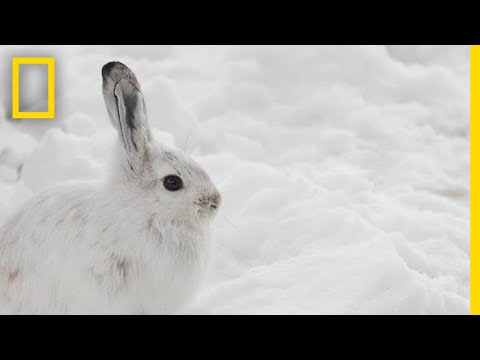
When learning about the habitats of Arctic hares and snowshoe hares, it’s important to recognize their unique preferences for living spaces. These hares thrive in different environments across North America, which influences their behavior and survival.
Boreal Forests and Tundra Regions
Arctic hares are often found in the tundra regions of Northern Canada and Greenland. These areas have harsh winters, where temperatures can plummet. These hares are well adapted to cold, with dense fur that provides insulation.
In contrast, snowshoe hares inhabit boreal forests across parts of Canada and the northern United States. They prefer environments with plenty of cover, such as shrubs and dense underbrush. This habitat provides safe spaces from predators. The snowshoe hare is known for its large feet, which help it move easily on snow.
Geographical Spread Across North America
The geographical spread of these hares varies significantly. Arctic hares mainly reside in the northern tundra, stretching over Greenland and the Arctic Ocean’s edges. Meanwhile, snowshoe hares are more widespread, found in the Rocky Mountains and Appalachian Mountains.
You can spot snowshoe hares from Northern California to the Northern United States and throughout Canada. Their ability to adapt to various forest ecosystems helps them thrive. Understanding these distributions allows you to better appreciate these fascinating creatures and their unique habitats.
Reproductive Behavior and Life Cycle
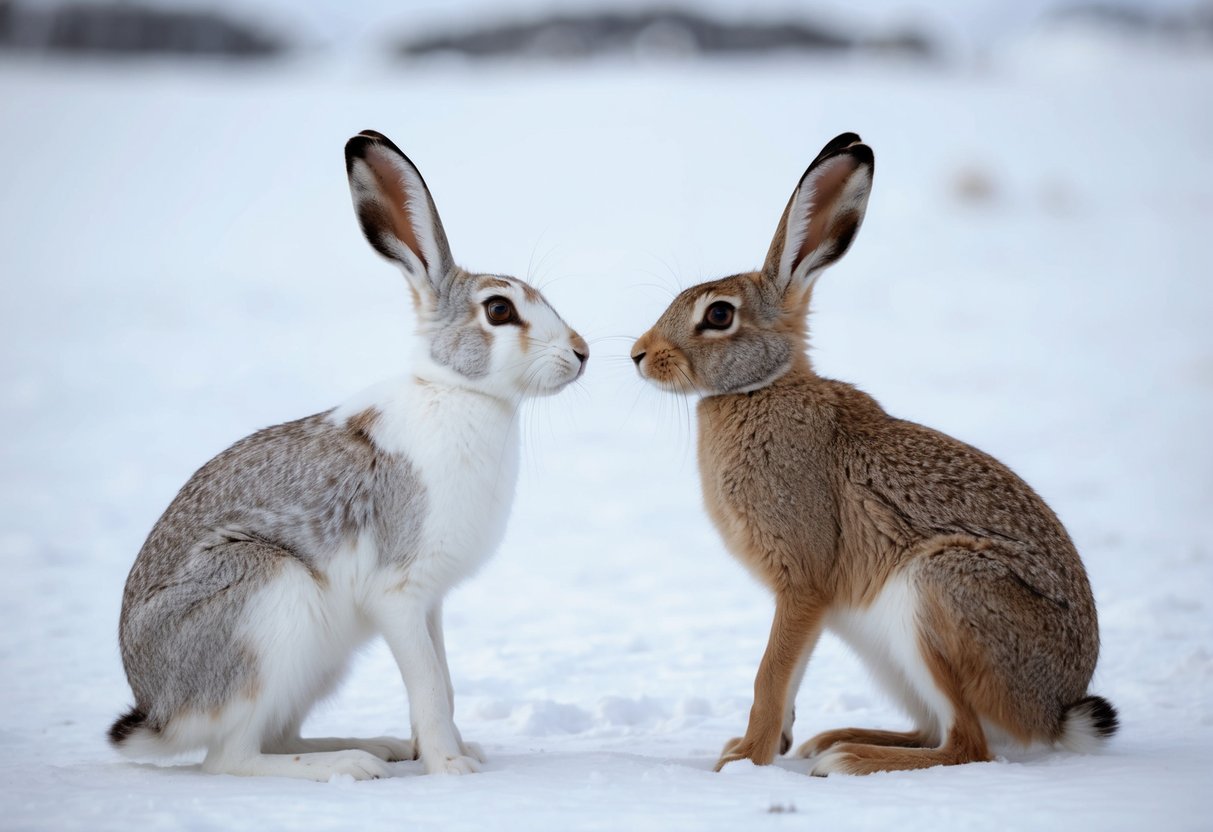
Arctic hares and snowshoe hares have unique reproductive behaviors and life cycles that are adapted to their environments. Understanding these aspects can help you appreciate how these animals thrive despite harsh conditions.
Mating Rituals and Breeding Season
Both Arctic hares and snowshoe hares have distinct mating rituals. Breeding typically occurs in the spring. Males establish territories and may engage in various displays to attract females. This can include chasing and boxing behavior.
The breeding season is crucial for survival. Arctic hares usually mate once a year, while snowshoe hares can breed up to four times. After mating, the gestation period lasts around 50 to 60 days. During this time, females prepare nests made of grass and fur.
Raising Young: From Leverets to Independence
Once the young, known as leverets, are born, they are well-developed and fur-covered. They are often born in litters of 2 to 4. This helps ensure that some will survive, as predators often target these young hares.
Females nurse their leverets for about 4 to 6 weeks. After this period, the leverets are weaned. They begin to venture out on their own, learning to find food. By late summer, they are independent and ready to explore their surroundings. Understanding these stages helps you see the incredible resilience of hares in their natural habitats.
Survival Strategies and Predatory Challenges
Arctic hares and snowshoe hares have unique ways to survive in their harsh environments. They face various predators and must adapt their behaviors and physical traits to thrive despite the threats around them.
Predators and Natural Threats
Arctic and snowshoe hares have many natural predators. Some of the main ones include lynx, foxes, coyotes, wolves, owls, and bobcats. These animals all depend on hares as a key food source.
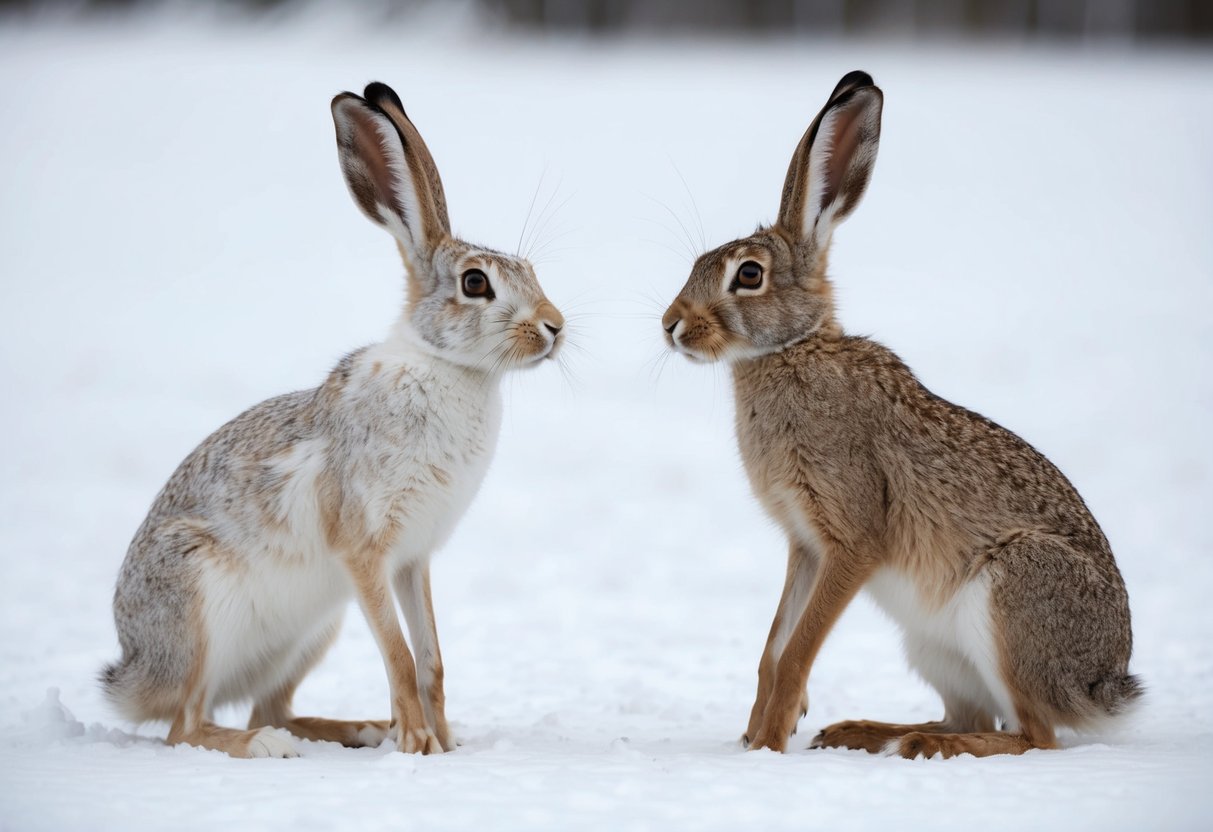
Hares use camouflage to blend into their surroundings. In winter, their white fur helps them hide in the snow, while their brown summer coat allows them to blend with the earth. Despite this, they cannot avoid predators all the time. Their speed plays a vital role in escape, allowing them to run quickly to evade danger.
Hares in the Food Chain and Ecosystem
Hares are essential parts of the food chain. They contribute to the balance of their ecosystems by providing sustenance for larger carnivores. When predator populations grow, hare numbers are affected, highlighting the importance of this balance.
In snow-covered areas, you may see hare tracks in the snow, indicating their activity. This rich food source is crucial for maintaining the population of predators like mink and martens. The IUCN Red List classifies some hare species, emphasizing their ecological significance and the impact of environmental changes on their survival.


