
If a bee lands on you, it’s pretty normal to feel a jolt of worry. But here’s the thing—most bees don’t sting unless they get spooked or feel threatened. They’re often just taking a break or checking things out.
Try to stay calm. If you move suddenly, you might make the bee nervous, and that’s when stings are more likely.
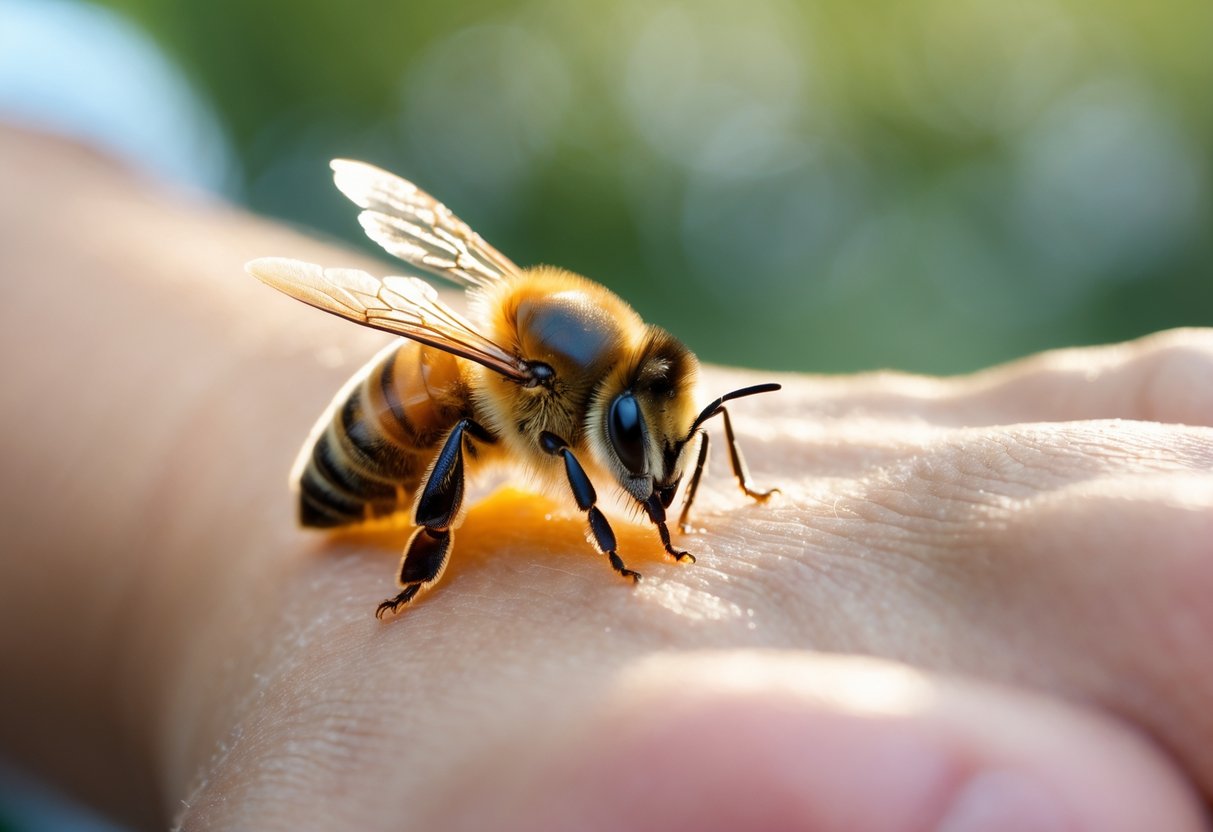
You might wonder why some bees sting while others don’t bother. Bees usually sting to protect themselves or their hive.
If you leave them alone and don’t swat at them, they’ll probably just fly away.
How you react when a bee lands on you can make a big difference. Staying still or gently blowing on the bee often encourages it to move along.
What Happens When a Bee Lands on You?

When a bee lands on you, it’s usually just curious. Maybe something about you—your scent or color—caught its attention.
Bees almost never sting right away. The bee’s behavior and type matter a lot when it comes to stinging.
Bee Behavior and Reasons for Landing
Bees love smells like sweat, perfume, or anything sugary on your skin or clothes. Sometimes, they’re just tired and want to rest.
They use their sense of smell to check for nectar or food sources. A bee landing isn’t usually a bad sign.
Bees don’t sting unless they get scared or feel attacked. If you stay calm and don’t move too much, the bee will probably leave on its own.
Swatting at a bee can make it feel threatened, and that’s when it might sting.
Will Bees Sting When They Land on People?
Most bees won’t sting just because they land on you. They only sting if they sense danger.
Female bees have stingers and mainly use them to protect the colony. If you keep still and calm, you lower your chances of a sting.
Honey bees can only sting once, and then they die. Bumble bees and carpenter bees can sting more than once, but they usually don’t want to.
Male bees can’t sting at all.
Types of Bees and Stinging Habits
You might see a few common types of bees around:
| Bee Type | Can Sting? | Stinging Behavior |
|---|---|---|
| Honey Bee | Yes, females only | Sting once, then die to protect colony |
| Bumble Bee | Yes, females only | Can sting multiple times but usually won’t |
| Carpenter Bee | Yes, females only | Can sting multiple times but rarely aggressive |
| Male Bees | No | Cannot sting |
Knowing what kind of bee you’re dealing with helps. Most pollinators like honey bees and bumble bees just want nectar, not trouble.
Staying Safe During and After Bee Encounters

When a bee lands on you, keeping your cool really lowers your chance of a sting. Spotting signs of an allergic reaction fast is important.
You can take a few easy steps to avoid stings when you’re outside.
How to Respond If a Bee Lands on You
If a bee lands on you, stay as still as you can and don’t make sudden movements. Bees only sting if they feel threatened.
Quick or jerky motions might make the bee defensive.
You can gently brush the bee off with a slow, smooth motion. Or just wait and let it fly away.
Don’t swat or slap at the bee because that usually makes things worse.
If you get stung, calmly move away from the area. That helps you avoid attracting more bees or wasps, like yellow jackets, which can get aggressive.
Always check your skin for any leftover stinger. Remove it by scraping sideways with a fingernail or a plastic card.
Recognizing and Managing Sting Reactions
Most people get minor reactions after a sting—just some redness, swelling, and pain. You can use ice and over-the-counter pain meds to help with the discomfort.
If you’re allergic to insect stings, watch for signs of a severe allergic reaction (anaphylaxis). Symptoms include trouble breathing, swelling in your face or throat, dizziness, or a really fast pulse.
If that happens, use an EpiPen if you have one and call emergency services right away.
Quick treatment is super important for anaphylaxis, especially if you’ve been stung by wasps or yellow jackets, which sometimes cause stronger reactions than bees.
Preventing Future Stings
If you want to avoid stings, skip the bright clothes and leave the perfumes or scented lotions at home—they tend to draw in bees and wasps. I’d also keep away from flower beds, beehives, and anywhere you see lots of buzzing insects.
Wear protective clothing, like long sleeves, pants, or even a hat with a veil, especially if you’re heading into places where bees or wasps hang out.
If you know you’re allergic, always keep your EpiPen close. Let people around you know about your allergy, too.
Keep an eye on your surroundings and try not to mess with insect nests. Honestly, just moving slowly and staying calm makes a big difference—it really does help you avoid getting stung.
For more tips, check out this guide on how to stay safe when a bee lands on you.


