
When your bird refuses to come out of her cage, it can be confusing and, honestly, a bit frustrating. Most of the time, she just feels safer inside the cage than out in the open.
Birds sometimes develop a fear of the outside world, especially if they haven’t spent much time out or had enough social interaction.
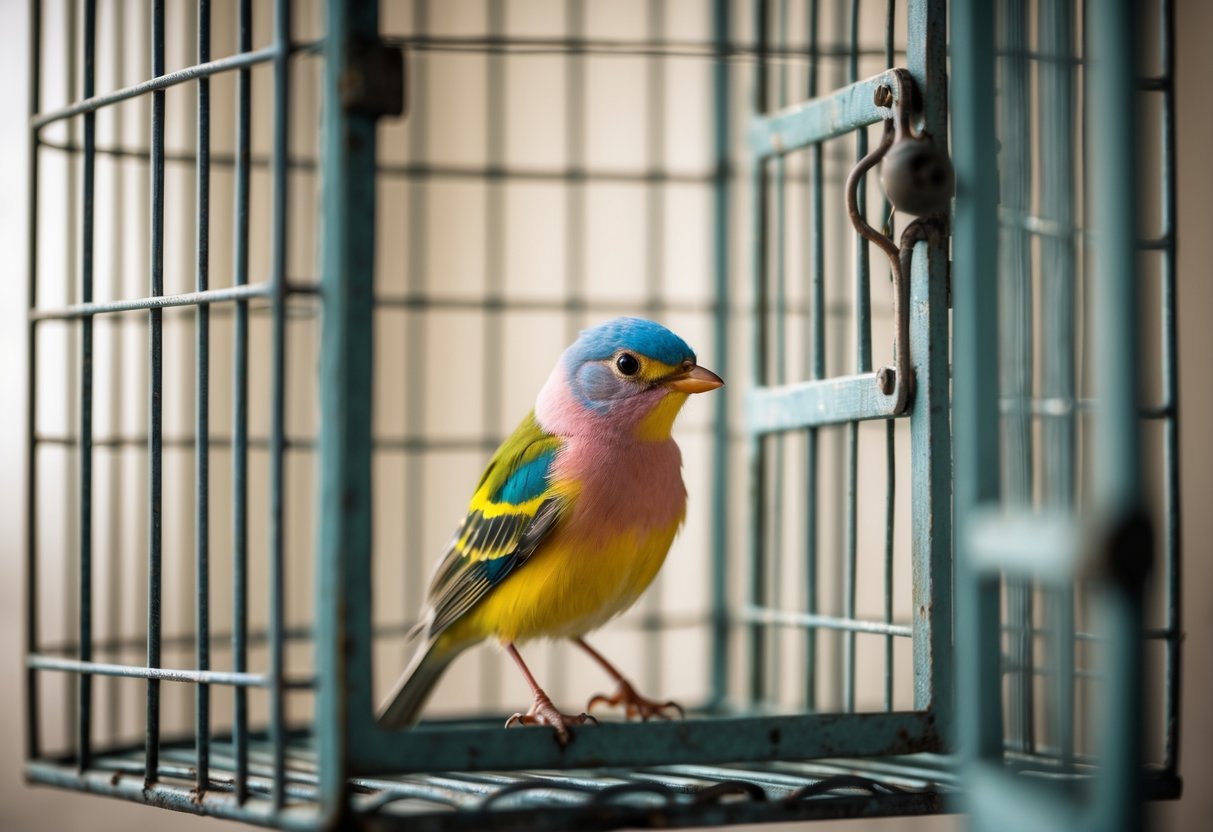
Your bird might see her cage as a cozy home and worry about what’s out there. Past experiences like neglect or stress can really shape this behavior.
If you want to help her feel more comfortable outside, it helps to start by understanding why she acts this way in the first place.
Understanding the Bird’s Refusal

When a bird refuses to leave her cage, she’s acting on how she sees freedom, her instincts, and her feelings about being inside versus outside. Her choice isn’t just about staying put—it’s tied to what makes her feel safe and comfortable.
Desire for Freedom and Natural Instincts
Your bird’s refusal to come out often connects to her deep need for freedom. Parrots and other birds are born to fly and explore big, open spaces—skies, trees, lakes, you name it.
Inside the cage, she might catch glimpses of the world outside, but it’s never quite the same as actually being out there.
Her instincts push her to roam, but she also weighs that urge against the safety of her cage. Leaving a familiar, protected spot can feel risky, especially if she hasn’t learned to trust what’s beyond the bars.
Differences Between Flying and Being Caged
Flying lets your bird go anywhere, whenever she wants. The cage, though, keeps her movements limited.
When she looks out through the bars, the world looks different. It’s not like soaring over rice fields or gliding by a lake.
She might see willow trees or water, but she can’t interact with them the way she would in the wild. That gap between seeing and actually doing things can be confusing or even frustrating for her.
So, if she doesn’t see being outside as truly free, she might just stay where she feels in control.
Effect on Bird’s Happiness and Wellbeing
Your bird’s happiness depends on feeling both safe and free—kind of a tricky balance. If she feels stuck in a cage she doesn’t want, she can get stressed or bored.
But if she leaves before she’s ready, she might get scared, which doesn’t help her emotional health.
If you notice your bird refusing to leave, she might feel threatened or uneasy. Maybe she’s had bad experiences, isn’t feeling well, or there’s been a change near her cage.
To keep her happy, try to create a calm environment, offer treats, and let her come out only when she feels safe.
Tips to improve wellbeing:
- Set the cage so your bird can see peaceful things, like trees or lakes
- Keep loud noises and sudden moves away from her
- Give gentle praise and treats for any small steps she takes toward coming out
These little steps can help her relax. Over time, she might even start enjoying her time outside the cage.
Real-Life and Educational Perspectives
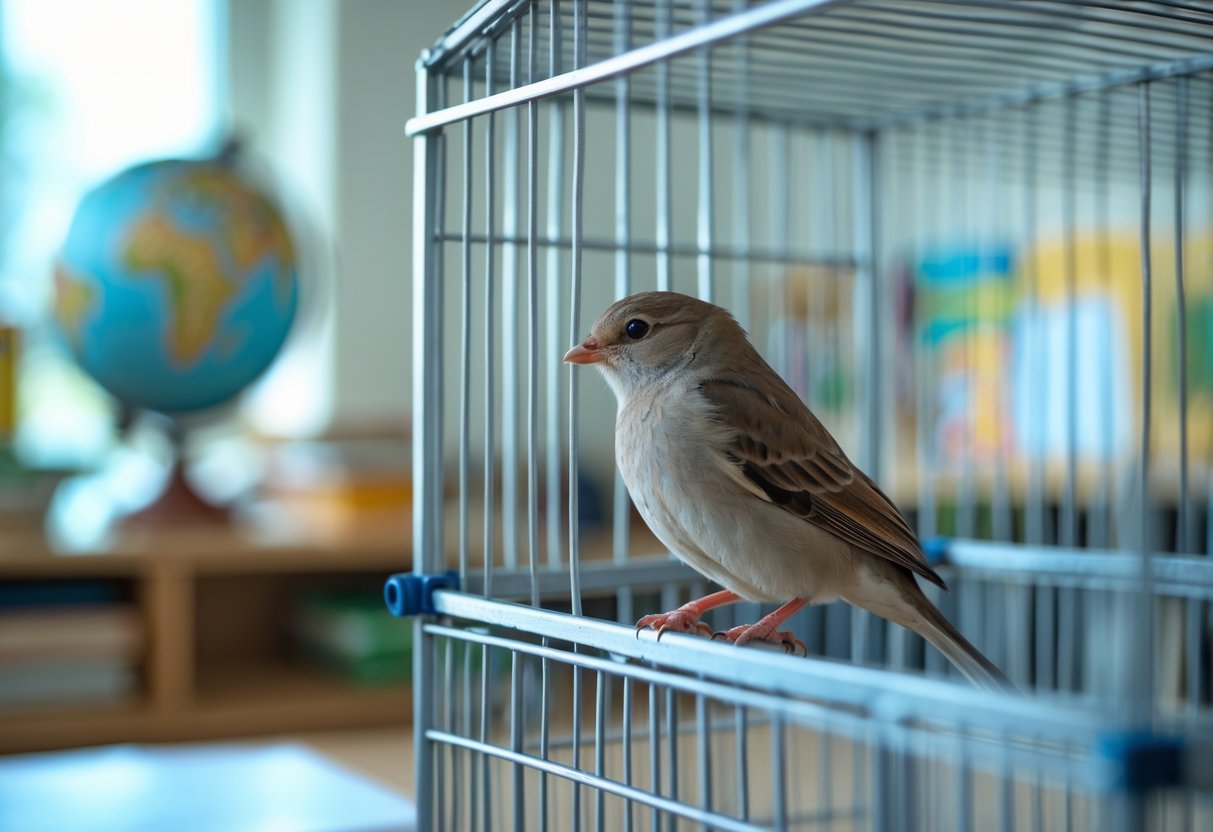
Figuring out why a bird might refuse to leave her cage teaches us a lot about freedom, comfort, and safety. It’s something you’ll come across in school lessons too, especially if you’re caring for pet birds like parrots.
Lessons from NCERT Solutions and CBSE Contexts
If you’re studying this story or poem in your CBSE or NCERT syllabus, you’ll notice it’s not just about a bird. The bird’s refusal to leave her cage shows that freedom isn’t only about space.
She feels safer and more secure inside because the outside world seems unfamiliar, maybe even scary.
NCERT solutions often focus on how the bird’s view changes from inside the cage. You learn that freedom means more than just moving around—it’s about feeling safe and comfortable, too.
This helps you understand feelings like fear, hope, and the search for real freedom.
Advice for Caretakers of Parrots and Pet Birds
If you’ve got a pet bird or parrot, you might notice your feathered friend sometimes refuses to leave its cage. Birds usually stick close to their cages because they feel safe there. After all, that’s their home and shelter.
So, what can you do to help your bird? First off, try making the area outside the cage feel safe and familiar. If it’s too new or noisy, your bird might just dig in and refuse to budge.
Let your bird check things out at its own pace. Don’t rush it—give your bird time to take those first steps outside.
Toss a few toys and perches both inside and outside the cage. This keeps your bird curious and gives it a reason to explore.
Keep an eye on how your bird acts. Watch for signs of stress or comfort—sometimes it’s hard to tell, but you’ll pick it up with time.


