
Ever notice a red bump hanging around after a bee sting? Honestly, it’s pretty normal—your body’s just fighting off the venom.
Your immune system sends cells to the sting site to heal and protect you, which is why that red bump shows up. You’ll probably get some swelling, redness, and itching too.
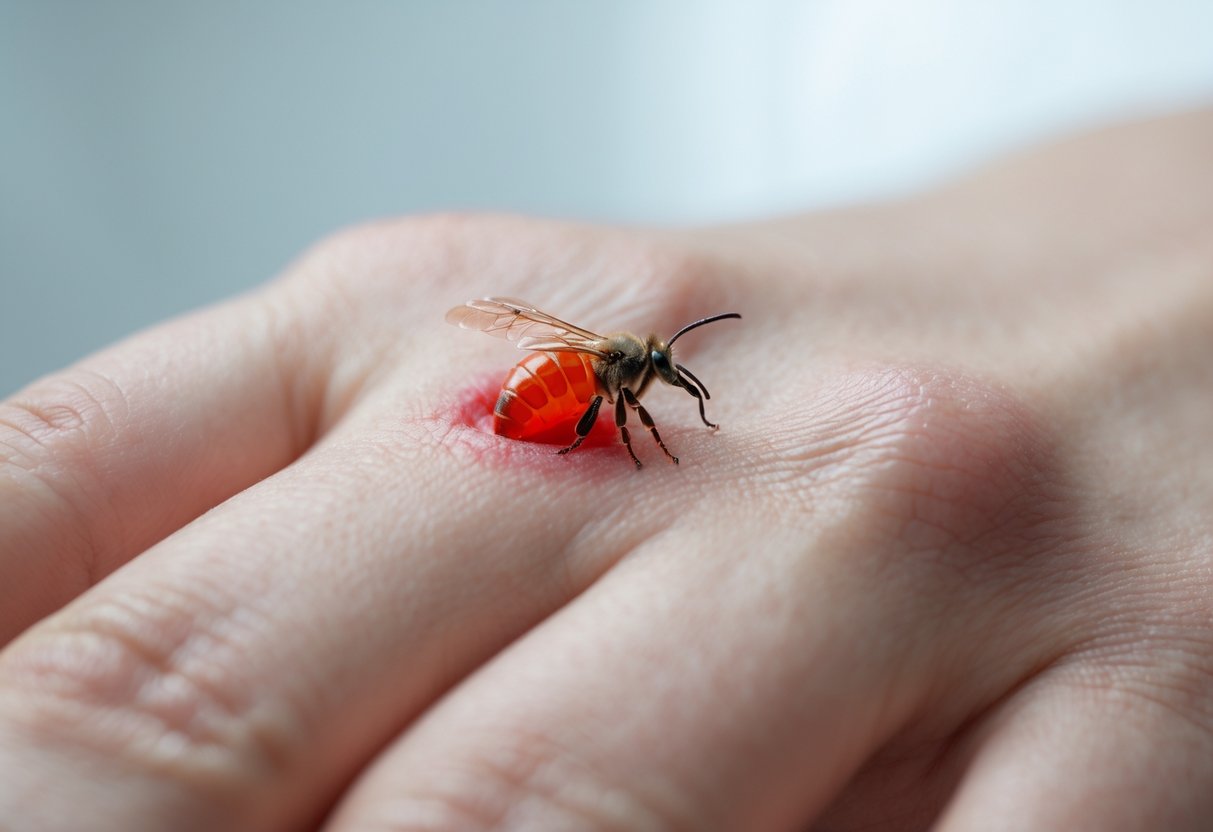
Sometimes, the bump sticks around or even gets bigger for a couple of days. The venom causes inflammation, and your skin just needs a little time to calm down.
If the bump gets super painful, starts spreading, or looks infected, it’s probably smart to check with a doctor. Most of the time, though, the bump fades as your body does its thing.
Why Do Bee Stings Cause a Red Bump?

When a bee stings you, your body jumps into action against the venom. The skin around the sting changes almost right away.
That red bump is just your body’s way of dealing with the sting and trying to protect you.
How Bee Venom Triggers Local Reactions
Bee venom has chemicals that mess with your skin and immune system. Melittin, one of the main ones, damages cells and makes blood vessels open up.
This helps immune cells rush to the sting and kick off the healing process.
The venom also creates swelling and redness as your body tries to trap the venom and keep out infection. That’s where the red bump comes from—it can hurt or itch, sometimes both.
If the stinger’s still in your skin, it keeps pumping out venom until you pull it out.
What a Normal Bee Sting Reaction Looks Like
Usually, you’ll see redness, swelling, and a raised bump around the sting. The bump might get bigger in the first day or two.
It can feel warm or sore when you touch it.
For most people, the bump shrinks and fades after a few days. Blisters or pus don’t show up often, but they can.
If redness, pain, or warmth spread beyond the sting, keep an eye out for infection.
Redness Versus Hives: Telling the Difference
A red bump from a bee sting stays close to where you got stung. It’s a local skin reaction.
Hives are different. They’re raised, itchy, red patches that can pop up anywhere on your body.
If you spot hives or red patches away from the sting, you might be having an allergic reaction. Watch for trouble breathing or swelling in your face—those need quick medical help.
Want more info on bee sting infections? Check out how to tell if your bee sting is infected.
When to Worry About Your Bee Sting Bump

Not every red bump after a bee sting means something’s wrong, but you should pay attention to changes. Some signs could mean infection or a serious allergic reaction.
If you notice things getting worse or spreading, don’t ignore it.
Signs of Infection or Allergic Reactions
If the sting site gets more painful, swollen, or red a day or two later, infection might be starting. Warmth around the bump, pus, or redness that spreads are all red flags.
Try not to scratch—it can make things worse.
An allergic reaction can give you a big, hard lump that keeps growing or gets super itchy. Hives or a rash away from the sting are also possible.
If you spot these, it’s probably time to check in with a doctor. Keep an eye on the bump for the first 48 hours.
Symptoms That Require an Emergency Room Visit
Head straight to the ER if you have trouble breathing, swelling in your face, throat, or tongue, or chest tightness. These can mean a life-threatening allergic reaction.
Other urgent symptoms include fainting, a racing heartbeat, or feeling really weak or dizzy.
If you get stung lots of times, watch for nausea, vomiting, or fever. Those could mean your body’s overwhelmed and needs help fast.
Delayed Reactions to Insect Stings
Sometimes your body waits hours—or even days—before reacting. You might notice swelling or new bumps popping up far from where you got stung.
These reactions don’t happen as often, but they’re worth paying attention to.
If you start getting new symptoms like a rash, fever, or joint pain days after the sting, you should reach out to a doctor. Delayed responses like these could need treatment, just to be safe.
Keep an eye on your symptoms until they’re completely gone.
For more details, check out signs of infection or allergic reactions here and when to see a doctor for serious reactions here.


