
Have you ever wondered why snowshoe hares change color with the seasons? This fascinating adaptation helps them survive against predators in their changing habitats. Snowshoe hares take on a white coat in winter to blend in with the snow and a brown coat during summer to match the earth and foliage.
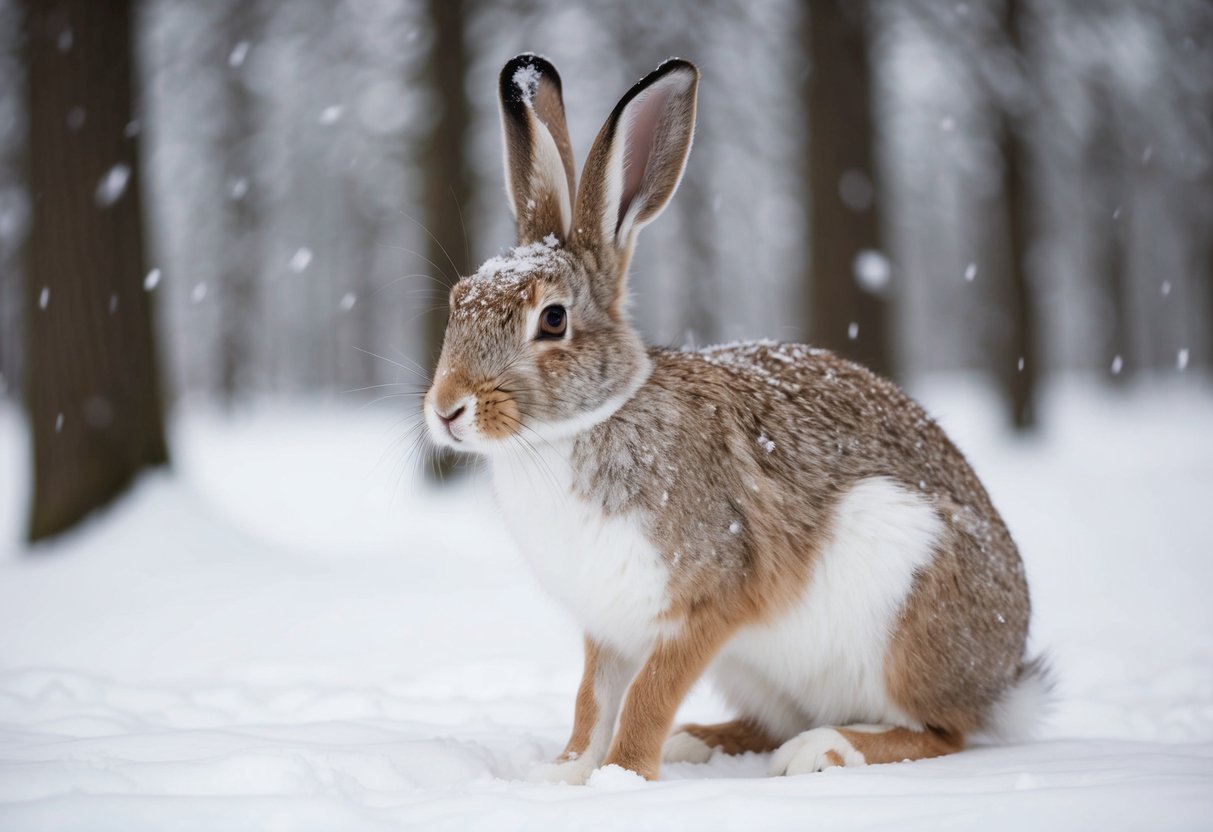
This remarkable ability to camouflage not only helps the hares avoid detection but also highlights how animals adapt to their environments. As the seasons shift, these hares transform their coats to stay hidden, ensuring they can go about their lives without becoming a meal.
As climate change affects snowfall patterns, the timing of this color change can become mismatched with their surroundings. This makes understanding their behavior even more important. You’ll find the relationship between snowshoe hares, their coat color, and survival both intriguing and essential for the health of their ecosystem.
The Biology of Color Change

Snow hares are fascinating creatures, especially when you consider their ability to change color with the seasons. This adaptation serves as a survival strategy, helping them blend into their environment.
Two main aspects of this biology include the process of molting and the genetic factors that control this remarkable color shift.
Understanding Seasonal Molting
Every autumn, snow hares undergo a seasonal molt that transforms their brown coats into white ones. This change is crucial for camouflage during winter in snowy environments. The entire process takes about one month.
As temperatures drop and snow begins to fall, your hare will shed its old fur and grow new white fur. This adaptation helps you stay hidden from predators, making it much harder for them to spot you against the snow.
In areas like Montana, where snow comes in and out, timing this molt is critical for survival. If snow arrives late, you might still have your white coat, making you easily visible against a brown background.
Genetics Behind Pigmentation
The color change in snow hares is underpinned by genetic variation. Specific pigmentation genes are responsible for controlling the fur color you see. These genes dictate whether your hare will display a brown or white coat.
Research shows that certain genetic factors influence the timing and effectiveness of this color change. If conditions are right, you can successfully transition from brown to white. However, changes in climate can disrupt this timing, leading to situations where hares are not well camouflaged. As climate change progresses, it raises concerns about how these pigmentation genes will adapt, affecting how well you blend into your surroundings during winter.
Adaptations to the Environment
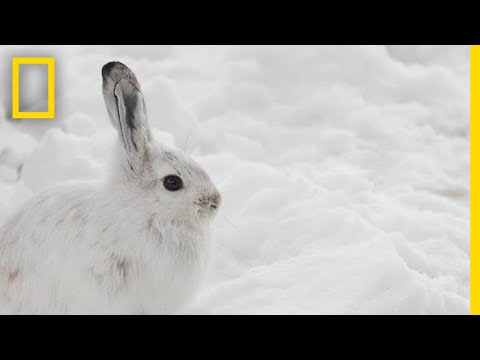
Snowshoe hares are fascinating creatures that adapt to their environments in clever ways. Their seasonal color changes help them survive by blending in with surrounding landscapes. Understanding the influences of habitat, climate, and environmental cues is key to appreciating how these adaptations work.
Habitat and Climate Impact
Snowshoe hares live mainly in boreal forests, where snow covers the ground during winter. This habitat provides them with a unique challenge and opportunity.
As climate change affects these regions, the timing and extent of snow cover can vary significantly.
If winters are milder and snow cover decreases, hares may struggle to camouflage themselves. This can lead to more hares being spotted by predators. Hares that adapt quickly to these changing conditions may have a better chance of survival.
Snow Cover and Temperature Effects
The snow cover depth influences how snowshoe hares change color. During autumn, their fur transforms from brown to white, allowing them to blend in with the snowy landscape.
If snow arrives late, or it melts early, hares may still be in their white coats while the ground is largely bare.
Temperature plays a vital role here. Warmer winters can lead to shorter periods of snow cover, leaving hares exposed. This situation puts them at risk from predators like foxes and coyotes. Therefore, adapting to the extent of snow cover is crucial for their survival.
Photoperiod and Environmental Cues
The change in coat color of snowshoe hares is also triggered by photoperiod, which is the duration of daylight. Hares sense longer days in spring, prompting them to shift back to brown. This reaction helps them match their fur color to the changing environment.
Environmental cues, such as changes in temperature, also inform their seasonal transformations. As you explore these adaptations, you can appreciate how closely snowshoe hares align their survival strategies with the rhythms of their habitats.
Interactions with Predators and Ecosystem

Snowshoe hares play a significant role in their ecosystem, interacting closely with their natural predators. Their remarkable ability to change color helps them avoid detection and stay safe.
Natural Predators and Camouflage Efficacy
Snowshoe hares face threats from various predators, including weasels and arctic foxes. During the winter, their white fur helps them blend into the snowy landscape. This camouflage is crucial for evading predators that rely on sight to hunt.
When the hares don’t change color in sync with their surroundings, they become more visible. For example, if snow melts early, hares might still be in their white coats, making them easy targets. The balance between camouflage and visibility is essential for their survival, directly affecting their population in the wild.
Role in Boreal Forest Ecosystems
In boreal forests, snowshoe hares are considered a keystone species. Their grazing habits help shape the plant life around them.
By feeding on shrubs and young trees, hares control plant growth, which benefits other wildlife in the habitat.
This interaction supports a variety of animals, from birds to larger predators. The presence of healthy hare populations indicates a stable ecosystem. Conservation efforts focus on protecting hares, as their well-being reflects the health of the boreal forests they inhabit. Regular ecological monitoring can help track their numbers and ensure they thrive in their environment.
Challenges and Conservation Efforts
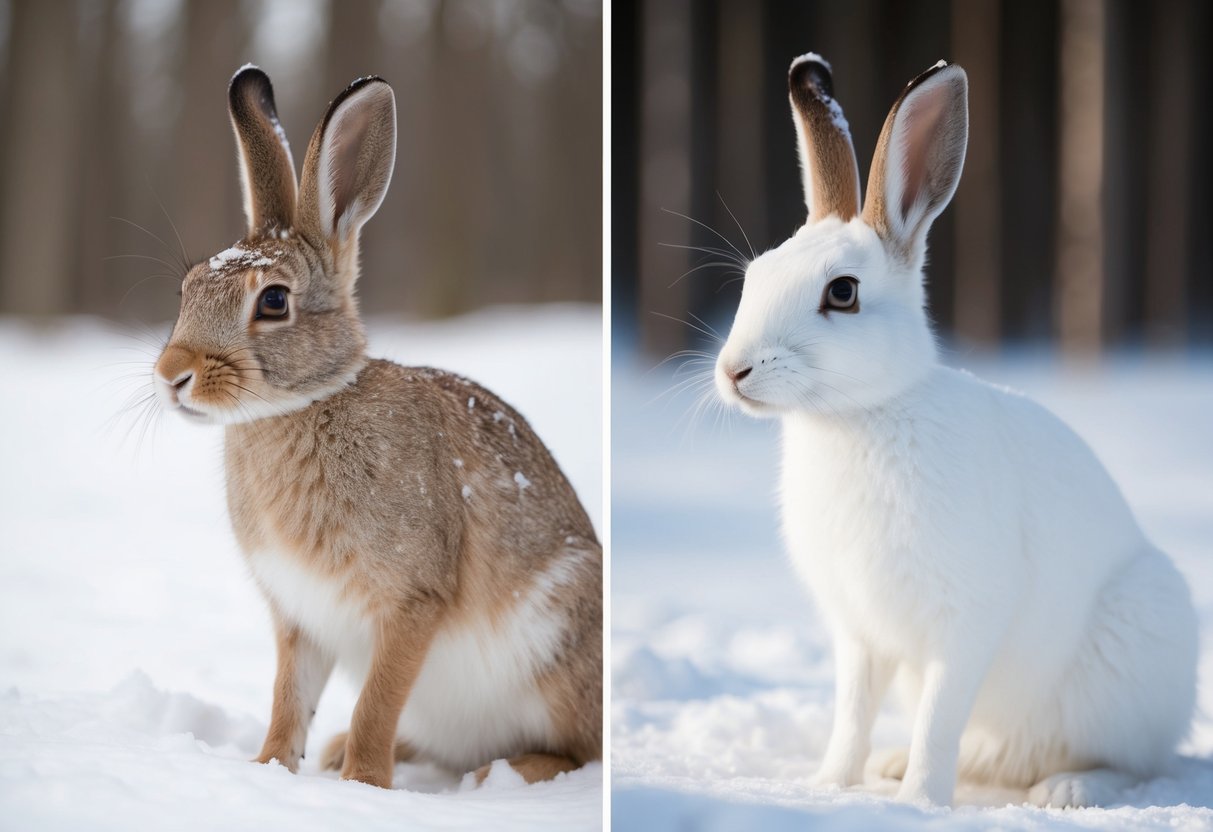
Snowshoe hares face significant challenges due to changing climates. Their ability to adapt their fur color is affected by global warming, making them vulnerable to predators. Conservation efforts are essential to help them thrive in rapidly changing environments.
Impact of Global Warming on Seasonal Adaptations
As temperatures rise, snowshoe hares struggle to change their fur color in sync with the seasons.
In areas like the Yukon Territory, where snow comes later or melts earlier, the white fur can make them easier targets for predators.
Studies show that snowshoe hares rely on environmental cues like snow depth and temperature to trigger their color change. When these signals are confused by climate change, hares may remain brown longer into winter. This mismatch can lead to higher predation rates, significantly affecting their populations in regions across North America, especially in the Pacific Northwest.
Conservation Strategies and Ecological Monitoring
Conservationists focus on long-term ecological monitoring to protect snowshoe hares. They track hare populations and their habitats to understand how climate change impacts their survival.
Efforts include creating protected areas where hares can live without excessive human interference. Researchers also work on adaptive management strategies. These strategies allow hares to migrate to areas less affected by climate change.
You can also help by supporting local conservation organizations and advocating for policies that address climate change. Your involvement supports the research and actions needed to ensure snowshoe hares can adapt and thrive in their natural environments.


