
Picture two powerful animals circling each other—you can’t help but wonder, who’s really got the upper hand? Most of the time, hyenas fear lions because lions kill them, take over prime food sources, and use their numbers and brute male strength to push hyenas off kills.
Lions bring a real, immediate danger. That’s why hyenas shift their timing, tactics, and group size to dodge deadly run-ins.

This fear shapes daily life for both species. Hyenas change when they hunt, which carcasses they grab, and how many show up to face off with lions.
Let’s break down the direct threats, the food battles, and the social strategies that keep hyenas wary.
Why Do Hyenas Fear Lions?

Hyenas deal with bigger, stronger lions who fight for the same food and control big stretches of the African savanna. You’ll notice how male lions, direct attacks, territorial squabbles, and survival choices shape the daily lives of both animals.
Threat of Male Lions
Male lions, honestly, are massive compared to spotted hyenas. One adult male can weigh 180–250 kg. You can see why hyenas usually keep their distance.
That size, the mane, and an aggressive attitude make male lions the most intimidating to hyenas.
Male lions behave differently around kills and borders. Sometimes, they’ll kill hyenas just to cut down on competition or to keep a pride’s meal safe.
When a group of males passes through, hyena clans often pull back or hide until the coast is clear.
Hyenas don’t take chances with males. They keep watch, sound warnings, and only go for kills if no males are around.
If you want to dive deeper, check out this discussion on their rivalry and ecology at the Institute for Environmental Research. (https://iere.org/why-lions-are-afraid-of-hyenas/)
Direct Predation and Confrontations
Lions kill hyenas in fights over food or territory. These clashes can leave hyenas badly hurt or dead.
Even though attacks don’t happen every day, the risk is always there—and that changes how hyenas act.
Group size makes a difference. A lone hyena or a small group usually loses to even a few lions.
Bigger hyena clans sometimes chase lions off a carcass, but a fight with male lions or a full pride is really dangerous. Hyenas usually try to avoid those situations.
Lions don’t just fight—they steal kills from hyenas, too. This food theft (kleptoparasitism) means hyenas lose meals and face more danger.
You can read more about this competition and their long-term battles for space here. (https://pmc.ncbi.nlm.nih.gov/articles/PMC5167031/)
Territorial Disputes
Territory overlaps create constant tension out on the savanna. Lion prides and hyena clans often lay claim to neighboring or overlapping areas, sparking regular border fights.
You’ll see aggressive displays, chases, and sometimes deadly battles where territories meet.
Territorial fights break out when either group defends dens, water, or the best hunting grounds. Male lions patrol and defend big chunks of their pride’s range.
Hyenas adjust their routes and timing to avoid lion-heavy spots. When boundaries shift—like after a pride takeover or a drought—conflict can spike.
These disputes shape when and where you’ll spot hyenas and lions. Hyenas might hunt at night or stick to thick cover to avoid lions.
Local studies link these patterns to changing resources and the seasons.
Survival Strategies of Hyenas
Hyenas have come up with clear survival tactics to dodge lions. You’ll see them rely on numbers, timing, and sneaky moves to stay safe and get food.
A big clan can mob lions at a kill, but hyenas still prefer to avoid a fight unless they really have the advantage.
They change up their activity, too. Hyenas often forage when and where lions aren’t around.
They use calls and scent marking to warn each other and steer clear of lion territory. You’ll spot this behavior most where lions are thick on the ground.
Hyenas also use the landscape to their advantage. Bushes, termite mounds, and rough ground give them places to hide or escape.
These choices—sometimes small, sometimes bold—keep a lot of hyenas alive in lion country.
Competition for Resources and Social Dynamics
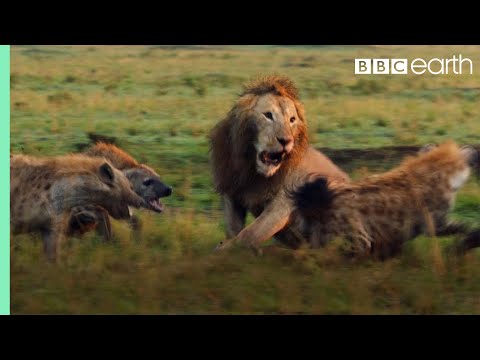
This rivalry gets complicated. Group size, who controls a kill, and teamwork all decide who gets to eat.
Numbers, timing, and boldness often tip the scales for hyenas or lions.
Hyena Clans vs. Lion Prides
Hyena clans work like tight-knit teams led by females. You’ll often see a crowd of adults and young ones at a carcass.
They use their numbers and loud calls to coordinate. When lions show up, especially males, the balance can shift fast—male lions are just bigger and make hyenas think twice.
If you watch closely, you’ll notice hyenas calling clan-mates to a kill. That group strength really matters.
A big group of hyenas might mob lions or hold onto a carcass, but mobbing is risky—lions can injure or kill hyenas, so clans prefer teamwork over going solo.
Scavenging and Food Theft
Hyenas rely on quick detection and numbers to scavenge well. They’re fast to find carcasses and usually work together to eat or steal from lions.
At fresh kills, the fight is intense because the meat won’t last long.
You’ll spot hyenas trying to steal food by arriving as a group and making a lot of noise. Success depends on how many hyenas show up and whether adult male lions are guarding the meal.
If hyenas outnumber the lions or keep coming in waves, sometimes they can drive the lions off and get the meat. Still, if male lions are there, hyenas usually back off or just wait for a better shot.
Cooperative Hunting Tactics
You really see the benefits of cooperative hunting when hyenas team up to bring down medium or large prey. Spotted hyenas don’t just charge in—some chase, others flank, and a few focus on wearing out the target.
This kind of teamwork gives you a much better shot at a successful hunt than if you tried it alone. When the hunt works out, hyenas stick together to defend their kill, since it’s the result of hours of effort.
That group defense keeps smaller competitors away and makes it harder for lone lions to steal the prize. But if lions show up fast or start patrolling nearby, your clan might change tactics—recruiting more members and mobbing the lions to hang on to the meat.


