
You might imagine a tiny horse popping out just like any other animal, but seahorses? They’ll surprise you. The babies actually come out of a special pouch on the front of the male’s tail—called the brood pouch—which opens up and releases the fry into the water.
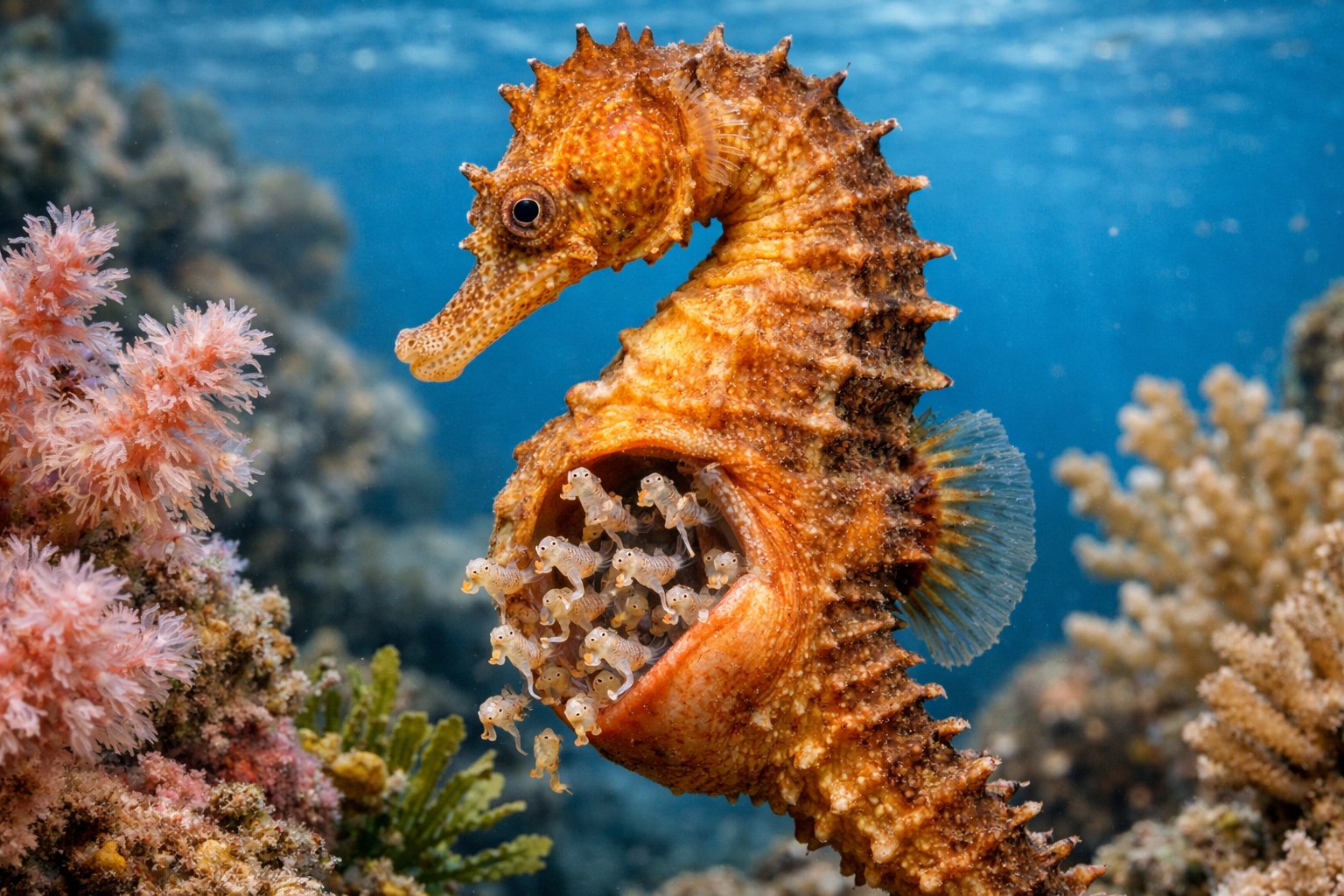
Here’s how it goes: the female drops her eggs into that pouch, the male fertilizes and cares for them, and his pouch acts kind of like a womb. It’s a strange, honestly fascinating process.
If you’re curious, keep reading to see how the pouch actually works, how long the pregnancy lasts, and why so many of these tiny seahorses never make it to adulthood.
Where Do Baby Seahorses Come Out?

Baby seahorses leave their father’s body through a single opening on his belly. That opening sits at the front of the brood pouch and can let out dozens—or sometimes hundreds—of tiny fry in one go.
The Role of the Brood Pouch in Seahorse Birth
The brood pouch is a skin-lined chamber on the male’s abdomen. After the female deposits her eggs, the pouch holds them.
Inside, the pouch supplies oxygen, nutrients, and immune factors to the developing embryos. It’s a bit like a placenta in other animals.
During pregnancy, blood vessels grow into the pouch lining to help swap gases and nutrients. When it’s almost time for birth, the pouch thins out and wrinkles up to boost gas exchange.
The pouch keeps water and salt in balance so the embryos stay healthy until they’re ready to leave. Once the babies are out, the pouch quickly shrinks back to its normal, non-pregnant look.
Male Seahorse Reproductive Anatomy
Male seahorses belong to the Syngnathidae family and have bodies built for some serious dad duty. The brood pouch sits on the ventral side, right where the tail meets the belly, and opens at a small slit called the pouch orifice.
During mating, the female transfers eggs into this pouch. Inside, tissues give embryos a place to attach, and channels for blood vessels run through.
The pouch lining has cells that absorb nutrients and pass them to the embryos. That way, male seahorses can carry tons of embryos—sometimes literally hundreds—until they’re ready to hatch.
How Seahorse Fathers Give Birth
Labor starts when the male’s muscles contract around the brood pouch. He pumps water and pressure through the pouch orifice.
You’ll see rhythmic contractions that might last a few minutes or go on for hours, depending on the species and the number of fry. These contractions push the fry out head-first into the water.
Each contraction can release a few or a whole bunch of young at once. After the last fry comes out, the male usually takes a break and then gets back to normal life pretty quickly.
The newborn seahorses are on their own right away. They have to find food and shelter by themselves.
Seahorse Reproduction and Baby Seahorses

Male seahorses carry fertilized eggs in a pouch on their front tail. When the time comes, they push the fully formed babies out of that pouch.
Let’s look at how they mate, how the embryos grow, how species differ, and what newborns face after birth.
Seahorse Courtship and Egg Transfer
Courtship is honestly a careful dance. It helps pairs sync up their timing and get the pouch ready.
Males and females do daily displays—color changes, fin fluttering, and a kind of “dance” where they rise and fall together. These actions help strengthen the pair bond and line up the female’s egg release with the male’s pouch opening.
During egg transfer, the female uses her ovipositor to place eggs directly into the male’s brood pouch. The male then releases sperm into the pouch to fertilize the eggs.
You might spot the exchange: the male expands his pouch to take in eggs while the female contracts to push them out. In some species, this happens multiple times over a breeding season.
Gestation Period and Embryo Development
Once the eggs are in, the male’s brood pouch turns into a sort of incubation chamber. The pouch supplies oxygen, some nutrients, and helps regulate salinity for the embryos.
Temperature plays a big role—warmer water usually means a shorter gestation. Gestation can run from about 10 days up to six weeks, depending on the species and water temperature.
Inside the pouch, embryos grow fins, tails, and those classic seahorse snouts. Just before birth, you might notice the male’s abdomen swelling up and he’ll start those rhythmic contractions to move the fry toward the opening.
Species Differences in Seahorse Birth
Different seahorse species really do vary in brood size and timing. Some of the smaller species might only release a few dozen fry, while bigger ones can let out up to a couple thousand.
Some species form long-term pairs and sync up daily, while others mate with different partners. The structure of the brood pouch changes too.
In some, it’s simple and shallow; in others, it’s deep and packed with blood vessels to support more developed embryos. Watching birth behavior can be pretty different as well—species with bigger broods have longer, stronger contractions, while those with fewer fry finish up much faster.
Challenges for Baby Seahorses After Birth
Newborn seahorses come into the world tiny and delicate. They’re already fully formed, but wow, they’re small.
Right away, they have to find plankton to eat and deal with strong currents. Predators? They’re everywhere, and honestly, the odds aren’t great—scientists say fewer than 1 in 200 make it to adulthood in the wild.
Parents don’t stick around after birth. The fry try to use their little prehensile tails to grab onto seagrass or whatever they can, but plenty just get swept away.
If you care about these little guys, protecting seagrass beds really matters. Giving them more places to hide and feed can make a difference. If you’re curious about how males incubate and give birth, you can check out the article on male seahorses giving birth at HowStuffWorks.


