
Ever wondered who’s smarter—a chimpanzee or a gorilla? You’re definitely not the only one. Both of these animals impress in their own ways, but if we’re talking intelligence, chimpanzees usually show better problem-solving skills and more creative tool use than gorillas.
So yeah, chimps often get the nod as the smarter species.
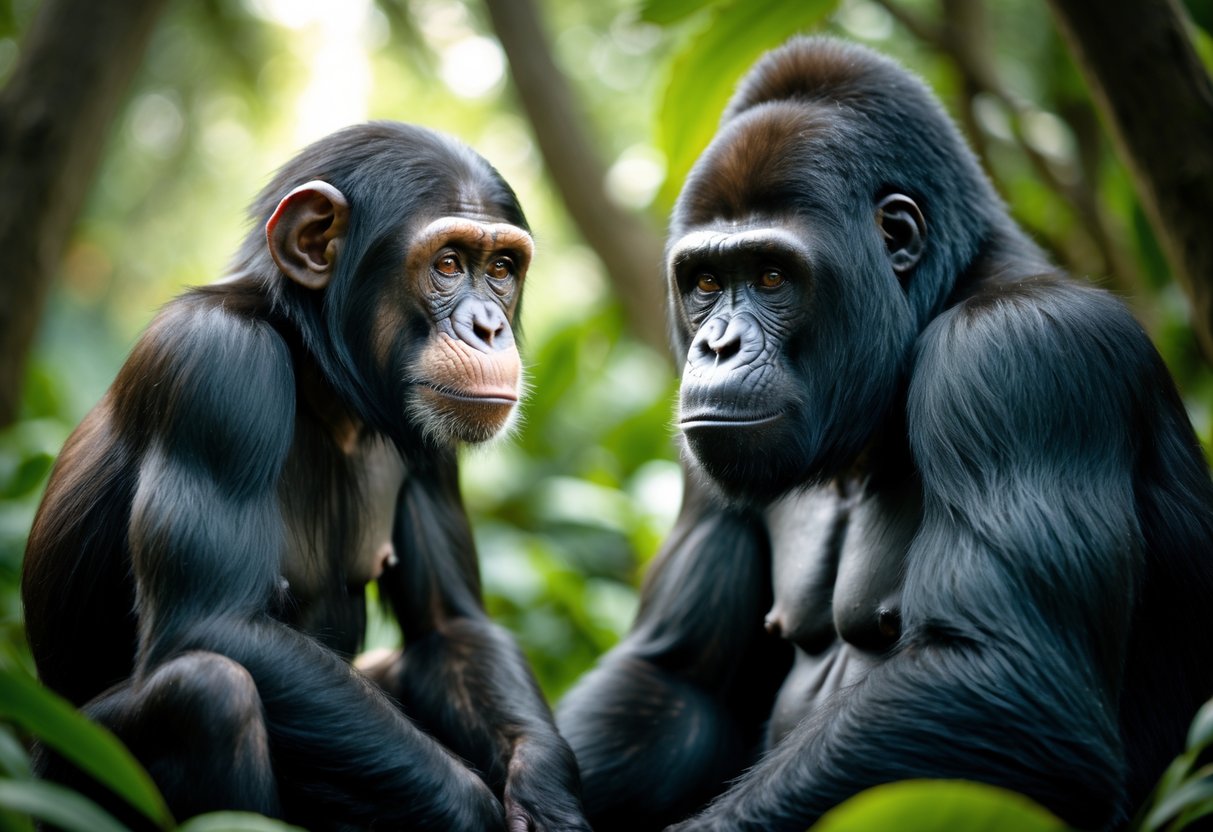
It might surprise you, but even though gorillas are way bigger and stronger, their brains are actually smaller than chimpanzees’ when you look at body size. Chimpanzees live in busier, more complicated social groups and interact a lot with their environment.
That extra engagement seems to boost their smarts.
You’ll find some key differences in how these two act and think. If you dig into those, you might start to see why chimps edge out gorillas in the intelligence race. Want more details? Check out this comparison of chimpanzee and gorilla intelligence.
Chimpanzee vs Gorilla: Intelligence and Cognitive Abilities

Both chimpanzees and gorillas are clever, but they show off their intelligence in pretty different ways. Their brains, problem-solving styles, and communication skills each have their own quirks.
Once you notice those differences, you start to see how each species shines.
Brain Size and Structure
Gorillas have bigger brains—about 500 cubic centimeters—while chimps have brains around 400 cubic centimeters. But, bigger isn’t always better.
Chimpanzees develop brain areas that help with memory and solving problems.
Gorillas seem to use their brains more for reading emotions and picking up on social clues.
So, chimps usually pick up new tricks faster. Gorillas, on the other hand, really get social situations and feelings in their group.
Problem-Solving and Tool Use
Chimpanzees love to figure things out. They grab sticks to fish out termites, or use rocks to crack open nuts.
That kind of tool use shows they can plan ahead and understand cause and effect.
You’ll see them solving puzzles in the wild to get food, and they even team up for hunts.
Gorillas solve problems too, but they usually go for simple solutions right in front of them. They don’t really mess around with tools much, except maybe to balance or reach something.
Gorillas rely more on their strength and social smarts to keep their families safe, instead of using tools.
Social Complexity and Communication
Chimpanzees hang out in big groups with lots of males, which makes their social lives pretty complicated. They watch each other, learn by copying, and teach young chimps how to use tools and make all sorts of sounds.
Gorillas stick to smaller family groups led by a silverback. They’re usually calmer and not as aggressive.
Gorillas use gestures, faces, and body language to talk, showing a lot of emotional intelligence.
Chimps mix tool skills with different sounds. Gorillas focus more on empathy and visual signals.
Each has its own style of “talking” and building friendships that fits their lives.
If you’re curious, you can check out more about chimpanzee and gorilla intelligence comparison.
Habitats, Behaviors, and Regional Differences

Chimpanzees and gorillas live in different parts of East Africa, and their habits really reflect where they call home. The places they live and the way they act shape how they survive.
It’s honestly fascinating how much their environment influences them.
East Africa’s Primate Habitats
Chimpanzees mostly hang out in lowland forests and woodlands. They move up in the trees and down on the ground, always on the go.
You’ll spot them in places like Uganda and Rwanda, but they seem to prefer warmer, lower areas.
Gorillas—especially mountain gorillas—stick to cooler, high-up forests in Uganda and Rwanda. Unlike chimps, they spend almost all their time on the ground.
Their homes are thick, dense forests with plenty of plants for food and cover.
Both species depend on forests, but they pick different spots. So, if you’re up in the mountains of Rwanda or Uganda, you’ll probably run into gorillas. Chimpanzees? You’re more likely to see them in the lower forests nearby.
Unique Behaviors in Uganda and Rwanda
In Uganda and Rwanda, gorillas stick together in family groups. A silverback male leads the way.
These groups feel calm, almost gentle, and everyone seems close. You’ll notice gorillas using body language—hugging or soft touches—to connect or show they care.
Chimpanzees in these areas gather in larger communities, often with several males in the mix. Their social lives get complicated, with shifting alliances and a bit of competition thrown in.
They use tools, like grabbing sticks to fish out termites. Sometimes, you’ll hear their loud calls echoing through the forest as they communicate.
Gorillas put a lot of energy into building emotional bonds and keeping their group safe. Chimpanzees, though, seem more interested in solving problems and moving fast through their world.
It’s fascinating to watch how each species leans into its strengths to survive in these East African forests.
For more about their habitats and behaviors, check out the detailed information on gorilla versus chimpanzee social and habitat traits.


