
Ever heard a soft “hoo hoo” in the dark and wondered which owl was behind it? You’re definitely not the only one.
Plenty of owls can hoot, but the Great Horned Owl is probably the one you’re thinking of with its deep, soft “hoo hoo” call. Listen for that pattern—“hoo-h’HOO-hoo-hoo”—it’s a classic. These calls let them mark out their turf and chat with their mates.
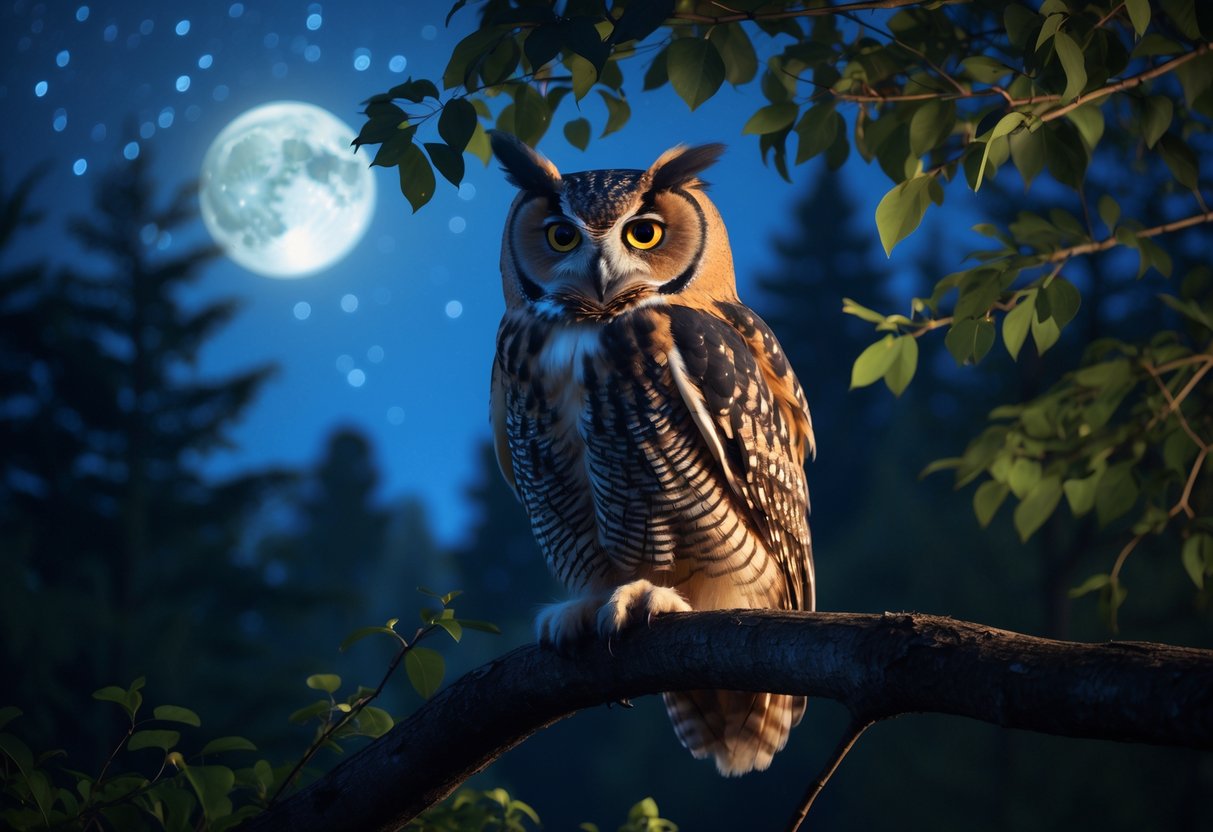
Other owls get in on the action too, though. The Barred Owl, for example, belts out a longer call that sounds a bit like “Who cooks for you? Who cooks for you-all?” If you’re hearing just a simple “hoo hoo,” it’s probably a Great Horned Owl hanging out nearby.
Learning these calls can turn a regular nighttime stroll into something a little more magical. You start to feel more connected to the wild world around you.
Curious about how owls communicate or what their calls might mean? There’s a lot more to discover. You’ll start picking out different owls just by listening. Want to hear the Great Horned Owl’s hoots for yourself? Here’s a good place to start: Great Horned Owl Sounds.
Owls That Say ‘Hoo Hoo’: The Main Offenders

When you hear a “hoo hoo” echoing through the trees, you’re probably listening to one of a few famous species. These hoots have their own patterns and rhythms, which can help you figure out who’s who.
Some calls are obvious, while others can trick you if you’re not careful. Sometimes, even experienced listeners get mixed up.
Barred Owl: The Classic ‘Who Cooks for You’ Call
Barred Owls are famous for that unmistakable “Who cooks for you? Who cooks for you all?” call. It’s a rhythmic, two-part hoot, and the last note just kind of lingers.
You’ll hear them mostly in the eastern U.S. and parts of Canada. Barred Owls—Strix varia if you want to get technical—use this call to talk to each other, especially during courtship or when they’re defending their turf.
The hoots are steady and stick in your mind. If you’re wandering through woods and hear that call, you’re probably close to their home.
Their numbers have actually gone up in some areas, so these hoots are getting more common. Barred Owls don’t just make one sound, though. They have some softer calls too, but that “hoo hoo” is the one you’ll remember.
Great Horned Owl: The Deep, Resonant Hoots
Great Horned Owls let out a deep, booming hoot—think “hoo, hoo-hoo, hoo, hoo.” Their call is strong and can travel for miles, especially on a quiet night.
If you hear a duet, the female usually starts, and then the male joins in. You can find Great Horned Owls all over North America. Their hoots are slower and more spaced out than the Barred Owl’s, with a rougher, almost foghorn-like quality.
People call them “horned owls” because of those tufted feathers on their heads. They use their calls to claim territory and during courtship. Their hoots might not sound as musical, but they’re just as useful for figuring out who’s calling.
Confusion With Sound-Alikes and Other Owl Calls
It’s not just Barred and Great Horned Owls that say “hoo hoo.” Spotted Owls, for instance, have softer, slower hoots that can sound kind of similar but are usually less clear or a bit faster. Screech Owls don’t really say “hoo”—they make trills that can throw you off if you’re new to owl calls.
If you only catch a couple of hoots, it’s easy to mix things up. Listen for patterns, rhythm, and pitch—that’s the secret. Spotted Owls, for example, have a more hollow, echo-like hoot with pauses, which is different from the steady “who cooks for you” of the Barred Owl.
Owls sometimes mimic other animals or toss in whistles and barks, just to keep things interesting. Want to get better at owl calls? There are recordings and guides out there that can help you out.
Check out the National Audubon Society’s guide for some in-depth examples.
Barred Owl Details: Habits, Range, and Diet

You might know the Barred Owl by its famous hoot, but there’s more to this bird than just its call. It’s a strong hunter with some quirky habits and a pretty varied menu.
Barred Owls usually stick to forests near water and hunt quietly after dark.
Barred Owl Appearance and Identification
Barred Owls, or Strix varia, have brown and white stripes—almost like little bars—across their feathers. That’s where their name comes from.
You’ll spot them by their round heads and big, soulful brown eyes. Unlike Great Horned Owls, they don’t have those ear tufts. They’re actually pretty big, standing about 16 to 25 inches tall.
That “Who cooks for you? Who cooks for you-all?” call is the easiest way to ID them by sound. If you’re near old forests or swamps at night, you’ll probably hear them.
They fly almost silently, which gives them an edge when sneaking up on prey.
Typical Habitats and Territorial Behavior
Barred Owls love big, mature forests, especially if there’s water like a river, swamp, or lake nearby. They need large trees for nesting and a quiet place to rest during the day.
You’ll usually find them in dense, unbroken woods. They get pretty territorial and use their loud hoots to let others know this is their patch.
Sometimes, a pair will call back and forth, almost like a conversation. If you try imitating their call, you might get a curious Barred Owl to fly in for a look.
They don’t really migrate, so once they find a spot they like, they stick around all year.
Diet: What Barred Owls Really Eat
Barred Owls go after small mammals like mice, rats, and voles most of the time. Still, their menu is honestly pretty broad.
They’ll eat birds, frogs, reptiles, and crayfish. If they get the chance, they’ll even snatch up fish.
You’ve got to admit, that’s some impressive flexibility for a hunter.
They mostly hunt at night. With sharp talons and silent flight, they swoop down on their prey.
Sometimes, they find animals on the ground or hiding near forest edges.
Barred Owls actually eat a wider range of food than spotted owls, which probably explains why you can find them in so many different places.
For more details on the Barred Owl’s hoot, visit the Audubon Field Guide.


