
Ever wondered which bird doesn’t fly? Well, there’s more than one. Birds like penguins, ostriches, kakapos, and cassowaries all stay grounded. They’ve evolved to live on land or in water, using strong legs or wings for swimming instead of flying.

It’s easy to assume all birds need flight to survive, but flightless birds prove there’s more than one way to thrive. Some, like ostriches, rely on speed to escape danger, sprinting across the African plains.
Others, like penguins, swim so well they hunt underwater for food.
Learning about these birds reminds you just how wild and creative nature can get.
8 Birds That Can’t Fly | Britannica
What Are Flightless Birds?

Flightless birds are birds with wings, but they just can’t fly. They’ve got unique features and behaviors that help them get by without taking off.
Many of these birds live on islands or in places with few predators. Flying just isn’t as important there.
Their bodies look pretty different from birds that fly.
Main Characteristics of Non-Flying Birds
These birds usually have small wings compared to their body size. The wings just aren’t strong enough for flight.
But you’ll still spot wings on them. Sometimes they use them for balance or to show off.
They often have strong legs for running fast or walking long distances. Ostriches can sprint away from danger, and emus cover lots of ground with their legs.
Their plumage is different too. Feathers suit their needs—penguins have waterproof feathers, while others have tougher feathers for blending in on land.
Many belong to a group called ratites—ostriches, emus, and cassowaries are in this club. These birds have flat breastbones, missing the keel that helps flying birds attach their flight muscles.
That’s a big clue they don’t fly.
Why Some Birds Lost the Ability to Fly
Why did some birds just stop flying? A big reason is where they live—places with no predators, like remote islands.
If nothing’s hunting you, flying isn’t as important.
Flying burns a lot of energy. Birds that don’t need to fly save energy by walking or running.
Over time, they focused on other skills, like swimming or running.
Sometimes, changes in the environment forced birds to adapt. After dinosaurs vanished, some birds grew bigger to fill new roles, like grazing or hunting on land.
That made flying pretty tough.
Losing the ability to fly has happened many times in different bird families. It’s a handy trait in certain places, even if the birds aren’t closely related.
Physical Adaptations: Wings, Legs, and Plumage
Flightless birds have shorter wings and fewer or smaller wing bones. They can’t fly, but still use their wings for balance or during courtship.
Their legs are much stronger and longer. You can spot a bird built for running or swimming just by looking at its legs.
Ostriches have powerful legs for sprinting. Steamer ducks use both legs and wings to move through water.
Plumage matters too. Penguins have dense, waterproof feathers to help them swim.
Others have feathers that keep them warm or let them hide in their surroundings.
When you compare flightless birds to those that fly, you’ll notice these traits right away. Every change helps the bird survive in its own way.
Want to dive deeper? Check out birdnature.com.
Fascinating Types of Birds That Can’t Fly
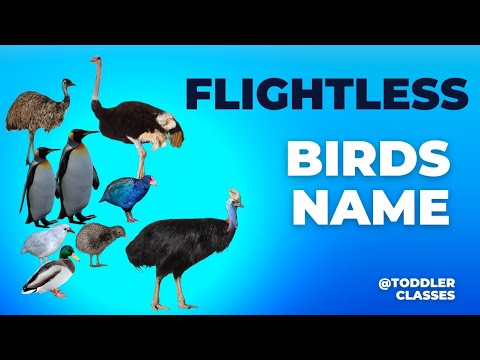
Some birds just don’t take to the sky. Instead, they rely on running fast or swimming with ease.
These flightless birds come in all shapes and sizes. You’ll find giant runners, expert swimmers, and oddball island dwellers.
Ostrich: The Largest Bird and Speedy Runner
The ostrich is the biggest bird around. It can grow up to 9 feet tall and weigh over 300 pounds.
Ostriches can’t fly—their size alone makes it impossible. But they’re built for land speed.
They can run up to 45 miles per hour, which helps them get away from predators.
Ostriches have strong legs that deliver powerful kicks for defense. Their digestive system lets them survive in harsh places like deserts and savannas.
You’ll spot ostriches mostly in Africa, living in open grasslands. Want more details? Check out this list of birds that can’t fly.
Penguins: Expert Swimmers of the Bird World
Think all birds fly? Penguins prove otherwise.
Penguins can’t fly in the air—their wings are built for swimming. They use their wings like flippers to zip through the water.
You’ll find many penguin species. The Emperor Penguin is the tallest and heaviest, while the Little Blue Penguin is the smallest.
Most penguins live in cold places like Antarctica, but some, like the King Penguin and Chinstrap Penguin, live on nearby islands.
They hunt fish and other sea creatures underwater.
Penguins’ bodies are made for swimming. Their dense bones help them dive deep instead of floating.
They might not fly, but they’re amazing swimmers. Curious about penguins and other flightless birds? Take a look at Animals Around The Globe.
Emu, Cassowary, and Rhea: Big Ground-Dwelling Species
You’ll find big ground birds like the Emu, Cassowary, and Rhea in the southern hemisphere.
Emus live in Australia. They can grow over six feet tall.
Like ostriches, they don’t have the strong muscles for flight, so they rely on running.
Cassowaries also come from Australia and nearby islands. They’re smaller than emus but have bright blue necks and really powerful legs.
Some people even call them dangerous—they can kick hard if threatened.
Rheas live in South America. They look a bit like ostriches but are smaller.
The Greater Rhea and Darwin’s Rhea live in open plains and wetlands. They use their long legs to escape predators.
All three birds run fast and use their size to stay safe. You can learn more about their habits and habitats in this detailed list of birds that can’t fly.
Unique Flightless Birds of New Zealand
New Zealand has all sorts of unique flightless birds you might not expect. The Kiwi stands out—it’s a tiny, shy bird with a long beak. People know it for its amazing sense of smell.
Even though it’s small, the kiwi can’t fly. You’ll spot its tiny wings hidden under soft feathers.
Then there’s the Takahe—a rare and colorful bird. For a while, everyone thought it had gone extinct, but folks rediscovered it back in the 20th century.
Takahes live up in the mountains. They rely on their strong legs to walk and hide in thick plants.
You’ll come across birds like the Weka, which is pretty curious and bold. The Kakapo is a heavy, nocturnal parrot—actually, it’s the world’s heaviest parrot.
The Flightless Cormorant is a bit of an outlier, hanging out in the Galapagos Islands. Instead of flying, it uses its wings to swim underwater.
Sadly, a lot of New Zealand’s flightless birds face danger because of predators and shrinking habitats. Their story really makes you think about how fragile nature can be.
If you want to dig deeper, check out more about these rare birds at flightless bird species.


