
Figuring out where to put your beehive in the garden can make all the difference for your bees’ happiness. You’ll want a quiet area with some morning sun and a bit of afternoon shade—somewhere out of strong wind and away from busy paths. That way, your bees stay comfortable, and the hive doesn’t get disturbed by people or pets.
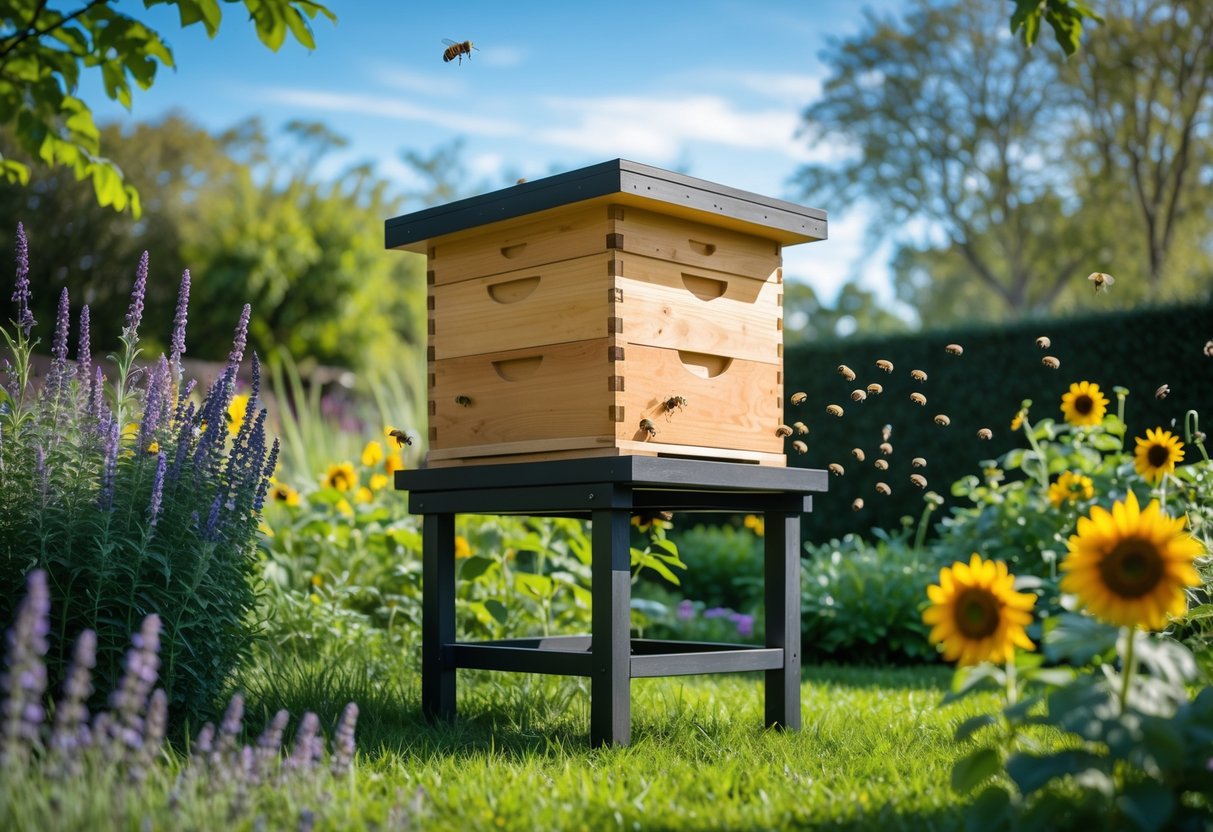
Try to pick a spot that you can reach easily. If you’ve got some room to move around the hive, managing your bees feels a lot less stressful.
Planting flowers nearby gives your bees a buffet of nectar right at their doorstep.
Finding the right spot takes a bit of thought, but it’s worth it. A good location helps your bees thrive and keeps your garden buzzing.
If you’re after more ideas, check out this guide on where to put bee hives.
Key Considerations for Bee Hive Placement
Where you place your bee hive really shapes your bees’ health and how easy beekeeping feels. You’ll want a spot with some sunlight, shelter from rough weather, easy access, and a little distance from where people hang out.
Sunlight and Shade Balance
Bees love that morning sun to warm up and get moving. Try to set the hive where it catches at least 4 to 6 hours of sunlight, especially early in the day.
Morning sun helps bees start foraging sooner. It also keeps the hive dry, which means less mold and fewer pests.
But too much afternoon sun? That can turn the hive into an oven, especially in hot places. Partial shade from a tree or a fence can cool things off.
Skip full shade, though. It keeps the hive cold and damp, which slows down your bees.
A hive stand lifts the hive off the ground. You’ll get better airflow, and the sun can reach underneath to keep things dry.
Shelter from Wind and Weather
Strong winds can really stress bees out and chill the hive. Look for natural windbreaks like shrubs, fences, or even a wall.
If you need to, set up your own windbreak on the side that gets the most wind. Face the hive entrance away from the wind so the bees can come and go more easily.
Try to avoid spots where rainwater pools around the hive. Waterlogged hives are never good news.
Set your hive on a solid surface or a sturdy stand. That way, storms won’t tip it over. A sheltered hive helps your bees save energy and stay in better shape.
Accessibility for the Beekeeper
You’ll want your hive somewhere you can reach without trouble, but not in the middle of the action. Leave about 3 feet of space around the hive so you can move and work comfortably.
It’s handy if you can get your tools and gear close to the hive, too. A flat, solid surface makes it much easier to lift and move hive parts.
If you’re just starting out, choose a spot that feels private but still easy to reach. That way, you can focus on learning without feeling rushed or watched.
Safety and Distance from Human Activity
Keep your hive away from busy walkways, play areas, or doorways. Bees fly straight out from the entrance, so make sure their path doesn’t cross where people or pets hang out.
Try to put at least 15 to 20 feet between the hive and places where people gather. That helps everyone feel safer and avoids surprises.
If your yard’s tight, you can point the hive entrance toward a fence or hedge. That way, bees fly up and away instead of straight into people’s paths.
Thinking ahead about safety lets you relax and enjoy beekeeping. If you want more details, check out these bee hive placement tips.
Garden Environment and Surroundings

If you want your bees to thrive, pay attention to the plants, the hive’s position, and anything that could bother the bees. The right environment makes caring for your bees easier and keeps them safer from pests.
Proximity to Bee Forage and Water Sources
Put your hive near flowers that bloom at different times. That way, bees always have nectar and pollen to collect.
Having trees, shrubs, and garden plants within half a mile is great. Bees usually don’t travel much farther than that.
Bees also need clean water close by. A pond, birdbath, or even a shallow dish with stones will do the trick.
If the hive’s too far from water, bees have a harder time cooling the hive and feeding their young.
Hive Stands and Ground Conditions
Always use a sturdy hive stand to keep your bee box off the ground. This simple step keeps things dry and makes it harder for pests like ants or beetles to get in.
Find a flat, dry spot. Avoid low ground where rainwater collects.
Good airflow under and around the hive helps keep it healthy. Make sure the stand feels steady, so storms or wind don’t knock your hive over.
Managing Pests and Predators
Small hive beetles can be a real headache. Keep the area around the hive tidy and clear away debris where pests might hide.
A hive stand makes it tougher for beetles to invade. Watch out for bigger troublemakers, too, like skunks or raccoons.
Try to pick a spot away from animal trails or up against a fence. If pests are common, you might want to add a simple barrier or guard for extra protection.
Urban and Small Garden Considerations
Urban beekeeping comes with its own set of quirks—less space, more people, and neighbors just over the fence. Pick out a quiet spot where your bees won’t end up annoying folks passing by.
Give your hive at least 4 feet of clear space on each side. It really helps if you can leave about 25 feet in front, so the bees fly up and over instead of straight into people.
If you’re squeezed for space, try putting up a fence or planting some tall greenery. That way, you can nudge your bees to fly away from the busiest areas.
Set up your hive near flowering plants if you can. It’s a simple way to help your bees thrive and keep things running smoothly in your neighborhood.
Want more ideas for handling hives in small spaces? Check out urban beekeeping.


