
Ever wondered where frogs vanish to when the sun’s out? You’re definitely not the only one. Frogs might be famous for their nighttime choruses, but most of them spend the day hiding to dodge predators and avoid drying up in the sun. You probably won’t catch them hopping around in broad daylight.
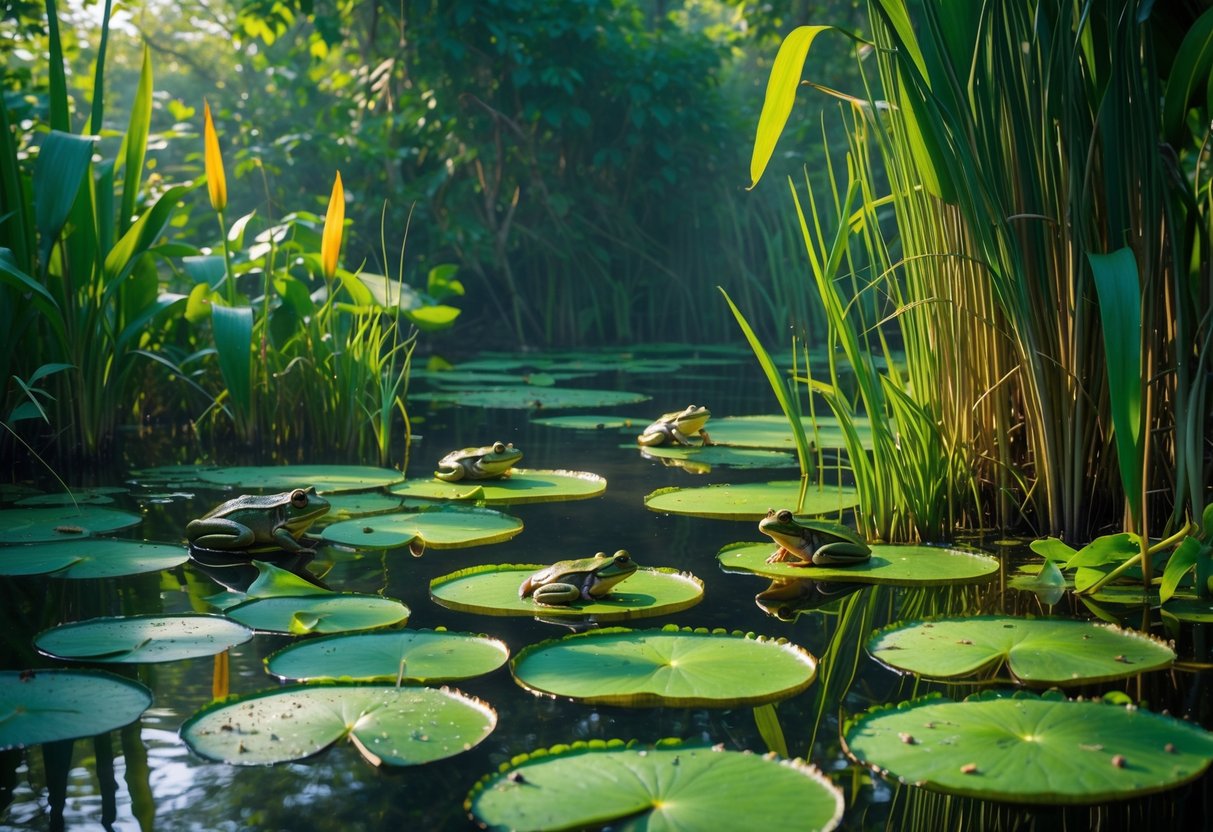
Different frog types pick their own favorite spots to rest. Some tuck themselves under rocks, leaves, or logs, while others hang out underwater or squeeze into tree hollows.
If you’re curious about their daytime routines, knowing these hiding places can help you spot them.
Figuring out where frogs go during the day almost feels like peeking into a hidden world most folks never notice.
Where Frogs Hide During the Day

Frogs actively search for cool, safe places to chill out and hide from hungry eyes during the day. They pick their spots based on what kind of frog they are and where they live.
Some like trees, some prefer burrows, and others stick to the water.
Daytime Hideouts for Tree Frogs
Tree frogs, like the green tree frog, love spending their days tucked away in cool, shady places high up in the trees. You might catch them lounging on leaves, branches, or hiding inside tree hollows.
Sometimes, they slip into big flowers or plants like bromeliads that hold water. Their sticky toe pads let them grip leaves and bark, even if things get slippery.
Tree frogs often tuck themselves into the leaf sheaths of big plants, like banana leaves, where they’re tougher for birds and other animals to find.
Burrowing and Underground Retreats
Burrowing frogs dig or use natural holes underground to escape the heat and predators. If you wander through wetlands or swamps, you might spot them deep in burrows or hiding under loose soil.
Toads, for example, really know how to dig, using their strong back legs to burrow down several feet.
Most frogs don’t bother making their own tunnels. Instead, they use old burrows left by small mammals or squeeze into cracks in the earth.
These underground spots keep them cool and damp when the sun’s blazing.
Vegetation, Leaf Litter, and Rocks
A lot of frogs who live on land rest under damp leaf litter, logs, or rocks on the forest floor during the day. These hiding places help them avoid birds and snakes that might be hunting.
You might find frogs under piles of leaves or inside thick plants near ponds and wetlands. Moisture and cover are key for them.
If you gently turn over rocks or logs, you might spot a frog trying to beat the heat or dodge predators.
Aquatic Daytime Shelters
Aquatic frogs stick close to water and usually hide underwater during the day. They rest among roots of water plants, under submerged rocks, or near logs in ponds and swamps.
Some, like the Titicaca water frog, have skin that lets them breathe underwater for a long time. These frogs hang out in cool, shaded water so birds and fish can’t easily get to them.
Every now and then, you might see aquatic frogs resting in wet, shady spots right by the water’s edge.
Want to dig deeper into frog hiding spots? Check out snakeinformer.com.
Factors Shaping Daytime Frog Behavior
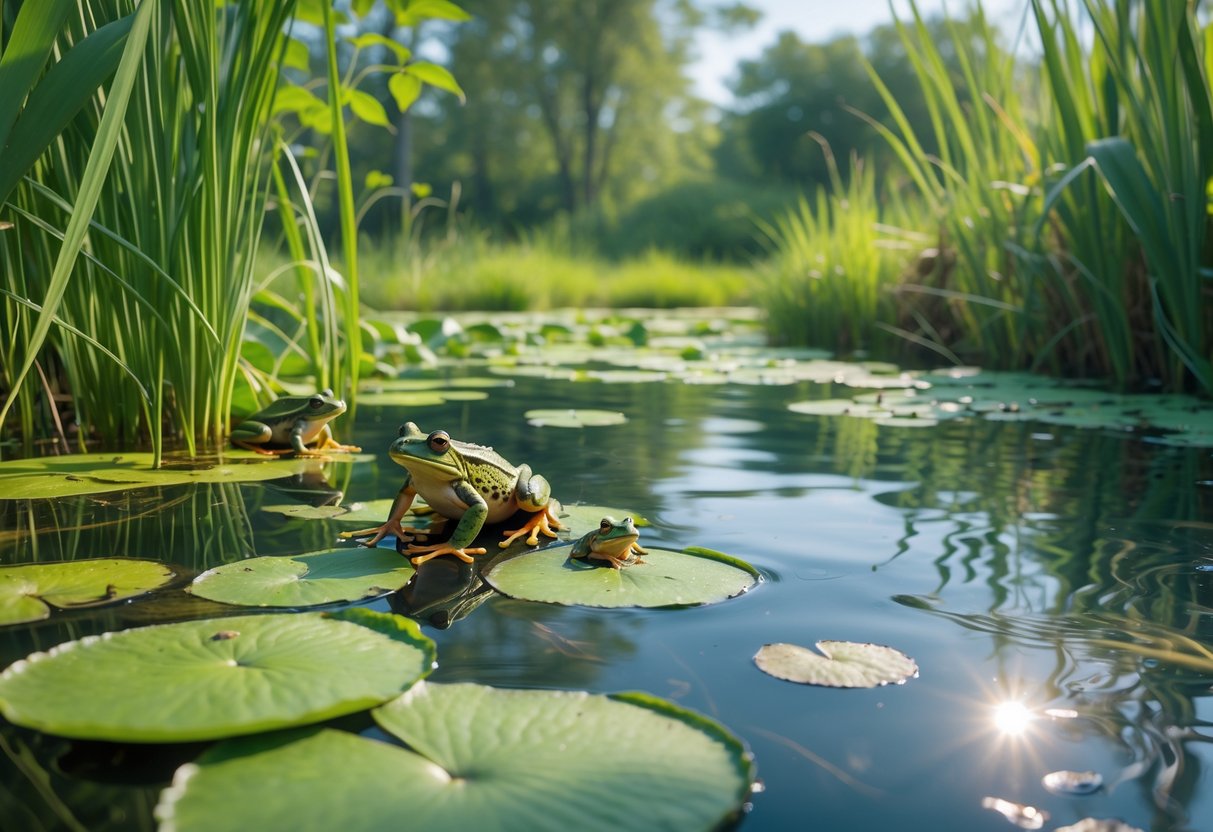
Frogs act differently during the day depending on a bunch of things. Their species, the weather, predators nearby, and changes in their habitat all play a part in how they stay safe.
Species Adaptations and Arboreal Lifestyles
Every frog species has its own tricks for survival. Arboreal frogs, for instance, live in trees.
You’ll find them hiding in tree holes, under bark, or nestled among leaves. Their sticky toe pads let them cling to branches and leaves, which keeps them out of reach from ground predators.
Ground frogs stick to hiding under rocks, logs, or leaf litter. Aquatic frogs prefer to stay underwater, blending in with plants or hiding under debris.
Each species has its favorite spot, so if you know what kind of frog you’re looking for, you’ve got a better shot at finding it during the day.
Temperature and Moisture Needs
Frogs need cool, damp places during the day because their skin is thin and soaks up water easily. Too much sun dries them out and can be dangerous.
When it gets hot, frogs hide in damp places like under leaves, in mud, or underwater. Humidity matters a lot here.
Frogs need moist air to breathe through their skin. If their home dries out, life gets tough for them.
That’s why they stick to shady, wet spots when the sun’s up—it helps keep them moist and comfortable.
Predators and Camouflage
Lots of animals would love a frog snack during the day—birds, snakes, even some mammals. Frogs use camouflage and clever hiding to stay out of sight.
You might miss them entirely because they blend right in with leaves, bark, or rocks. Some frogs even change color to match their surroundings better.
Others just sit perfectly still or pick hiding places that make them almost invisible. Bright-colored frogs use their looks as a warning: “Don’t eat me, I’m poisonous!”
Those bold colors let them move around more safely, even when it’s light out.
Habitat Loss and Conservation
People have put a lot of frog habitats at risk. When folks cut down forests or drain wetlands, or when pollution creeps in, frogs just lose their safe spots to hide out during the day.
Without enough shelter, frogs end up more exposed. Predators can spot them easily, and surviving gets a lot tougher.
Protecting frog habitats really comes down to keeping trees, ponds, and wetlands in good shape. If you’re looking for a way to help, supporting conservation groups that protect these places is a solid move.
That way, frogs can keep doing their usual daytime routines without so much danger.
For more details on where frogs go during the day, you can visit Where Do Frogs Go During The Day? 7 Cool Places – 2025.


