
You see deer at dawn or dusk and can’t help but wonder—where do they disappear to when night comes? Most deer bed down in sheltered spots: dense brush, evergreen thickets, wooded edges—places that give them cover, a good view, and an easy escape if things go sideways. Knowing this helps you spot where they might be hiding and gives you some insight into their after-dark behavior.
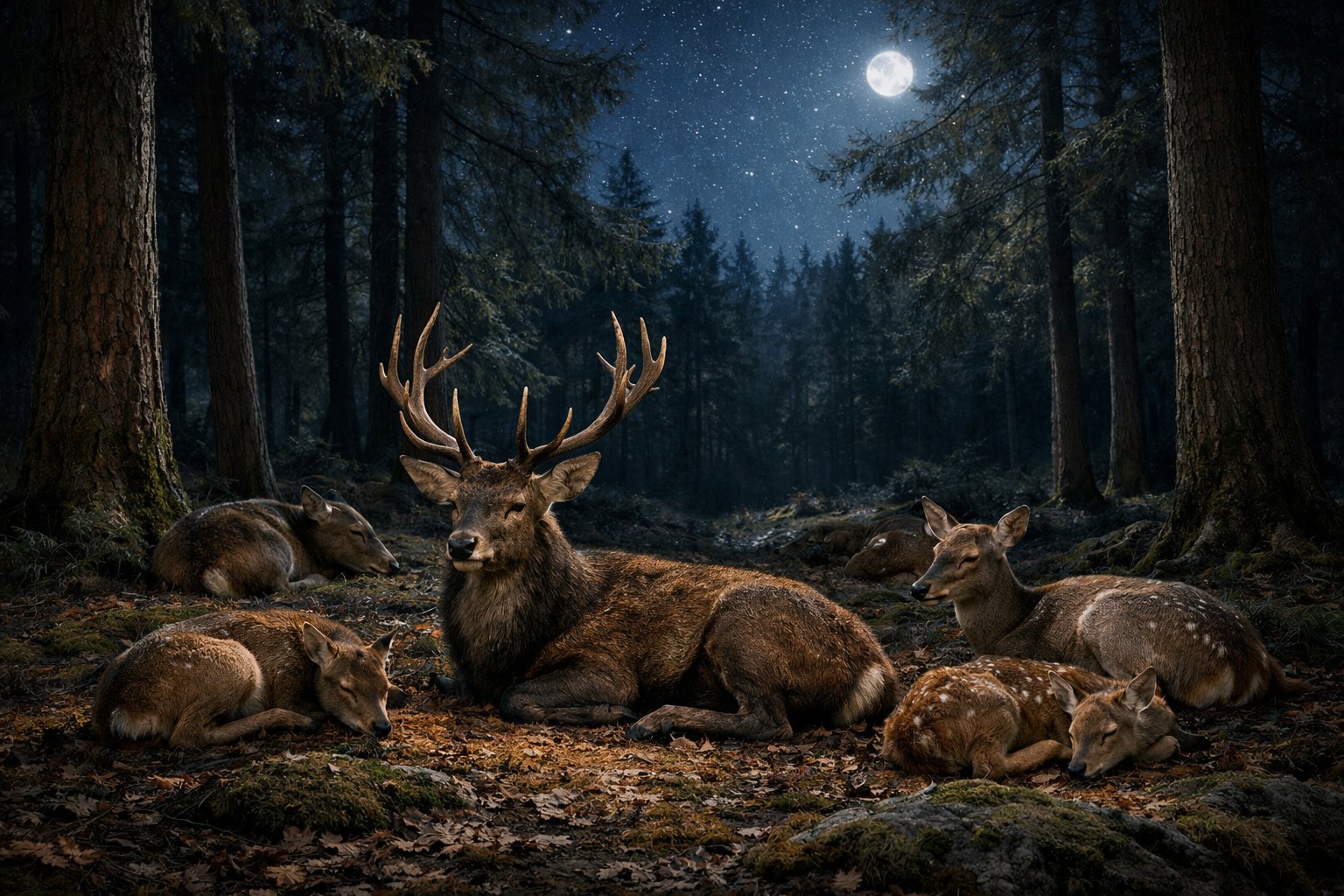
As you read on, you’ll get a peek into how deer pick their sleeping spots, how their sleep keeps them on alert, and what signs to look for if you’re trying to track them. Maybe it’ll even make your nighttime wildlife watching a bit more interesting—and a lot safer.
Where Do Deer Sleep at Night?

Deer pick spots that balance cover, visibility, and a quick escape. You’ll find them bedding where wind, shelter, and nearby food all work together to keep them safe and comfortable.
Natural Bedding Sites and Cover
Deer like to bed down in thick cover—think evergreen thickets, cedar rows, or tangled willows. These spots block the wind and keep deer hidden from both predators and headlights.
If you look closely, you might spot oval depressions in tall grass or under low branches. Both whitetail and mule deer make these shallow beds.
Field edges, brushy fencerows, and little islands in marshes also attract deer. They can reach corn, soy, or young browse quickly, but still keep cover between themselves and open ground.
In the woods, ridge benches and slopes protected from the wind are pretty popular. They give deer better sightlines and a bit of warmth.
When you scout, keep an eye out for flattened grass, fresh tracks, little droppings, and bent grass. Deer usually face into the wind while bedding, so they can smell trouble coming.
Differences Between Day and Night Bedding
At night, deer often pick beds where they can see a bit better than during the day. You’ll sometimes catch them on forest edges, in clearings near thick cover, or up on a rise where they can spot movement by sound or silhouette.
Bucks like to bed alone and usually choose higher ground. Does, especially with fawns, stick together in thicker cover.
During the day, deer hide out in heavier cover and stay still. At night, they want to move quickly to nearby feeding spots.
If hunters or people start showing up more, deer shift to thicker, quieter places and might not feed until it’s really late or just before sunrise.
You can spot night-use beds by fresh tracks going to and from feeding fields, or trails that get used right around dusk. Bucks tend to change their night beds more often than does, which makes them less predictable.
Seasonal Changes and Weather Influence
In winter, deer like south-facing slopes, cedar and pine stands, and spots that block wind and keep out deep snow. These places help them save energy and soak up a little sun.
You’ll find whitetail and mule deer hanging around conifers that act as windbreaks and help hold in heat.
When spring and summer roll in, deer use taller grass, CRP fields, and wetland edges—especially for hiding fawns. Does pick thick undergrowth for their fawns, while bucks hang out near the edge of feeding areas.
On hot days, deer move to shady draws and along streams to cool off.
Weather changes things too. If it’s raining or the moon is bright, deer pick heavier cover to stay hidden. When hunters are around, deer move their beds farther from trails and roads, or just go more nocturnal to avoid people.
Deer Sleep Patterns and Behaviors

Deer rest in short bursts and stay half-alert. They always choose beds with cover and an escape route.
They change sleeping spots with the seasons or if something spooks them. So, how do they sleep? When do they nap? Do they stick together or go solo? How long do they rest? People and predators definitely influence those choices.
How Deer Sleep and Stay Alert
Deer sleep mostly lying down in a shallow, oval depression. Usually, they keep their head up or turned toward the wind, so their nose and ears pick up scents and sounds fast.
If they’re somewhere safe and dense, they might tuck their head in for a deeper snooze, but not for long.
You’ll notice their ears twitch a lot and they take quick naps—these micro-sleeps last just a few minutes. They only get into a deeper, almost REM-like sleep in very safe spots, and even then, it’s usually just 15–30 minutes.
This mix of light and deep sleep lets deer digest food and save energy, but they’re always ready to bolt if needed.
Group and Solitary Sleeping
Does often bed down together near food and where their fawns can hide. Group bedding means a few does keep watch while fawns stay tucked away in tall grass or brush.
You’ll find these clusters at field edges or inside thick patches of cedar and pine.
Bucks, on the other hand, usually bed alone—especially outside the rut. They pick spots with good views and a quick exit.
When hunting season or human activity picks up, bucks move their beds more often to keep from being too predictable.
How Long Do Deer Sleep?
Deer rack up 8–12 hours of total rest in a day, but only 2–3 hours count as deep, uninterrupted sleep. Most of their rest comes from lots of short naps—3 to 10 minutes at a time, with alert breaks in between.
This polyphasic sleep matches their crepuscular habits: they’re active at dawn and dusk, and rest during the day and parts of the night.
Season and temperature change how much they rest. In winter, deer pick sunny or sheltered beds to save heat, which can tweak nap length.
If people or predators are around, deer barely get any deep sleep, relying on quick micro-naps and burning more energy just to stay safe.
Impact of Human Activity and Predators
People—whether they’re hunting, hiking, or just running loud machinery—tend to push deer deeper into thick cover. Deer end up moving between beds more often, burning extra energy and feeling more stressed.
You might notice deer steering clear of open bedding spots, especially if there are roads or busy trails nearby. In places where humans show up a lot, deer almost always shift their activity to darker hours.
Predators force deer to pick beds that let them escape quickly and see trouble coming. Where predators are common, does often switch up their bedding spots to keep fawns hidden.
Wildlife managers actually use these habits to plan better habitats and manage hunting pressure. They’ll even think about where to put food or cover to help deer stick around and stay healthy.
For hunters, knowing how deer pick their beds can make all the difference. It’s all about finding deer without completely throwing off their routine.


