
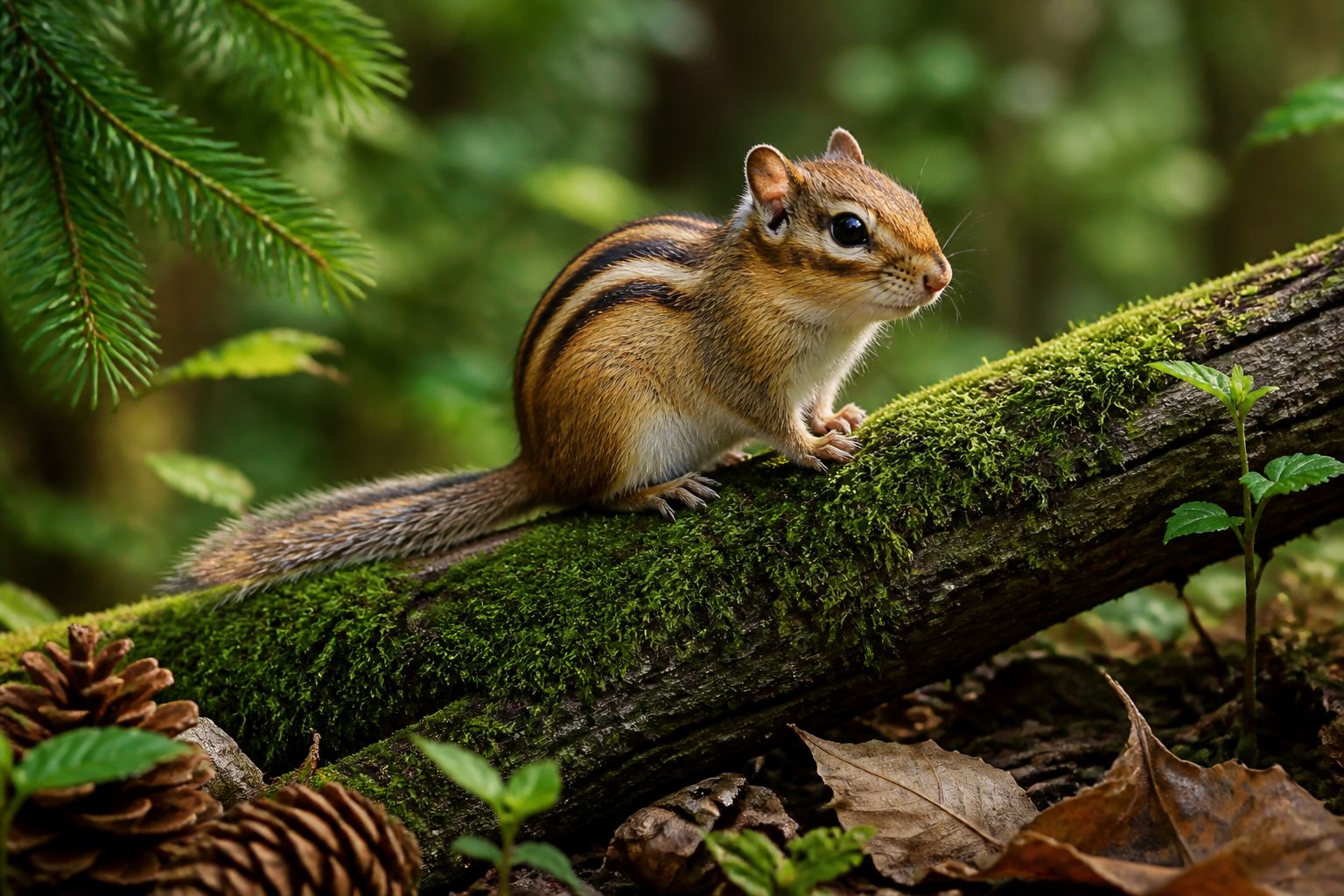
Chipmunks are small rodents in the squirrel family. They originated in North America.
Their lineage traces back deep into mammal evolution. The earliest chipmunk ancestors lived in the Early Miocene, roughly 20 million years ago, before they spread and diversified into the species you see today.
Their striped look, burrowing habits, and food-storing behavior helped them thrive across changing forests and climates.
The Short Answer On Their Earliest Origins

Chipmunk ancestors appeared in North America during the Early Miocene. Scientists place them within the marmotini branch of squirrel relatives, which helps explain why they look like compact, striped ground squirrels adapted to forest ecosystems.
North American Roots In The Early Miocene
The chipmunk lineage goes back to a North American ancestor from about 20 million years ago. Fossils and molecular evidence point to an ancient branch that later became the chipmunks you know today.
How Chipmunks Fit Within The Squirrel Family
Chipmunks are part of the squirrel family, Sciuridae, within the rodent order Rodentia. Their closest relatives sit among ground squirrel and marmotini lineages, which is why a chipmunk can resemble a small striped squirrel or ground squirrel while still having its own evolutionary path.
Why Scientists Class Them As Tamiina
Scientists place chipmunks in Tamiina because their skull shape, body plan, and genetics match a distinct branch inside the squirrel family. That classification reflects a specialized rodent lineage.
How Modern Chipmunk Lineages Split

Modern chipmunks split into eastern, western, and Asian lineages after their ancient North American origins. The living groups show how one ancestral stock expanded into different habitats, with tamias, neotamias, and related forms diverging over millions of years.
Tamias Striatus And The Eastern Chipmunk
Tamias striatus, the eastern chipmunk, is the only living member of Tamias. It serves as the classic eastern chipmunk and marks one major branch of chipmunk evolution.
Neotamias And The Western Species Radiation
Most western chipmunks belong to Neotamias, a group that includes the least chipmunk, Neotamias minimus, Uinta chipmunk, California chipmunk, alpine chipmunk, lodgepole chipmunk, red-tailed chipmunk, Hopi chipmunk, cliff chipmunk, Colorado chipmunk, Durango chipmunk, Panamint chipmunk, Siskiyou chipmunk, Sonoma chipmunk, yellow-cheeked chipmunk, and yellow-pine chipmunk. This western cluster shows how chipmunks diversified across mountains, forests, and dry uplands.
Eutamias And The Siberian Chipmunk
The Siberian chipmunk, Tamias sibiricus, has also been placed in Eutamias, appearing as Eutamias sibiricus in older classifications. That older use of Eutamias helps explain why scientific names can look different in historical texts.
What Nototamias Tells Us About Extinct Relatives
Nototamias refers to extinct relatives that help you see how chipmunk evolution did not stop with the living species. Those fossils show that the chipmunk family tree had more branches in the past.
Why Their Range And Behavior Help Explain Their Success

Chipmunks spread successfully because their daily habits fit wooded and edge habitats so well. Burrows, food storage, and seed movement help them survive seasonal change and shape local plant communities.
Burrows, Food Caching, And Winter Survival
Burrows give chipmunks shelter from predators and cold weather. Food caching helps them get through winter.
Their cheek pouches let them carry seeds and nuts quickly back underground. Stored food supports survival during lean months.
Seed Dispersal And Seedling Establishment
As chipmunks move and cache seeds, they influence seed dispersal and seedling establishment. Some buried seeds are never recovered, which gives new plants a chance to grow and adds an ecological benefit to their foraging.
How Habitat Shaped Eastern And Western Species
Eastern forests, western mountains, and drier habitats created different pressures on chipmunk populations. Those differences shaped eastern and western species into separate forms with distinct ranges, activity patterns, and local adaptations.
The Name Chipmunk And Other Historical Terms

The word chipmunk comes from Indigenous language roots, then changed through English spelling and usage. Older names and scientific labels can look messy, yet they show how language and taxonomy often develop at different speeds.
From Ajidamoonh To Chipmunk
Many etymologies trace chipmunk to the Ojibwe word ajidamoonh, often glossed as “red squirrel” or linked to the animal’s quick movements and vocal sounds. Over time, English speakers reshaped the word into the familiar form you use today.
Older Names Like Chitmunk And Ground Squirrel
Historical spellings such as chitmunk also appear in early records, along with broader names like ground squirrel. Pop culture picked up the word later, as with Alvin and the Chipmunks, which helped make the modern name even more familiar.
How Common Names Differ From Scientific Names
Common names shift with language, region, and culture. Scientific names aim for precision.
A chipmunk can have several old names in English. It still fits cleanly into a genus and family system that reflects its true place among rodents.


