
Bed bugs can show up any time of year. They usually appear when people and pests cross paths in sleeping areas.
You may notice bed bug bites after sleeping or see signs of infestation in bedding or furniture. Sometimes you only realize there is a problem after itching, anxiety, or insomnia start affecting your routine.

Bed bugs feed at night. The visible reaction can appear hours to days later, so you might not notice the bite and the cause at the same time.
When Bites And Reactions Usually Show Up

Bed bugs in the Cimex genus, including Cimex lectularius, usually feed while you are asleep. The skin reaction can be delayed, and the timing varies from person to person.
Why They Bite At Night
Adult bed bugs come out of hiding after dark and feed on exposed skin while you sleep. They inject anesthetic-like fluids, so you may not feel the bite at the time.
How Long Bite Marks Can Take To Appear
Some people show marks within hours. Others do not notice them for several days.
According to the CDC on bed bug bites, bite marks may appear one to several days after the bite. In some people, they can take as long as 14 days to develop.
Where On The Body Bites Commonly Happen
Bites often show up on areas exposed during sleep, such as the face, neck, arms, and hands. They may appear as small red bumps, a line of marks, or scattered spots.
People often mistake them for other insect bites.
When It May Be More Than A Mild Skin Reaction
Most reactions are limited to itching and irritation. Antiseptic creams or an antihistamine may help.
A stronger allergic reaction can cause enlarged bite marks, painful swelling, or, rarely, anaphylaxis. Seek medical care if your symptoms escalate.
How To Tell Whether Bed Bugs Are The Cause

Bites alone do not confirm a bed bug infestation. Look for physical signs in the room, especially near the bed.
What Early Evidence In The Room Looks Like
Early signs of bed bugs often include tiny blood spots, dark specks, shed skins, and live insects hiding near sleep areas. The CDC notes that a sweet musty odor can appear when activity is more established.
Where To Inspect Around The Bed First
Start with mattress seams, bedding, box springs, bed frames, and headboards. Then check the dresser, cracks and crevices, and nearby furniture where bugs can hide during the day.
How To Recognize Eggs, Shells, And Odor
Bed bug eggs are tiny and pale. Shed skins and exoskeletons are left behind as the insects grow.
If you notice a musty smell with these clues, that combination points more strongly toward a bed bug infestation.
How To Rule Out Similar Pests
Not every itchy bite means bed bugs are present. Bat bugs, fleas, and mosquitoes can cause similar skin reactions, so you need room evidence, not just symptoms, to separate bed bug infestation signs from other causes.
Where Infestations Start And How They Spread
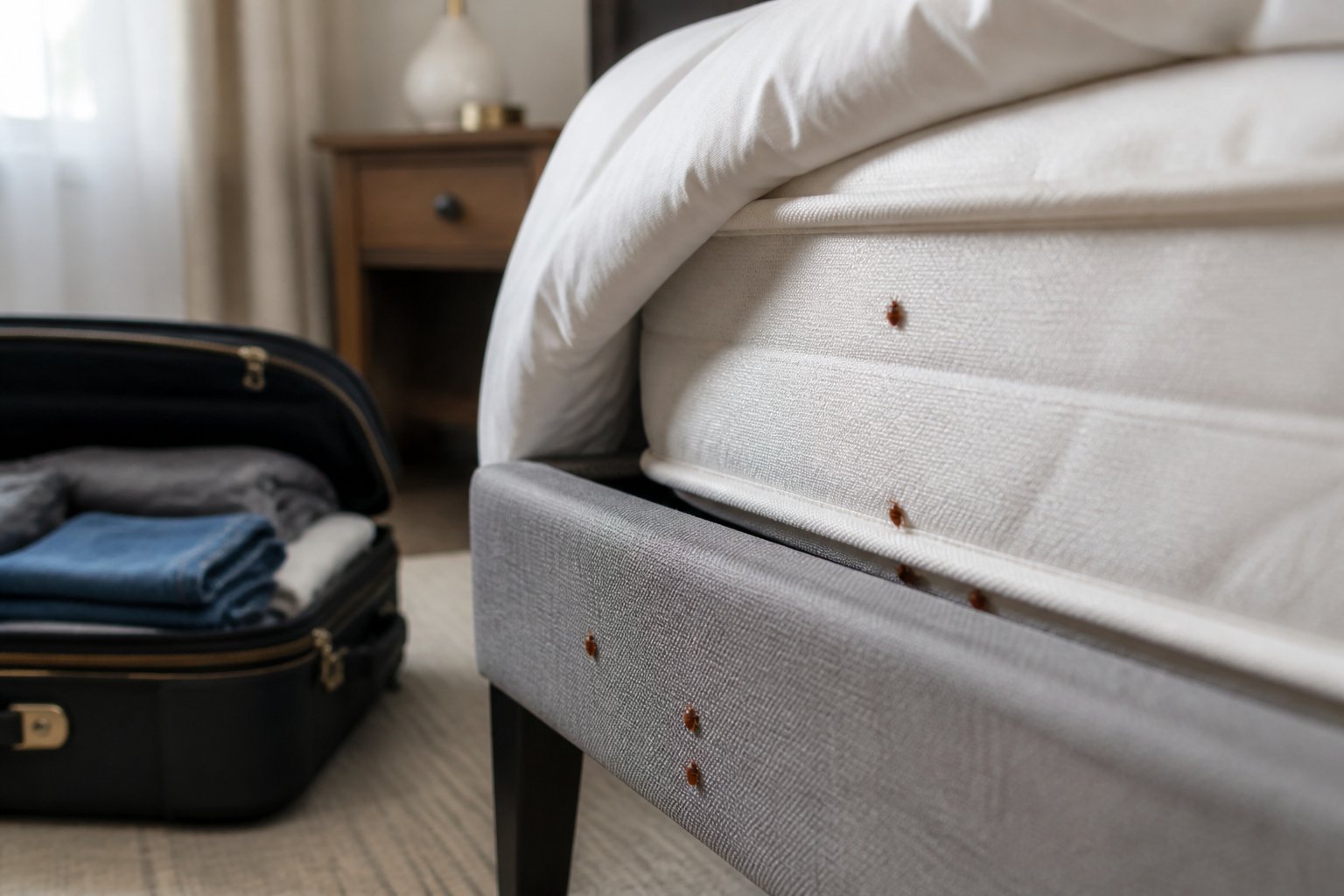
Bed bugs usually enter homes by hitchhiking on belongings. They also move between shared sleeping spaces.
Places with frequent turnover make that easier, especially when luggage and furniture move often.
Travel, Shared Spaces, And Used Items
Luggage, hotels, cruise ships, apartments, shelters, and dorm rooms are common starting points. Bed bugs can also ride in used furniture, folded clothes, and bedding.
Common Places People Pick Them Up
You are more likely to pick up bed bugs in places where many people sleep or store belongings close together. The CDC notes that travel and shared living or sleeping spaces raise the risk.
Crowded buildings can make introduction easier.
How They Move Through Buildings And Rooms
Bed bugs hide in seams, folds, and cracks. They spread by crawling from room to room or by being carried on items.
In multi-unit buildings, they can move through walls and shared openings. Early detection helps limit their spread.
What To Do Once You Suspect A Problem

Reduce exposure, confirm the problem, and act quickly. A small infestation is much easier to handle than a large one.
Immediate Steps To Reduce Exposure
Keep sleeping where you are until you can inspect carefully, because moving suddenly can spread bugs to new rooms. Wash bedding and clothes on hot settings when possible.
Vacuum carefully, and use mattress covers to limit hiding places.
When Home Measures May Help
Home measures can help when activity is limited and you have found clear evidence early. Basic cleaning, encasements, and targeted steps may reduce numbers, though they rarely solve a major problem alone.
When To Call A Professional
Call a professional pest control service if you keep finding bugs or if the infestation is spreading. Seek help if you continue to get bites despite cleaning up.
A professional exterminator uses coordinated bed bug eradication methods, including insecticides. They can help when insecticide resistance makes DIY efforts less effective.


