
If a bee comes after you, it’s pretty unsettling. The best thing you can do is stay calm and quietly move away until the bee loses interest—or until you make it indoors or into a car.
Swatting or making sudden moves just makes things worse. You’ll probably make the bee more likely to sting, so try your best to keep your cool.
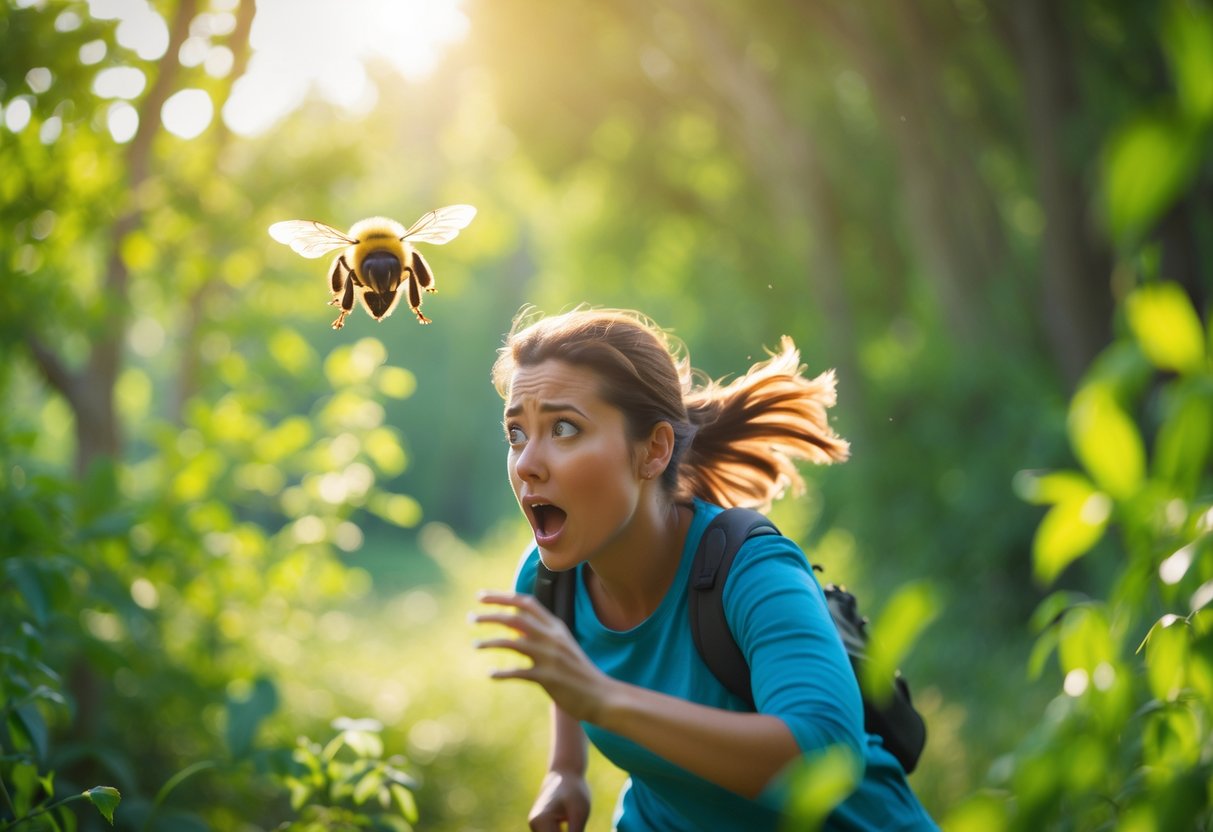
Bees usually chase people because they feel threatened or confused. They don’t actually want to hurt you.
If you understand why a bee might follow you, it’s easier to react in a way that keeps you safe. It might even help you avoid a sting.
Let’s get into some practical tips for what to do if a bee starts chasing you, and how you can protect yourself.
What to Do When a Bee Is Chasing You

If a bee comes after you, it helps to stay calm and know how to react. Moving quickly to a safe place and avoiding actions that might make things worse can keep you out of trouble.
Stay Calm and Don’t Swat
Try not to panic if a bee is on your tail. Swatting at the bee usually just makes it angrier, since it sees you as a threat.
Bees pick up on sudden movements and might sting if they feel attacked. Focus on staying calm and breathing evenly.
This helps you think straight and handle the situation better. Most of the time, a bee stops chasing if you don’t make it angry.
Don’t wave your hands or try to hit the bee.
Move Quickly to Shelter
Your best bet is to get somewhere safe, fast. Head for a building, a car, or any covered spot where the bee can’t easily follow.
Move quickly but don’t flail around. You’ll have a better shot at losing the bee.
Bees can fly fast, but if you get inside a closed space, they usually give up. Run in a straight line—don’t zigzag.
That actually makes it harder for the bee to keep up.
Avoid Attracting Bees Further
Stay away from flowers, fruit, or sweet drinks, since these attract bees. Bright colors or strong perfumes can also draw their attention.
If you’re outside and a bee gets close, just quietly and slowly walk away. Don’t make any sudden moves.
This keeps more bees from joining in or getting upset. If you stay calm and just move away, you’ll probably stop the chase without making things worse.
For more advice on bee encounters, check out what to do if a bee is chasing you at wise beekeeping.
Why Bees Chase People

Bees chase people when they feel threatened or sometimes just curious. Certain things you do—or even things in the environment—can make bees act more aggressive.
If you get why bees do this, it’s easier to stay calm and avoid a run-in.
Protective Behavior of Bees
Bees protect their hive from anything they see as a threat. If you get too close to their home, especially when the weather’s bad, they might chase you to defend it.
Guard bees usually take on this job. When pests like mice or possums invade the hive, bees kick into high alert and get more aggressive.
They’ll chase off intruders to keep their hive safe. Even if you just walk by during these times, bees might react quickly.
Triggers That Attract Bees
Bees get drawn to certain smells and movements. You might be giving off pheromones that catch their attention, even if you don’t realize it.
Bright colors or strong scents—like perfume or even sweat—can attract bees too. Bees use their senses to figure out what’s worth checking out.
If the weather’s gloomy or it looks like rain, bees sometimes get more defensive and might chase people nearby.
Common Mistakes to Avoid
Swatting at a bee? That usually just makes things worse. If you hit a bee, it’ll probably see you as a threat or maybe even as food, and then it’ll attack.
Try to keep calm. Move away slowly instead of panicking.
If you run or flail around, bees might chase you for even longer. Tossing stuff at a bee or its hive just makes them angrier.
Don’t mess with the hive, and seriously, give them some space.
Want more insights on how bees act? Check out why bees chase you for no reason.


