
When a bee chases you, the fear and confusion can hit fast. Honestly, the smartest move is to stay calm and get yourself to a safe spot—indoors or inside a car works best. Bees usually chase because they feel threatened or want to protect their hive. They can only sting once, so just getting away makes all the difference.
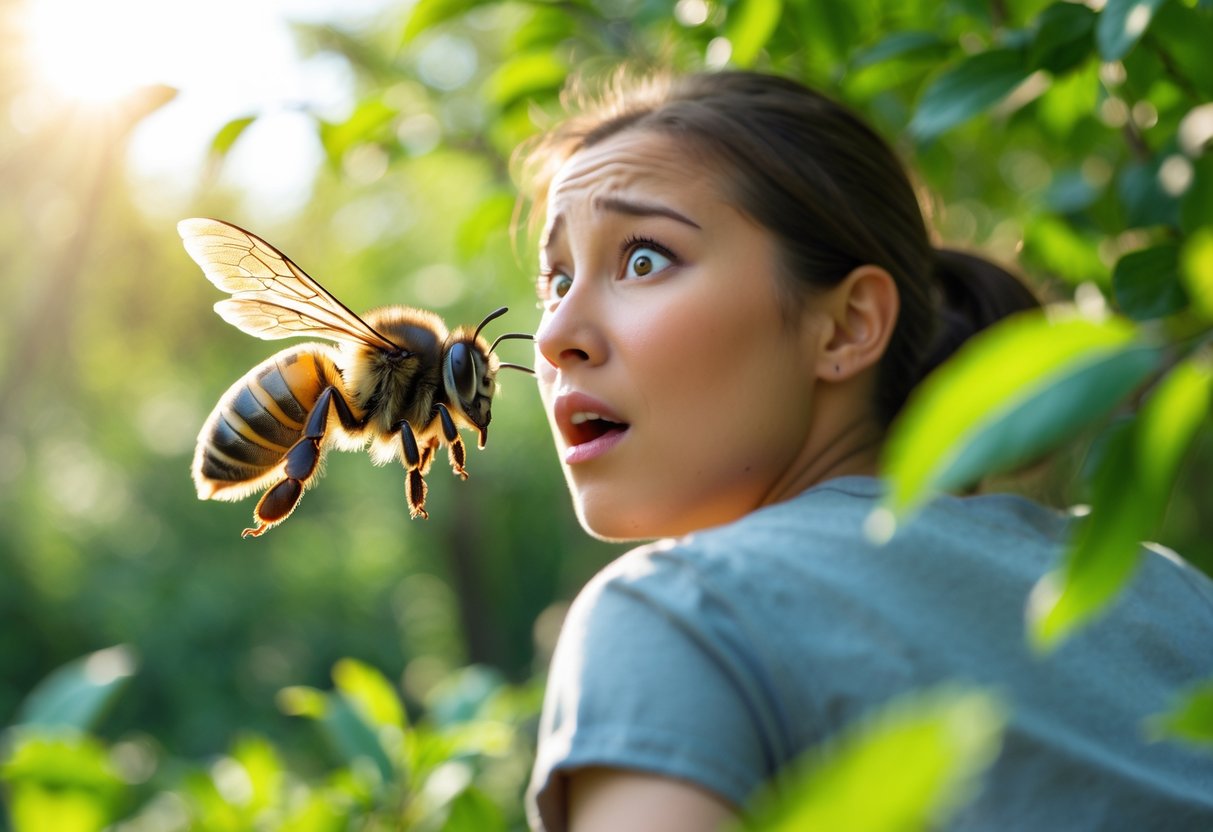
If a bee starts following you, resist the urge to swat at it or make sudden moves. That only makes the bee more agitated.
Instead, quietly head for shelter and close the door or window behind you. You’ll keep the bee out and yourself safe.
Knowing how to react can help you avoid a sting and keep your cool.
Understanding why bees chase you and what to do next can save you a lot of stress. This article breaks down simple steps to handle these buzzing visitors without panic.
For more tips on staying safe, check out what to do if a bee is chasing you.
Why Bees Chase You

Bees chase for a few clear reasons tied to their natural behavior and what’s going on around them. Sometimes you trigger their defense without even realizing it.
Certain actions or even the way you smell or look can make bees more likely to follow you.
Understanding Bee Behavior
Bees fiercely protect their hive. Guard bees will chase if they think their home is in danger.
You don’t even have to get too close—just being nearby can set them off.
Their aggression changes with the weather, too. Bees get more active and defensive during rain, storms, or cloudy days.
They might see you as a threat when the weather turns.
Some bees just get curious or confused. When a bee follows you, it might just be trying to figure out if you’re safe or not.
Common Triggers That Attract Bees
Certain things on you or in your environment can make bees chase you. Bright colors and strong smells—like perfume, scented lotion, or even sweat—draw them in.
If you move quickly or start running, bees see that as a threat. They’ll follow fast movements.
Eating outside or carrying sugary drinks can attract bees, too. Food and sweet smells are hard for them to resist.
Nearby pests like mice or possums can make bees extra defensive. They’ll try to protect their hive from those invaders, and you might just get caught in the crossfire.
Mistakes to Avoid When Approached by Bees
Don’t swat at a bee if it’s chasing you. Swatting only makes bees angrier and more likely to go after you.
Running in zigzags doesn’t really help. Bees can track you for a surprisingly long distance—sometimes half a mile.
Try to stay calm and walk away slowly. Avoid sudden moves, and keep an eye on the bee, but don’t stare it down.
Never throw things at a hive. That’ll just provoke a swarm, and trust me, you don’t want that.
How to Respond When a Bee Is Chasing You

When a bee starts chasing you, what you do next really matters. Staying calm and knowing how to put distance between you and the bee can keep you from getting stung.
After you get away, it’s smart to take steps so it doesn’t happen again.
Immediate Steps to Take for Safety
If a bee comes after you, don’t panic or swat at it. Swatting just makes the bee feel more threatened.
Stay calm and move away quickly, but don’t make wild movements.
Run in a straight line instead of zigzagging. Bees handle quick changes pretty well, so steady movement is better.
Look for shelter—a car, building, or covered spot works. Bees usually stop chasing once they can’t see you or you’re inside.
Cover your face with your hands or a shirt if you can. Bees go for eyes, nose, and mouth first, so protect those spots.
How to Stop Bees from Following You
If a bee won’t leave you alone, don’t panic or try to smack it. Calmly moving away usually does the trick.
Skip the bright colors and floral perfumes if you know you’ll be around bees. Sweet smells and flashy clothes just invite attention.
If you’re near flowers or a hive, just leave the area slowly. Bees are just defending their space.
Sometimes, letting an aggressive bee follow you inside and then shutting the door behind you ends the chase right there.
What to Do After Escaping a Bee
Once you’re safe, take a good look at yourself for any stings. If you spot one, try to scrape the stinger out with your fingernail or maybe a card—just don’t pinch it.
Wash the area with soap and water. Grab some ice and press it on the spot to help with swelling.
If you’re itching or feeling some irritation, you might want to take an antihistamine.
Got a bee sting allergy? Or maybe you notice a serious reaction? Don’t wait—get medical help right away.
When things have calmed down, sit for a bit and sip some water. It’s totally normal to feel a little rattled, so give yourself a moment to recover.


