
Bee venom hits your body in a few pretty obvious ways. When a bee stings you, the venom brings pain, redness, and swelling as your immune system jumps into action. Your body reacts as if it’s facing a threat or injury.
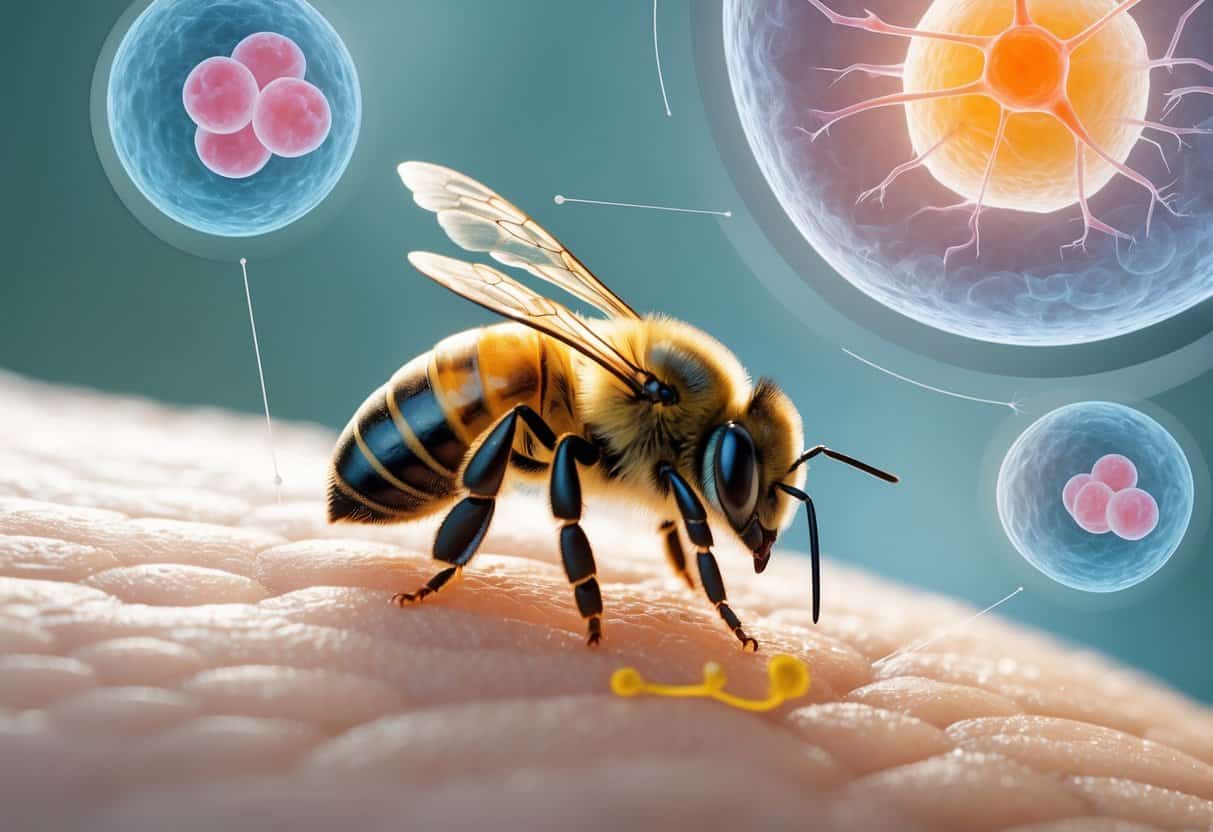
But honestly, bee venom isn’t just about the sting. It’s got compounds that might calm inflammation and even give your immune system a little nudge. Sometimes, it seems to help with things like arthritis or skin flare-ups, although it can also set off allergic reactions for some folks.
If you get how bee venom works, you’ll see why it’s both powerful and, well, a bit risky.
How Bee Venom Interacts With the Body
When bee venom gets into your system, a mix of proteins and enzymes start acting almost instantly. These substances spark pain, swelling, and set off your immune system.
You also need to watch out for allergic reactions or even more severe problems that can happen.
Composition and Key Compounds
Bee venom, or apitoxin, contains several active substances. The main one, melittin, makes up about half the venom by weight.
Melittin damages cell membranes, which leads to inflammation and pain.
Other compounds, like phospholipase A2 and phospholipase A, break down fats in your cell membranes. This helps the venom spread and ramps up tissue damage.
There’s also hyaluronidase—it sort of acts like a “spreading agent” by breaking down the glue between your cells. That lets the venom sink deeper into your skin.
You’ll find two smaller players, apamin and adolapin, which mess with your nervous system and can reduce pain signals or block nerve messages. Apamin is a mild neurotoxin, so it can tweak how your nerves behave, but in tiny, controlled doses, it sometimes gets used for therapy.
Immediate Effects of Bee Stings
Right after a sting, those venom compounds start irritating your skin. Melittin triggers burning and redness by making your cells release histamine and other stuff.
You’ll probably notice pain, swelling, and heat at the sting spot within a few minutes. Blood vessels widen, fluid leaks out, and your skin puffs up.
White blood cells rush to the area, trying to fight off the venom. This can cause even more redness and tenderness.
Usually, these effects stay around the skin and nearby tissue. How bad it gets depends on how much venom you got and where you got stung.
Immune System Responses
Your immune system treats bee venom like an invader. The proteins in the venom push your body to make antibodies.
These antibodies spot venom components and send immune cells to attack. That immune response causes inflammation, which is just your body’s way of clearing out the bad stuff.
Some people develop tolerance after being exposed to tiny amounts of bee venom. Bee venom therapy uses this idea to help folks with allergies, but it really needs a doctor watching over things.
Risks and Allergic Reactions
A lot of people only get mild discomfort, but some have serious allergies to bee venom.
An allergic reaction might cause anaphylaxis, which is life-threatening and needs immediate help. You could have trouble breathing, feel dizzy, or notice your heart racing.
If you know you’re allergic, even one sting can get dangerous fast.
Bee venom can also mess with certain medications, like blood thinners or immune drugs. If you’re thinking about bee venom therapy, definitely tell your doctor.
Keep an eye out for any signs of a bad allergic reaction after a sting and get help right away if you need it.
Therapeutic Effects and Potential Benefits
Bee venom actually has a few uses that might help with pain, inflammation, your immune system, and even your skin. Some treatments use bee venom injections in controlled ways to ease symptoms for certain illnesses—especially those tied to the immune or nervous system.
Anti-Inflammatory and Pain Relief Mechanisms
Bee venom contains stuff that can lower inflammation in your body. That’s why people sometimes use it for arthritis or rheumatoid arthritis, where joint swelling and pain are a problem.
When you get bee venom therapy, your body releases natural anti-inflammatory chemicals. This helps calm swelling and dull pain in sore spots.
Some people with chronic pain, like fibromyalgia, try this therapy for relief.
The venom works on nerves to block pain signals, which explains why researchers have studied bee venom injections for pain. Still, you’ve got to be careful—bee venom therapy isn’t risk-free.
Applications for Autoimmune and Neurological Conditions
Bee venom might help balance your immune system. That’s useful for some autoimmune diseases, like multiple sclerosis, where your body attacks itself.
A few studies suggest people with neurological conditions such as Parkinson’s disease could benefit from bee venom. It might improve movement and reduce symptoms by calming inflammation and protecting nerve cells.
In traditional medicine, apitherapy (using bee products, including venom) has been around for asthma and other immune issues. But honestly, if you’re thinking about bee venom treatment, do it with a professional—reactions can be unpredictable.
Benefits for Skin Health and Wound Healing
Bee venom can give your skin a boost by increasing blood flow and helping your body make more collagen. Over time, this might soften wrinkles and make your skin feel a bit smoother.
You’ll find bee venom in some anti-aging creams. Some people even try injectable bee venom treatments for a shot at skin rejuvenation—though, honestly, that’s not for everyone.
The venom packs antibacterial and antioxidant benefits, which protect your skin and can speed up healing for wounds. If you mix it with propolis (another bee-made wonder), you might get even better protection against skin infections.
Using bee venom—if you’re careful—could help small wounds heal and make your skin look healthier. But you definitely need to watch out for irritation or allergic reactions.
Curious about the science behind it? Check out bee venom’s therapeutic properties and medical uses.


