
People often toss around the words “possum” and “opossum” as if they’re the same critter, but honestly, they’re not. Opossums live in North and South America, while possums call Australia and nearby islands home. They share a few quirks, but they’re from different families and look pretty different, too.
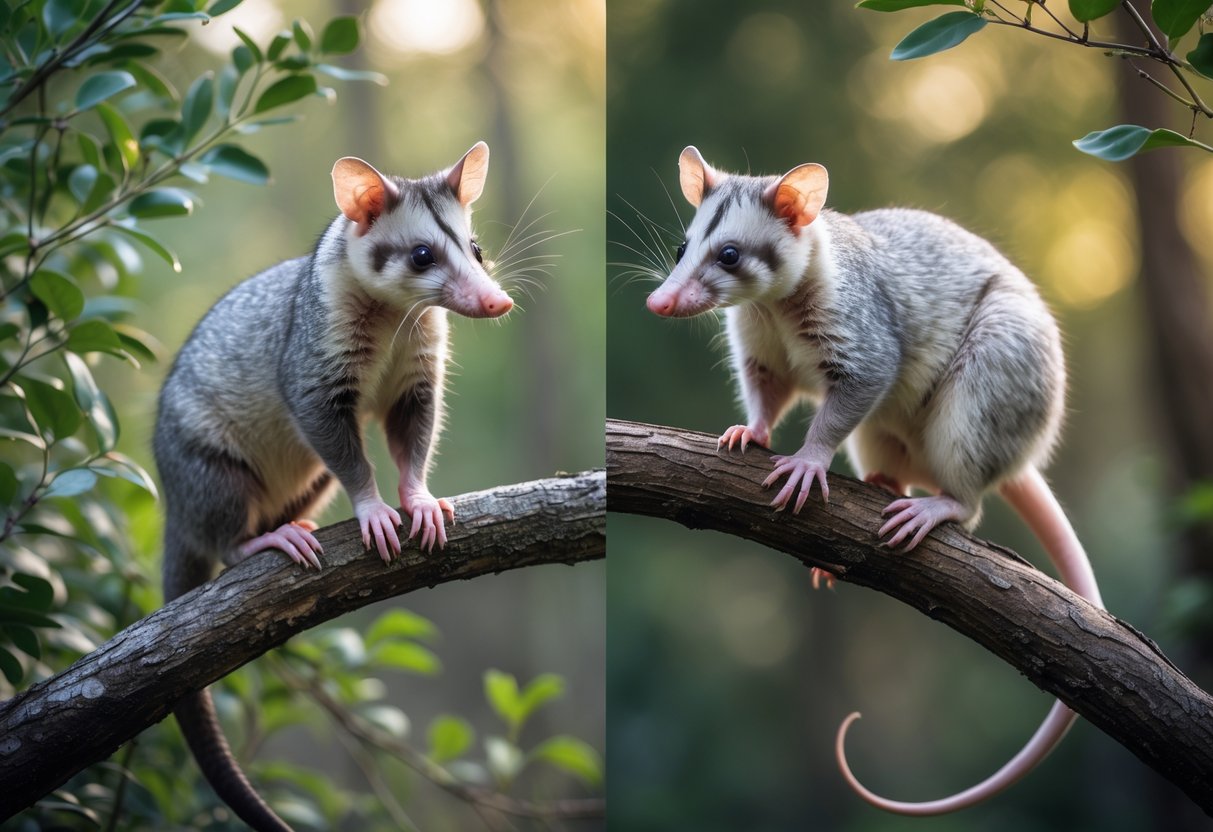
If you’ve seen both, you might spot the opossum’s long, pointy snout and that weird scaly tail. Possums, on the other hand, usually have furry tails and rounder faces.
They act differently, too. Plus, they live on totally separate continents, which makes them even more interesting to compare.
Knowing which is which can save you some confusion when you spot one in the wild. Let’s dig into their habits, looks, and where they actually fit in the animal kingdom.
Key Differences Between Possums and Opossums

Possums and opossums don’t just look different—they live in totally different places and act in their own unique ways. Their bodies and habits changed over time to fit their homes.
Geographic Distribution and Habitat
Opossums, like the Virginia opossum, come from North America. You’ll spot them in the U.S., Canada, and parts of Central and South America.
They hang out near rural spots or even cities, rummaging through garbage or hunting small animals.
Possums stick to Australia and nearby islands like New Guinea. These guys prefer forests and are skilled climbers, often sleeping high up in the trees.
The brushtail possum, for example, loves bouncing through branches after dark.
So, if you’re in North America, you’re probably seeing an opossum. If you’re in Australia, it’s a possum for sure.
Physical Characteristics and Appearance
Opossums usually grow bigger than possums. They reach about two to three feet long, tail included.
They have long, pointed snouts and lots of sharp teeth. Their tails are scaly and hairless, which helps them grip things as babies but isn’t as handy when they grow up.
Possums have rounder faces and fluffy tails. The brushtail possum’s tail is so bushy it almost looks like a paintbrush.
They’re smaller, usually just one to two feet long.
Opossums show off grayish fur, but possums can be any shade—often softer and thicker.
Behavioral Traits and Defense Mechanisms
Opossums have a weird trick—they play dead when scared. They flop over and give off a nasty smell to fool predators.
That’s a classic North American opossum move.
Possums in Australia do things differently. They’re mostly nocturnal and like to be alone.
Instead of playing dead, they rely on their fast climbing and sharp senses to get away from danger.
Their babies, called joeys, ride around in their mother’s pouch.
Both animals hunt for food at night and don’t hang out in groups. They both eat a bit of everything since they’re omnivores.
If you’re curious for more, check out Terminix’s detailed guide.
Ecology, Diet, and Human Interaction

Opossums and possums act pretty differently if you ever spot them around your house or yard. Their diets, how they fit into nature, and the health risks they bring might change how you feel about them.
Diet and Adaptations
Opossums are the only native marsupials in North America. They show off a pointed snout and a prehensile tail for climbing and holding onto branches.
They don’t care much what they eat—bugs, small rodents, fruits, veggies, even garbage or pet food left outside.
Possums, mostly in Australia and New Guinea, have bushy tails and love tree life. They munch on leaves, fruit, flowers, and insects.
Opossums help out by eating tons of ticks—sometimes up to 5,000 in a season. That’s a big deal for controlling tick-borne illnesses like Lyme disease.
Environmental Role and Benefits
Opossums act like little garbage collectors, cleaning up pests and waste. They eat insects, rodents, and even venomous snakes, helping balance the ecosystem.
They also cut down on ticks, which is great news for anyone worried about Lyme disease.
Possums help their habitats, too, but they focus more on plants and tree insects. They spread seeds and pollinate flowers, keeping their ecosystems healthy.
Opossums scavenge dead animals and rotten fruit, stopping harmful bacteria from spreading.
Potential Health Risks
Opossums don’t get rabies easily because their body temperature runs low, but they do carry fleas. Those fleas might bring diseases into your home.
Their droppings can contain bacteria or parasites that could mess with your pets or family. Honestly, it’s not something you want to clean up without gloves.
Leptospirosis sometimes shows up in places where opossums pee. You’ll want to steer clear of any spots where they’ve nested or left droppings.
If you stumble upon baby opossums, resist the urge to pick them up. It’s better to call a wildlife professional and let them handle it.
Possums usually pose fewer risks to people, but they can still bring in fleas or mess up your property if they set up camp nearby. Try keeping food locked away and getting rid of hiding spots to keep them from moving in.
If you’re not sure what to do, reaching out to a professional makes sense. You can get more info on dealing with these critters by checking out this guide on opossum and possum differences.


