
So, you’ve found a baby chipmunk. It’s totally normal to want to help right away, but don’t rush in. The best move is to approach slowly, handle the little one as little as possible, and reach out to a wildlife professional for advice. Baby chipmunks have pretty specific needs, and honestly, experts handle this way better than most of us could.
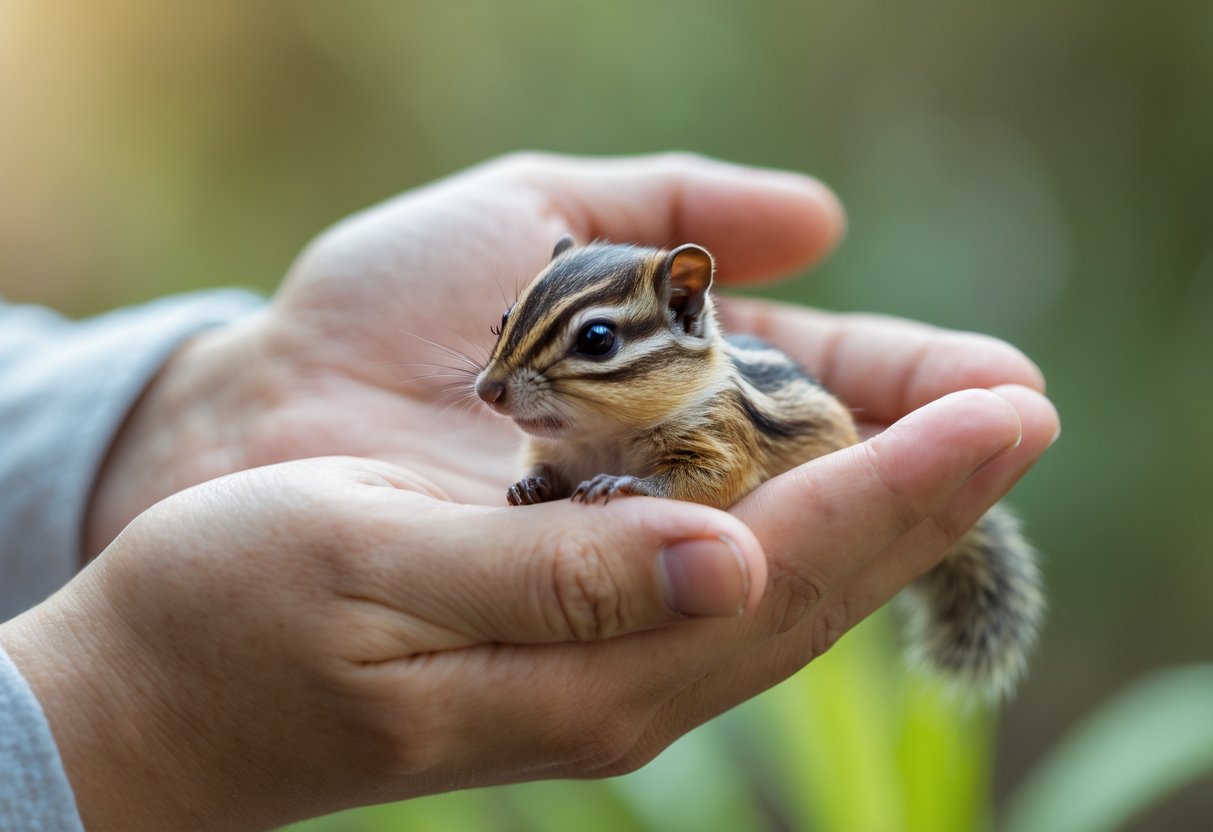
If you need to keep the chipmunk safe for a bit, place it gently in a small box with soft bedding. Find a warm, quiet spot, and keep it away from pets.
You might want to just watch from a distance and see if the mother comes back. Chipmunk moms often return even after a while.
Knowing what to do in these situations can really help the baby survive. Here’s a simple guide with steps to keep the little one safe until someone with more experience takes over.
For more details, check out what to do if you find a baby chipmunk.
Immediate Actions for Finding a Baby Chipmunk

If you spot a baby chipmunk, take a moment to really look at what’s going on. Figure out if it actually needs help and how you can keep things safe for both of you.
These steps can protect you and the chipmunk.
Determine If the Baby Chipmunk Needs Help
Start by watching the chipmunk from a distance. Does it seem hurt, weak, or super skinny?
If you see bleeding, limping, or shivering, it probably needs help.
If the chipmunk looks fine and you think the mom is nearby, try not to jump in right away. Chipmunks sometimes leave their babies alone while they gather food.
Stick around and keep an eye on things for a few hours. If the mother doesn’t come back and the baby looks weak or in danger, that’s when you should step in.
Attempt Reuniting With the Mother
If the baby seems okay and not hurt, try putting it back where you found it. Most chipmunk moms will return if the baby is safe in its original spot.
Set the chipmunk down in a sheltered area close to where you found it. Try not to touch it more than necessary or move it too far.
Then, just back off and watch quietly for a while. The mom might show up as soon as she feels it’s safe.
Contact a Licensed Wildlife Rehabilitator
If the baby chipmunk looks sick, injured, or the mom never comes back, call a wildlife rehabilitator. These folks know how to handle wild animals like chipmunks.
Let them know where you found the chipmunk, how it’s doing, and how long you’ve watched it.
Wildlife rehabilitators can give the chipmunk the right food, shelter, and medical care so it has a real chance to recover.
Safety Precautions When Handling
Always use gloves or a soft cloth when you need to handle a baby chipmunk. Wild animals can carry diseases or parasites, and it’s better to be safe.
Don’t pick up the chipmunk with bare hands. That keeps both of you safer and helps the animal stay calm.
Place the chipmunk gently in a small box with soft bedding. Keep the box somewhere warm and quiet, away from pets and loud noises.
Never try to feed the chipmunk without professional advice. The wrong food can really hurt it.
Short-Term Care Before Professional Help Arrives

If you have to care for a baby chipmunk for a bit, focus on keeping it safe, warm, and calm. That’s your main job until you can get it to a rescue.
You’ll want to make a simple shelter, keep it hydrated (but not too much), protect it from stress and pets, and get it ready for a safe trip.
Warming and Shelter Essentials
Baby chipmunks need warmth to survive. Use a small box or container lined with something soft—shredded paper, cloth, or paper towels work well.
Keep the box in a quiet, dark spot away from drafts. You can use a heating pad on low under half the box to provide gentle warmth.
Make sure there are holes for air. Don’t use bulky blankets that might smother the chipmunk.
Don’t try to warm the chipmunk by holding it against your skin for too long. That could stress it out or even hurt it.
Preventing Dehydration
Hydration matters, but you have to be careful. Offer a shallow dish of water or use a dropper or syringe.
Give just a little water slowly, so it doesn’t choke or inhale it. Never force the chipmunk to drink.
Watch for dehydration—lethargy, a dry nose or mouth, sunken eyes, and no appetite all point to trouble.
Skip milk and don’t give lots of water before talking to an expert. That can mess up a chipmunk’s digestion.
Protecting From Stress and Pets
Baby chipmunks get stressed out easily. Keep things quiet and dim to help them feel safer.
Handle the chipmunk as little as possible. If you have to pick it up, use gloves.
Make sure pets can’t get to the chipmunk. Put the box in a secure place away from people and noise.
Stress really lowers a baby chipmunk’s chances, so a calm, safe spot is super important.
Transporting to Wildlife Rescue
Grab a small container with plenty of ventilation. Toss in some soft bedding to keep the chipmunk comfortable.
Make sure you secure the container well. You really don’t want it sliding around or popping open.
Don’t feed or give water during the trip. That way, you’ll avoid any risk of choking or vomiting.
Try to keep the container in a dark, quiet spot while you’re on the road. It helps the animal stay calm.
Call the rescue center before you leave. Ask for any special instructions and let them know you’re coming so they can get ready for the baby chipmunk.
If you want more tips on how to transport baby chipmunks, check out this wildlife rehab advice page.


