
If you spot bees swarming near your house, it’s easy to feel nervous. Honestly, most swarms are temporary and don’t pose much danger if you just stay calm and don’t get too close.
Bees swarm when they’re searching for a new home, so in most cases, they’ll move on in a few hours or maybe a day or two.
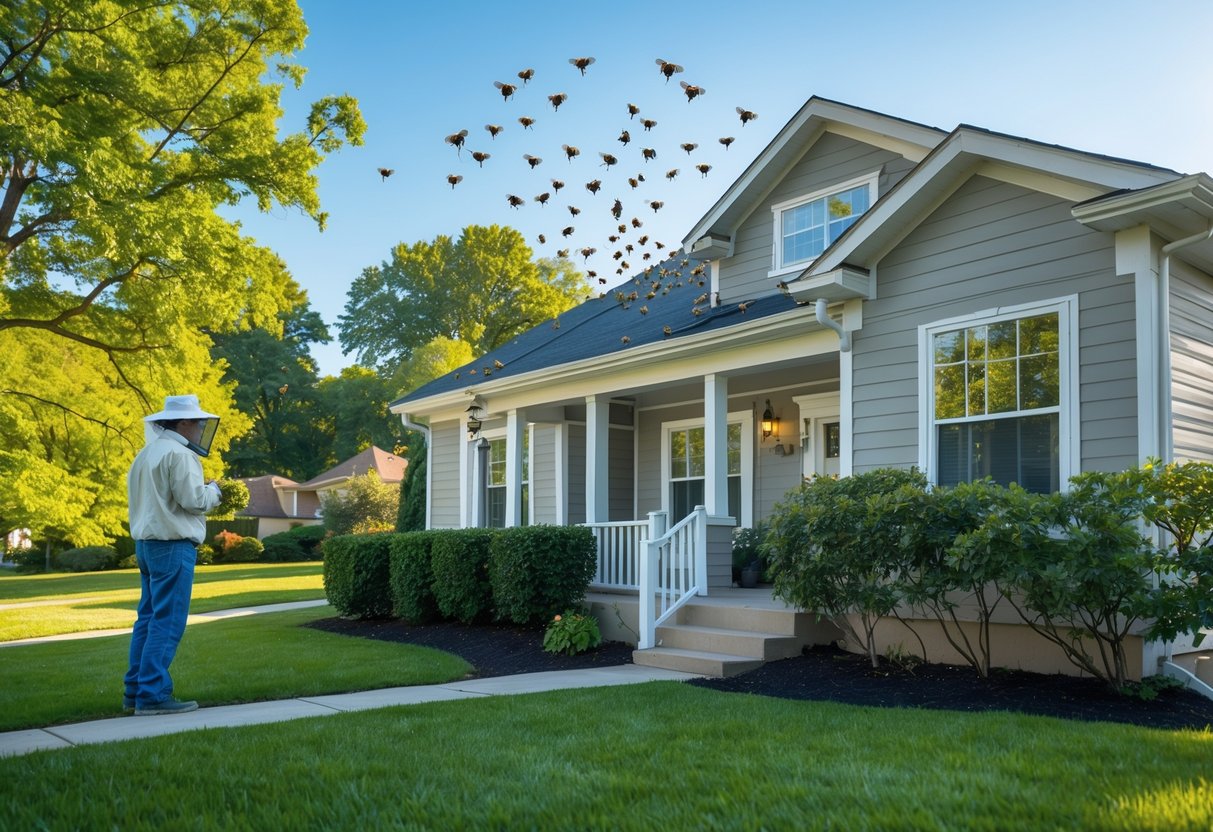
Try not to disturb the swarm. Definitely keep kids and pets inside until the bees leave.
If a hive starts to form close to your house, call a local beekeeper or pest control pro. They can remove the bees safely—no need for you or the bees to get hurt.
Knowing why bees swarm and how to handle it can really help you stay safe. Plus, it protects the bees, and let’s be honest, we need them around for the environment.
For more details, check out this page on what to do when bees are swarming around your house.
Immediate Steps When Bees Are Swarming Around Your House

When bees swarm near your home, staying calm is key. It helps you and the bees stay safe.
Watch them carefully. Try to figure out what kind of bees or insects you’re dealing with.
Take steps that don’t stir things up. Sometimes, it’s just smarter to call in a professional.
How to Safely Observe and Assess the Situation
First off, don’t panic. Avoid sudden movements.
Bees react to quick motions and loud sounds—they can get defensive.
Stay at least 10 feet away from the swarm. Watch quietly and see if they’re passing through or settling in.
Look for a cluster of bees hanging out in one spot, or a steady stream flying in and out of a hole. That usually means a hive is forming nearby.
Don’t touch or bother the swarm. You just want to figure out your next step without making the bees upset.
Identifying Different Types of Bees and Stinging Insects
Not every bee-like insect acts the same. You might see honeybees—they’re usually chill unless you mess with them.
European honey bees are common and often swarm in spring or early summer.
Some areas have Africanized honey bees, which are more defensive. You’ll want to be extra careful around them.
Wasps and hornets look similar but act differently. Wasps, for example, tend to be more aggressive.
Knowing what you’re dealing with makes it easier to stay safe and respond the right way.
Do’s and Don’ts When Encountering a Bee Swarm
Do stay calm. Move away slowly if a bee gets close—don’t freak out.
Do keep kids and pets inside until things settle down.
Don’t spray the bees or swat at them. That just makes them mad.
Don’t try to remove or disturb the swarm yourself unless you really know what you’re doing.
Do close windows and doors near the swarm so bees can’t get inside.
When to Involve a Professional Bee Removal Specialist
If the swarm settles on or near your house, go ahead and call a bee removal specialist.
These pros can move honey bee colonies safely and usually without hurting the bees.
They know how to handle different bee types, including European and Africanized honey bees.
Trying to do it yourself is risky. It can make the bees defensive and lead to stings.
Letting experts handle it protects your family and gives the bees a chance to be relocated, not destroyed.
You can search online for local honey bee removal or bee removal specialists.
For more info, check out this guide to swarm rescue and removal.
Effective and Humane Ways to Relocate or Prevent Bees From Nesting

You can handle bees near your house in a way that’s safe for everyone.
Getting expert help, blocking off entry points, and using natural prevention methods will protect your home and the bees.
These steps let you control the situation without causing harm.
Contacting Local Beekeepers or Bee Removal Services
If you find a hive close to home, reach out to local beekeepers or pro bee removal services.
They have the tools and know-how to move bees without hurting them.
Beekeepers often relocate honey bees to places where they can keep pollinating. That’s good for everyone.
Look for services that handle honey bees, carpenter bees, or bumblebees, depending on what you’ve got.
Don’t try to remove hives yourself—bees sting, and some nest in tricky spots like walls.
Professionals keep your home safe and make sure the bees get relocated.
Sealing Entry Points and Preventing Future Swarms
Once the hive is gone, you’ll want to keep new bees out.
Check for cracks, holes, or gaps around windows, doors, vents, and eaves.
Seal these spots with caulk, steel wool, or mesh. This helps stop carpenter bees and bumblebees from making new nests.
Close up openings after the bees leave, since empty spaces attract new colonies fast.
Inspect your house in spring and summer—bees usually swarm when they’re searching for new spots.
Natural Deterrents and Yard Maintenance Tips
You don’t have to rely on chemicals to keep bees away—you’ve got some natural options. People often plant citronella, eucalyptus, or mint to help repel bees.
Try spraying a mix of water and cinnamon or vinegar around spots where bees hang out. Some folks put mothballs near possible nests, but you’ll want to keep those away from kids and pets.
Trim back those wild bushes, and clear out any fallen fruit in your yard. Bees love sweet smells and cozy hiding spots, so tidying up makes your garden much less interesting to them.
A clean yard and a few natural repellents can go a long way in keeping bees from settling in too close. If you’re looking for more tips on moving bees safely, you might want to check out humane bee removal services.


