
Bats can be surprising guests in your home, but there’s no need to panic. If you find bats around your house, the best course of action is to keep calm, secure your living space, and seek safe removal strategies. These agile creatures play important roles in the ecosystem, helping to control insect populations, so it’s beneficial to handle the situation thoughtfully.
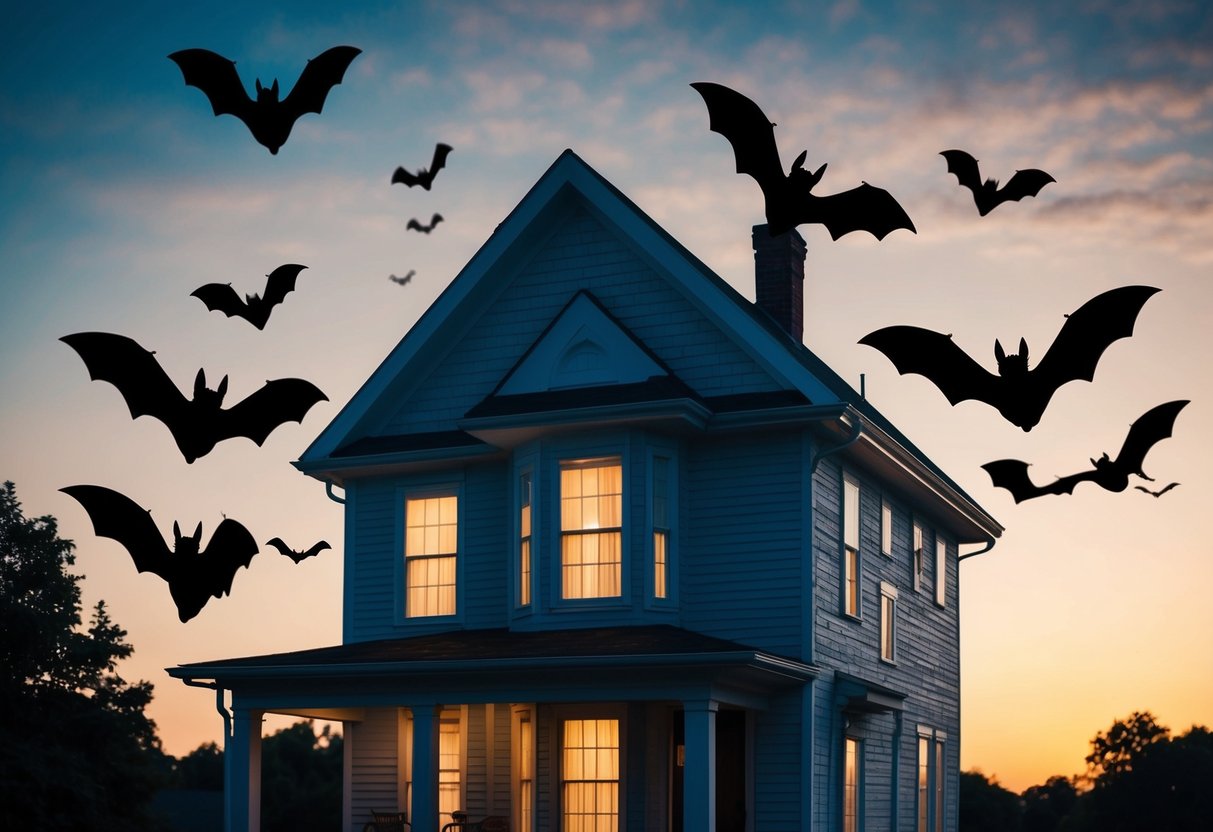
To prevent bats from entering your home, check for any small openings or gaps in the roof, walls, or eaves. Common bat species often seek shelter in attics or under overhangs. By sealing these entry points, you can reduce the chances of them becoming regular visitors.
If you do find yourself with bats inside, you may want to consider non-lethal methods for removal, which will allow them to thrive safely outside.
Encouraging bats to live nearby can also be a good idea. You can install a bat house in your yard to provide a home for these helpful creatures once they are safely removed. Taking these steps ensures you are managing your home environment while also respecting the needs of local bat populations.
Understanding Bats and Their Behavior

Bats are fascinating creatures that play an important role in the ecosystem. Knowing about their species and behavior can help you manage their presence around your home effectively.
Bat Species and Habitats
In your area, you may encounter various bat species, including the little brown bat and the big brown bat. These bats typically roost in dark, secluded spots such as attics, eaves, and behind wall voids.
Understanding where bats like to hang out helps you identify potential entry points in your home. They prefer places that provide shelter and safety from predators. By knowing their habitats, you can take steps to prevent bats from roosting near your living spaces.
Also, it’s important to recognize that bats play a vital role in controlling insect populations. A single bat can eat thousands of insects each night, benefiting both you and the environment.
Maternity Season and Roosting Habits
Bats usually have a maternity season in late spring and early summer. During this time, female bats give birth and care for their young. You may notice increased bat activity around your home as mothers seek safe roosting spots.
During maternity season, bats often choose warmer locations to keep their pups healthy. They prefer dark and enclosed spaces, which makes attics and roof spaces ideal. If you find bats roosting during this time, it’s best to wait until the young are old enough to fly before taking any removal actions.
Remember, if you need help with bats, seek professional assistance. This ensures the bats are treated humanely while helping protect your home.
Preventative Measures to Keep Bats Away

Taking steps to prevent bats from settling around your home is essential. This involves making your property less appealing to them and sealing entry points. Here are some effective strategies to keep bats at bay.
Bat-Proofing Your Home
Start by inspecting your home for potential entry points. Bats can squeeze through very small openings, so look for gaps around windows, doors, and vents. Seal these areas with caulk or other suitable materials to block their access.
Next, consider removing nearby food sources. Bats are attracted to areas with plenty of insects, so reducing standing water in your yard and keeping fruit trees clean can help. Ensure that ripe fruits are picked promptly and compost is managed to avoid attracting pests.
Additionally, consider using commercial bat repellent products. These can help deter bats without harming them. Ultrasonic repellents work by emitting sounds that bats find uncomfortable.
Maintaining Your Property
Regular maintenance can make a significant difference. Keep your yard tidy by trimming back overgrown shrubs and removing debris where bats can roost. Check your property regularly to ensure that there are no openings that could invite bats inside.
Remove standing water where mosquitoes breed, as bats often hunt insects near water sources. Installing proper drainage can help with this issue. If you have fruit trees, be vigilant about picking up fallen fruit to prevent attracting insects, which in turn invites bats.
Finally, consider consulting with local wildlife experts if you suspect a bat problem. They can help assess your situation and suggest further measures to prevent bats from taking up residence near your home.
Safe Bat Removal Strategies

If bats are around your house, it is important to approach removal safely and responsibly. Here are effective methods you can use, along with legal and ethical considerations to keep in mind.
DIY Bat Removal
Removing bats yourself can be effective if done carefully. Start by identifying where the bats are roosting. Common places include attics, eaves, and chimneys.
You can use a few methods, such as:
- Noise and Light: Bats prefer dark, quiet places. Using bright lights or noise devices can encourage them to leave.
- Exclusion: Seal any small openings, but do this when bats are out for the night. One-way bat doors let bats exit but not return.
Make sure to wear protective gear like gloves and masks to avoid any health risks.
Professional Pest Control Services
Sometimes, hiring a professional is the best choice. Pest control experts have specialized knowledge and tools for safe bat removal. They can ensure the process follows local wildlife laws.
A professional can also provide:
- Inspection Services: They can identify entry points and recommend exclusion methods.
- Cleanup Services: After removal, they can help clean up any droppings or guano, reducing health hazards.
Choose a licensed and experienced pest control service to ensure responsible practices.
Legal and Ethical Considerations
Before you act, remember that bats are often protected species. This means you may need a permit for removal. It’s crucial to check regulations with your local wildlife agency.
If bats are hibernating, it’s especially important to avoid eviction during colder months. Doing so can harm the bats since they may not find food. Always aim for humane bat control by encouraging them to move on rather than harming them.
Health Risks and Cleanup Procedures
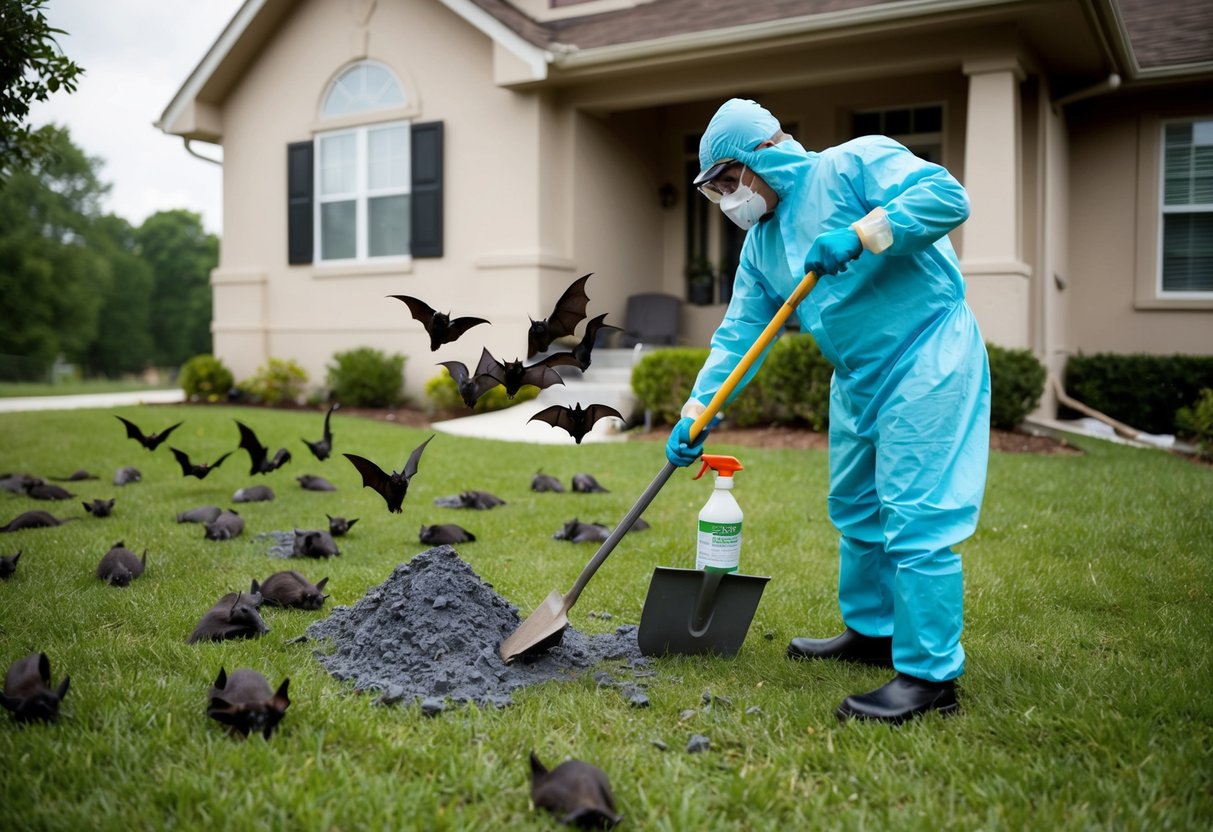
Bats can pose health risks mainly through their droppings, often called guano. Understanding these hazards is key to keeping your home safe. Proper cleanup methods can help you manage these risks effectively.
Hazards of Bat Droppings
Bat droppings can contain harmful spores that may lead to a respiratory disease called histoplasmosis. When guano becomes dry, it can break apart and release these spores into the air.
If you breathe them in, you could experience flu-like symptoms. Symptoms include fever, cough, and fatigue. In some cases, the effects may be severe, especially for individuals with weakened immune systems.
Additionally, bats can carry rabies, which poses a serious threat to human health. While the risk through droppings is lower, coming into direct contact with an infected bat or its feces heightens your danger. Always be cautious when dealing with bat droppings.
Bat Guano Cleanup Tips
When cleaning bat guano, you should take precautions to protect yourself. Start by wearing gloves, a mask, and protective eyewear. This gear will minimize your exposure to dust and harmful spores.
-
Wet the droppings: Before cleaning, spray the affected area with water. This helps prevent spores from becoming airborne.
-
Use a scoop or dustpan: Carefully remove the bat poop, placing it in a sealed plastic bag.
-
Clean the area: After you’ve removed the droppings, clean the surfaces with a disinfectant. This step helps kill any remaining spores.
-
Dispose properly: Seal the droppings in the bag and dispose of them according to local regulations.


