
Dealing with bees buzzing around your home or garden? You probably want a solution that’s safe and easy. Mixing dish soap and water makes the best homemade bee killer. This combo suffocates bees fast, and you don’t have to worry about harsh chemicals.
It’s a relief if you want to protect your family, pets, and the environment at the same time.
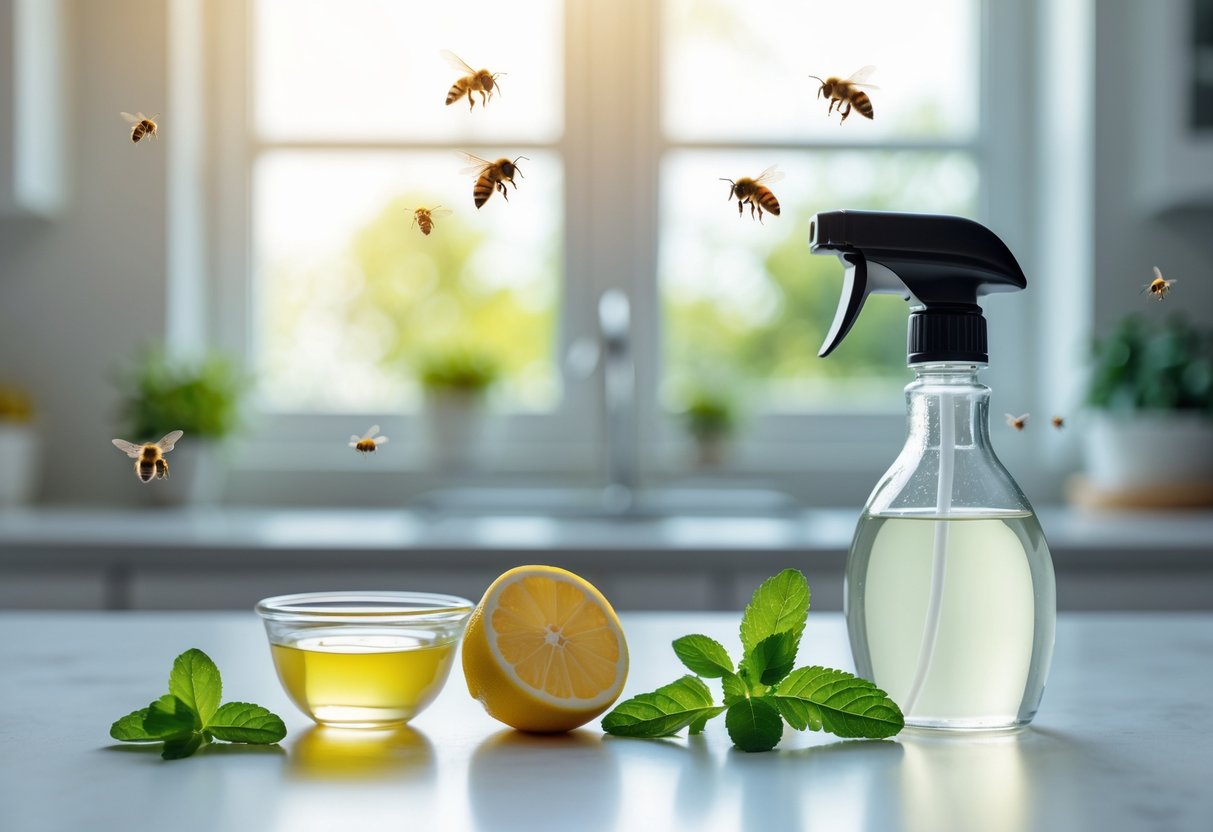
Just grab a spray bottle and mix one part dish soap with two to four parts water. Shake it up. Spray the mixture directly on bees or even the hive if you need to. If you’re curious, you can add essential oils for a different twist.
You should always handle bees carefully. They get aggressive if you bother them too much.
This homemade spray helps you manage bees naturally and gives you some peace of mind.
Best Homemade Bee Killers and How They Work

You probably have everything you need at home to control bees without much fuss. Some sprays suffocate bees or mess with their senses. Others trap them so you can release them somewhere else.
Dish Soap and Water Solution
This one’s a go-to for a reason. Mix one part dish soap with two to four parts water in a spray bottle.
The soap eats away at the bees’ protective layer and clogs their breathing pores. They suffocate pretty quickly.
Spray the mix right on bees or the hive when the weather’s dry and sunny. Try not to spray plants or pets—soap isn’t great for them either.
It’s a simple, chemical-free way to cut down bee activity.
Vinegar-Based Bee Killer
Vinegar works because it’s acidic and bees really don’t like it. Mix equal parts water and vinegar in a spray bottle.
You can spray it where bees hang out. Vinegar usually won’t kill every bee, but it’ll irritate them enough to make them leave.
It’s handy for keeping bees away from your garden table or patio. Just watch out—too much vinegar can hurt your plants.
Vinegar keeps things non-toxic and still gets bees to back off.
Essential Oil Sprays
You can use certain essential oils to keep bees away or even kill them. Oils like peppermint, citronella, eucalyptus, and tea tree are popular picks.
Mix 10-15 drops of your chosen oil with water and a little dish soap in a spray bottle. Spray it where bees gather or near hives you want to clear out.
The strong scent keeps bees from coming too close. Stick to outdoor use, and don’t let the spray soak your plants.
It’s a nice-smelling, natural barrier between you and the bees.
Homemade Bee Trap Formulas
Homemade bee traps let you catch bees alive without using chemicals. Cut a soda bottle in half and put something sweet like sugar water or fruit inside.
Bees crawl in for the treat, but then they get stuck. Set traps where you see bee activity, but not right where you hang out.
Check the traps often and let the bees go far from your home. This way, you keep bee numbers down without hurting them.
Homemade traps are a gentle way to handle bees if you’d rather not kill them.
For more DIY ideas, check out this guide on natural ways to get rid of bees.
Tips, Safety Precautions, and Special Cases
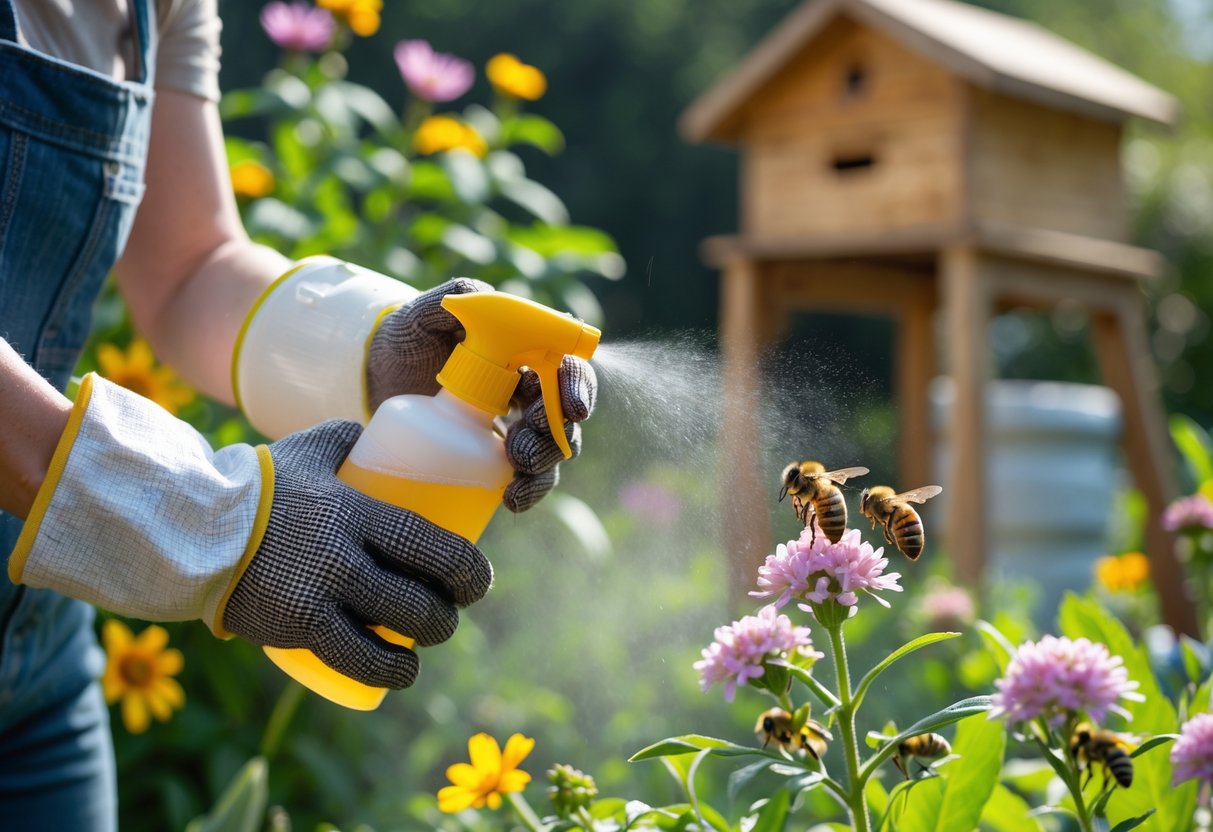
Whenever you deal with bees, protect yourself and use your sprays or traps safely. Different bees and insects sometimes need their own approach.
Think about kids and pets before you try anything. Safety first, right?
Protecting Yourself from Bee Stings
Bee stings hurt—and if you’re allergic, they can be dangerous. Wear long sleeves, gloves, and maybe a hat when you spray or move bees.
Move slowly so you don’t scare them. Swatting at bees just makes things worse.
If you or your family have allergies, keep an epinephrine injector nearby. After you’re done, check for stings and clean up any wounds quickly.
Homemade sprays like the dish soap mix cut out harsh chemicals, but you should still keep your distance. Try spraying bees in the early morning or late evening when they’re less active.
Carpenter Bees, Yellow Jackets, and Other Types
Different insects call for different tricks. Carpenter bees dig into wood and can mess up your house, but they only sting if you provoke them.
Blocking their holes or using traps usually works and keeps you safe. Yellow jackets are more aggressive and aren’t actually bees.
Bee sprays don’t do much against yellow jackets, so use baits and traps made just for them. Spraying yellow jackets can make them attack, so it’s best to avoid that.
Figure out what insect you’re dealing with before you try anything. Many homemade repellents keep bees away without killing them, which helps protect your garden’s pollinators.
Safe Use Around Children and Pets
If you’ve got kids or pets at home, go for homemade solutions with simple, natural ingredients—think water and dish soap. Skip sprays packed with harsh chemicals or strong scents; those can really bother sensitive skin or make your pets sneeze.
Keep all repellent sprays and traps somewhere little hands and paws can’t reach. Bees buzzing near play areas? Handle that with extra care to keep everyone safe. When you spray bees in your yard, make sure you tell the kids not to touch those spots until everything dries.
It’s smart to check your pets for bee stings, especially after they’ve been outside playing. If your pet does get stung, call your vet right away.
Choose bee repellents and removal tricks that keep risks low for the whole family. If you’re curious about homemade bee killers, you can find safe recipes using dish soap and water at knowanimals.com.


