
If a frog bites you, it’s probably scared or thinks your finger looks like food. Most frog bites don’t do much harm—they’re more startling than anything else.
Some bigger frogs might leave a tiny wound, but they can’t really break your skin deeply or do any real damage.
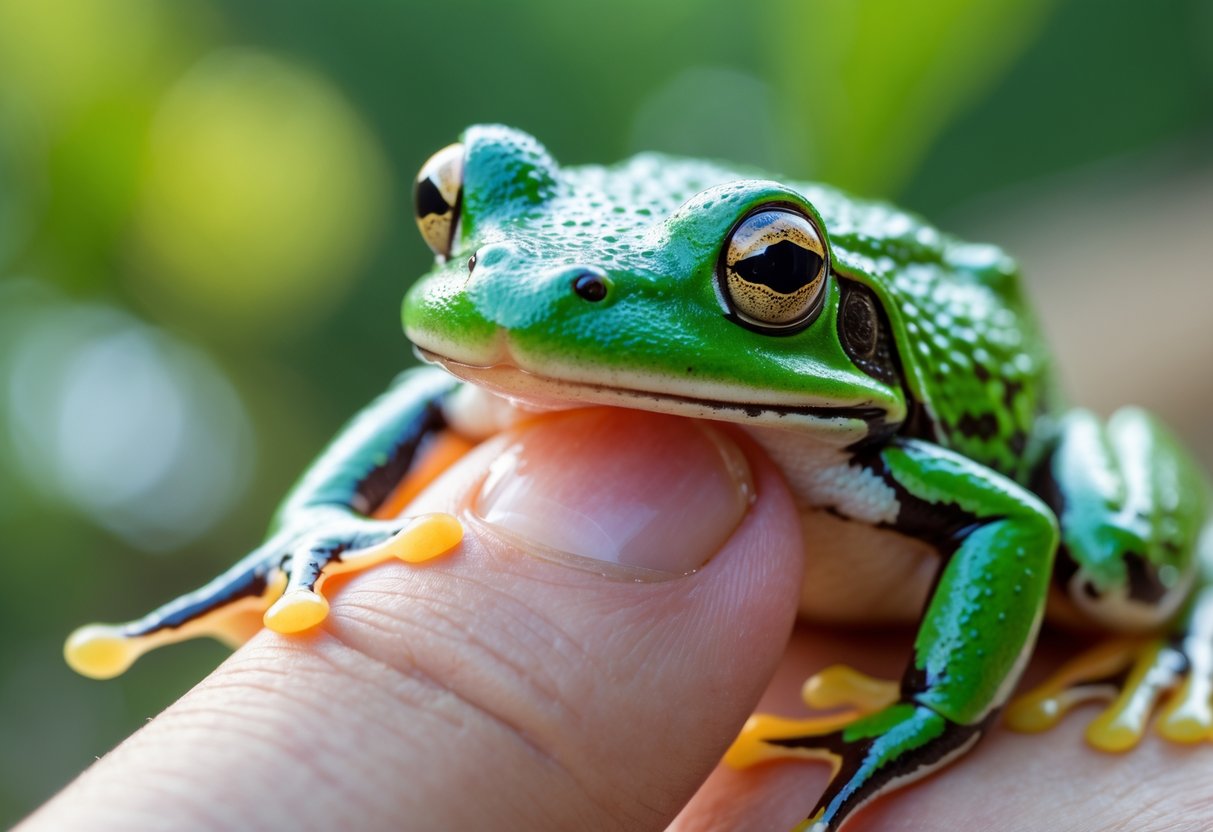
Frogs do have teeth, but they mostly use them to hold onto food, not to bite hard. Only a handful of species, like the horned frog, can really give you a noticeable pinch.
If you know why frogs bite, you can probably avoid it—and keep your pet frog out of trouble too.
What Happens If a Frog Bites You?

A frog bite usually happens fast. It can sting a bit and sometimes leaves a mild injury.
The pain and risk really depend on the frog species and how it reacts if you handle or scare it.
Immediate Reactions and Pain Level
When a frog bites, you’ll probably just feel a quick pinch or a sudden grip on your finger. Some frogs, like Pacman frogs, have little teeth that point backward, and they can hang on for a minute or two.
That can make it tricky to pull away, and you might get a bit of pain or even a tiny bit of bleeding.
Most frogs let go right away, and you don’t end up with much pain. Maybe your skin feels sore or you see some scratches or red spots.
If the frog lets go quickly, it’s rarely a big deal.
Are Frog Bites Dangerous?
Frog bites aren’t usually dangerous. Frogs don’t have big, strong teeth like dogs or cats.
Most only bite if they feel threatened or if they think your finger is food. Some frogs have little spines or sharp bits in their mouths, and those might cause a scratch or small cut.
Watch out for infection if the bite breaks your skin. Frogs can carry germs like Salmonella, so you’ll want to clean up well.
Poison dart frogs are a special case—their skin has toxins, but you’re not likely to run into one unless you’re in their natural habitat or you keep unusual pets.
First Aid and Treatment Steps
If a frog bites you, try to stay calm. Gently open its mouth with your other hand.
Don’t yank your hand away, since that can make it worse. Wash the bite with soap and water right away.
Use some antiseptic on the area to help prevent infection. If you’re bleeding or the skin’s broken, cover it up with a clean bandage.
Keep an eye out for swelling, redness, or pain that gets worse—those could mean infection, and you should see a doctor. If a bigger frog bites you and leaves a deeper wound, it’s best to ask a medical professional.
Want more details about frog bites or how to handle your pet frog? Check out Do Frogs Bite? Vet Reviewed Reasons, Species & FAQ.
Frog Bite Science and Biting Species

Frogs can bite, but not every bite is the same. Some frogs use their teeth to defend themselves or catch dinner.
Others rely more on toxins to keep threats away. If you know which frogs bite and how they do it, you’ll have a better chance of staying safe around them.
Which Frogs Are Most Likely to Bite?
Some frogs bite more often, especially if they feel threatened. African bullfrogs, for example, have a reputation for a strong bite.
They use their powerful jaws and sharp teeth both for hunting and for defense. Pacman frogs—or horned frogs—can also bite pretty hard.
They’ve got a big mouth and strong jaws, and they snap up prey fast. Usually, they aren’t aggressive, but if your finger looks like food, they might chomp down.
Bruno’s casque-headed frog and Greening’s frog can bite too, but you don’t see them as often. If you’re handling these types, especially if they’re wild, you should be careful.
Do Frogs Have Teeth and How Do They Bite?
Frogs do have teeth, but they’re nothing like what you’d see on a cat or dog. Most frogs have tiny teeth along the upper jaw—those are called “vomerine teeth.”
These don’t bite hard; they just help hold onto slippery bugs or other small snacks. Pacman frogs and African bullfrogs have sharper teeth, though.
If they get scared or annoyed, they can bite down hard enough to hurt. They don’t bite to attack you, really—they just want to hold onto prey or defend themselves.
Usually, when a frog bites, it clamps down fast and then lets go. You might get pinched or feel some pain, but it’s pretty rare for a frog bite to cause a serious injury.
Venomous and Poisonous Frogs That Bite
Some frogs don’t just rely on biting—they use poison to protect themselves. Poison dart frogs probably get the most attention here.
They don’t inject venom by biting. Instead, their skin oozes toxins that can hurt you if you touch or accidentally ingest them.
Bruno’s casque-headed frog takes a different approach. It delivers venom through sharp spines, not with its mouth.
These toxins help the frogs defend themselves. They aren’t really used for attacking.
You don’t need to worry about pacman frogs or African bullfrogs being venomous. They mostly defend themselves with their bite strength and sheer size.
Still, I’d always suggest handling any frog with care and respect. You never know which species might hide a nasty defensive toxin.
Curious about which frogs bite and how to steer clear of injuries? Check out this detailed resource on frogs that bite.


