
Ever wondered what goddess the bee stands for? It’s a question that leads straight into the heart of the ancient world.
In Greek mythology, bees connect closely with Demeter, the goddess of harvest and fertility. Artemis also gets called the Queen Bee from time to time. Both goddesses stand for life, growth, and the natural cycle, so the bee becomes this powerful symbol of productivity and our bond to the earth.
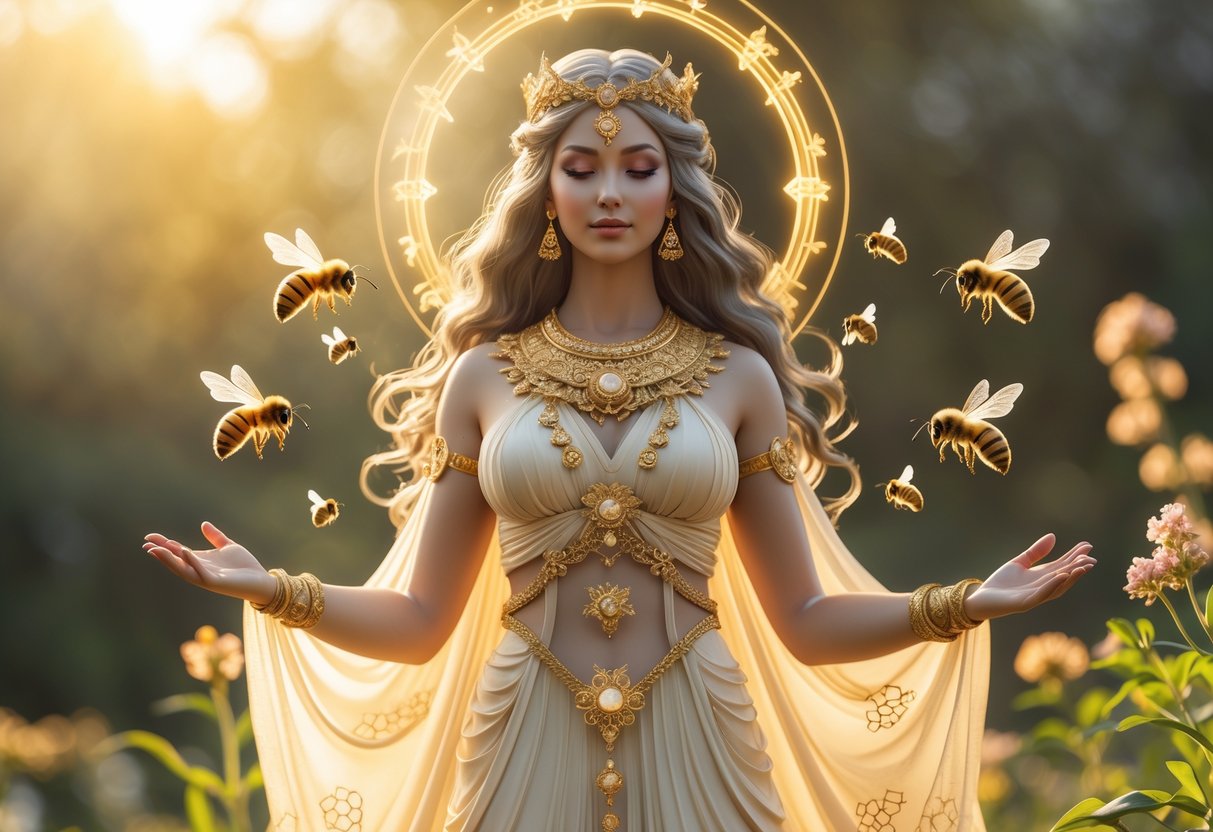
People in ancient times saw bees as sacred. They believed bees linked humans to the divine.
You’ll stumble across stories and rituals where bees act as messengers or stand for community and hard work. Learning about these goddesses makes it clear just how much bees shaped old cultures, their art, and their beliefs.
If you dive into bee mythology, you’ll probably gain a new respect for these little insects. It’s honestly wild how many goddesses and cultures honored bees for their unique traits and the life they help create through pollination and honey.
Want more about the goddess connection? Check out the story of Demeter and her bee priestesses and see how bees show up in Greek myths.
Bee Symbolism and Goddesses in Ancient Myths

Ancient myths, especially Greek ones, tie bees to some pretty powerful figures. Bees stand for life, wisdom, and a connection to the divine.
Their role touches on nourishment, sacred rituals, and the secrets of nature. People saw them as symbols with deep meaning.
Melissa and the Nourishment of Zeus
Greek mythology tells the story of Melissa, a nymph who looked after baby Zeus. She fed him honey, which everyone thought was a magical food.
Honey gave Zeus strength and helped him grow up to rule the gods. The name Melissa literally means “bee” in Greek.
Bees and their honey came across as gifts from the gods. As a “bee-nymph,” Melissa shows how bees stand for protection and nurturing.
You’ll spot bees in stories about care and survival, especially when it comes to important gods like Zeus.
Demeter, Priestesses, and the Sacred Hive
Demeter, goddess of the harvest and fertility, had priestesses called Melissae—meaning “bees.” These priestesses served her in places like Eleusis.
The bee symbolized life and renewal in her worship. People used honey and beeswax as offerings in Demeter’s rituals.
This practice linked bees to the cycles of growth, death, and rebirth. Bees also pop up in Persephone’s journey to the Underworld, hinting at a connection between the hive and mysterious life cycles.
Aristaeus and the Divine Art of Beekeeping
Aristaeus, a minor god tied to agriculture, taught humans how to keep bees. He represents the art and science behind harvesting honey and caring for hives.
Beekeeping was a divine gift, connecting people to nature’s cycles. Pollination from bees helped crops grow.
Honeycomb stands for structure and order in this craft. Aristaeus’ story brings together honey, bees, and human survival through a sacred tradition.
The Bee as a Universal Symbol: Rebirth, Power, and Civilization

Bees have held a special place in a lot of cultures. People saw them as symbols of life after death, strength, and human progress.
Their ties to gods and ancient myths show just how important they were in shaping early civilizations.
Bees as Symbols of Rebirth and the Afterlife
It’s kind of surprising, but bees symbolize rebirth and the afterlife in plenty of traditions. Their life cycle and the way they build honeycombs make them a natural sign of renewal.
In ancient myths, bees often show up as creatures that connect life and death. People saw the honey they make as a symbol of sweetness and immortality.
This idea links bees to thoughts of the soul living on after death. Some beliefs even say bees guide souls through the underworld or protect them on their journey.
Bees keep renewing flowers and making honey, which fits with these ideas. That’s probably why they became such strong symbols of spiritual life and rebirth across cultures.
Bee Associations in Egyptian and Other Cultures
In ancient Egypt, people tied bees to power and royal authority. The bee symbolized Lower Egypt and connected directly to the sun god Ra.
It stood for life, death, and resurrection. Egyptian art and stories often highlight this link between bees and strong leadership.
Other cultures noticed bees too. In Ancient Greece, folks associated bees with gods like Zeus and Artemis.
People believed bees carried messages between mortals and the gods. Even Cupid, who stands for desire and the energy of life, had ties to bees.
Beekeeping played a big role in early civilization. The honeycomb’s neat structure sparked ideas about community and hard work.
People treasured honey—not just as food, but as a sign of wealth and abundance. Bees shaped how humans saw nature, the gods, and even society itself, generation after generation.
Curious? You can dive deeper into the bee’s role in ancient cultures and symbolism.


